Omoda EV Charging Station Nepal: Where and How to Charge Your Electric SUV
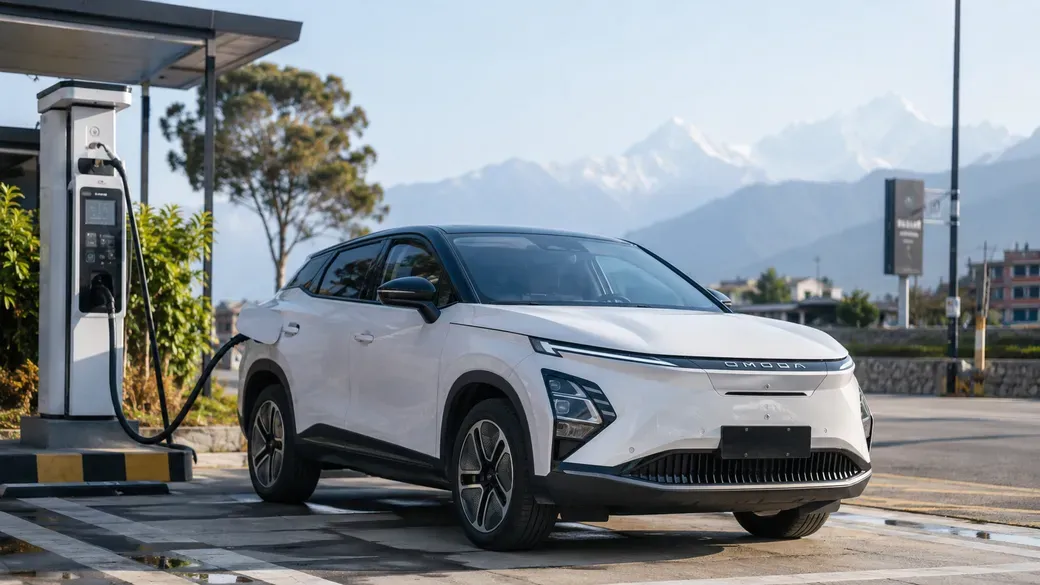
Omoda EV Charging Station Nepal: Where and How to Charge Your Electric SUV
So you've decided on an Omoda for your next electric SUV. Great choice, but there's one question that comes up almost immediately after the excitement of buying settles down: where do you actually charge it?
This is genuinely the most practical concern for new EV owners in Nepal, and it deserves a straight answer rather than a sales pitch. Let's walk through how Omoda EV charging in Nepal actually works, what infrastructure exists today, and what you should plan for as an owner.
How Omoda EVs Charge: The Basics
Omoda's electric models, including the E5 Pro, use a CCS2 charging port, the same standard used by most modern EVs sold globally, including in Nepal. This matters because it means your Omoda isn't locked into a proprietary charging network. Any public CCS2-compatible charger in Nepal, regardless of who installed it, should work with your vehicle.
There are two charging speeds worth understanding:
AC (slow) charging is what you'll use for overnight home charging. It trickles power into the battery over several hours, which is perfectly fine for topping up daily.
DC fast charging is what you'll find at public charging stations along highways and in cities. This pushes a much higher current into the battery and can take a car from a low charge to around 80% in well under an hour, depending on the charger's output and your battery size.
For daily driving within Kathmandu Valley, most Omoda owners rely almost entirely on home charging and rarely need to touch a public fast charger.
The State of EV Charging Infrastructure in Nepal
Nepal's charging network has grown quickly over the past few years, though it's still catching up to demand. The Nepal Electricity Authority (NEA) has been actively involved in building out public charging infrastructure, and private companies have added significantly to that network as well.
By 2024–2025, Nepal's combined public and private charging points reportedly crossed the 750 mark, concentrated mostly in Kathmandu Valley and along major highway corridors connecting to cities like Pokhara and Chitwan. That's a meaningful jump from just a few years earlier, when public charging was closer to a pilot project than a real network.
That said, coverage still thins out considerably once you get into rural or mountainous areas, which is worth keeping in mind if your driving regularly takes you off the main highways.
Where to Find Charging Stations for Your Omoda
A few practical resources exist for locating chargers in Nepal:
NEA-operated stations are placed at various points across Kathmandu and along key highway routes, generally accessible to any EV regardless of brand.
Private charging networks have expanded rapidly, often located at malls, fuel stations that have added EV bays, and dedicated charging hubs in urban areas.
Charging locator apps like Charging Stations Nepal and similar EV-focused apps let you check real-time station locations, and in some cases, live availability before you head out. These are genuinely useful for planning longer trips, since arriving at a charger only to find it occupied or offline is a frustration worth avoiding.
Before any longer road trip, it's worth spending five minutes checking charger locations along your specific route rather than assuming you'll find one when you need it.
Setting Up Home Charging for Your Omoda
For most Omoda Jaecoo Nepal owners, home charging ends up being the backbone of daily EV ownership, not the public network. A few things to sort out before or right after you buy:
Check whether your home or apartment complex allows a home charger installation. This is especially relevant for apartment or housing society residents, where shared parking and electrical infrastructure can complicate installation. Confirm this before you commit to the purchase, not after.
Understand your home's electrical capacity. A dedicated EV charging point typically needs a stable, sufficiently rated electrical connection. Have an electrician or your dealership assess this rather than assuming your existing home wiring can handle it without any upgrades.
Ask your dealership about charger installation support. Many EV dealerships, including those handling Omoda in Nepal, offer guidance or installation assistance as part of the purchase process. It's worth asking directly what's included.
Once set up, overnight home charging is genuinely convenient. Plug in when you park for the night, wake up to a full or near-full battery, and you've essentially removed the need for public charging from your daily routine.
Charging on Longer Trips Outside the Valley
If you're planning a trip to Pokhara, Chitwan, or elsewhere outside Kathmandu Valley, a bit of route planning goes a long way. Highway charging infrastructure has improved, but it's not yet as dense or reliable as what you'd find in more mature EV markets.
A few tips:
Map out charging points along your specific route before leaving, rather than relying on memory or assumption.
Build in a buffer. If you expect to need a charge partway through your trip, don't wait until the battery is critically low to start looking for a station.
Have a backup plan. If your first-choice charger is occupied or out of service, know the next nearest option along your route.
This kind of planning becomes second nature after a trip or two, but it's worth taking seriously on your first few longer drives until you get a feel for how your Omoda's real-world range holds up on Nepal's roads.
Charging Costs and What to Expect
Charging costs in Nepal vary depending on whether you're charging at home (billed through your regular electricity connection) or at a public DC fast charger (typically billed per unit of energy delivered, sometimes with a session or time-based fee on top).
Home charging is generally the more cost-effective option for regular use, since Nepal's domestic electricity tariffs are considerably cheaper than the per-unit rates typically charged at public fast-charging stations. This is one of the quieter financial advantages of EV ownership here, your daily "fuel cost" ends up being a fraction of what the equivalent petrol SUV would cost to run.
Why Charging Access Should Factor Into Your Buying Decision
It's easy to get caught up in range numbers and battery specs while shopping for an electric SUV Nepal buyers are considering, but charging access is just as important to your actual day-to-day experience. A car with a slightly smaller battery but a charging routine that fits your life smoothly will often feel more practical than one with bigger numbers on paper but an inconvenient charging setup.
Before finalizing your Omoda purchase, it's worth walking through your typical week: Where will you charge overnight? How often do you drive beyond the Valley? Is there a reliable charging option along those routes? Answering these honestly will tell you far more about real-world convenience than any spec sheet.
Final Thoughts
Charging an Omoda car in Nepal isn't complicated once you understand the basics: home charging covers most daily needs, public CCS2-compatible fast chargers handle longer trips, and Nepal's charging network, while still growing, has expanded enough to make EV ownership genuinely practical for most drivers based in and around major cities.
The key is doing a bit of homework before you buy: confirm home charger feasibility, check charging coverage along routes you drive regularly, and get comfortable with the apps and tools that make finding a station easier. Get that groundwork right, and charging quickly becomes one of the least stressful parts of owning your Omoda.