Bridging Worlds: Why Montessori Reading Must Join Traditional Schools
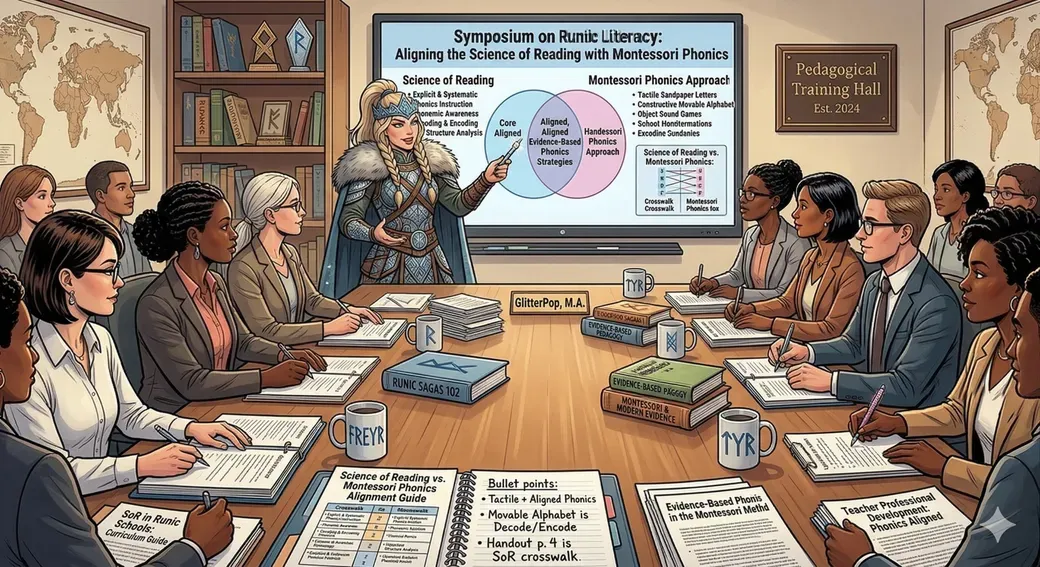
Montessori's century-old literacy methods align seamlessly with the "science of reading," yet traditional schools often overlook this proven approach in place of strict mandates. A compelling article by educators Susan Zoll, Laura Saylor, and Natasha Feinberg reveals how integrating Montessori could transform reading instruction for all students.
The Science of Reading Meets Montessori
The article shows how Montessori tools like Sandpaper Letters for decoding and the Moveable Alphabet for encoding directly to Scarborough's Reading Rope, covering word recognition strands such as phonological awareness and sight words. Activities like the Sound Game build phonemic sensitivity through child-led exploration, while Nomenclature Cards boost vocabulary and background knowledge essential for comprehension. This systematic progression matches science-backed paths to fluent reading, blending explicit instruction with hands-on experiences, all while maintaining student autonomy.
Evidence of Superior Outcomes
Arizona data shows Montessori reading students exceed state averages in literacy. Longitudinal studies confirm Montessori kids outperform peers in reading comprehension, vocabulary, and creative writing by kindergarten's end. Saylor et al.'s book Powerful Literacy in the Montessori Classroom provides classroom examples proving this alignment, urging more research to validate it fully.
The Integration Imperative
Public Montessori schools face mandates to add supplementary ELA curricula due to evidence gaps, fragmenting cohesive methods. Traditional programs could hybridize by incorporating Montessori's multisensory materials—like Phonogram Cards for digraphs—into phonics blocks, fostering autonomy without losing structure. This reform supports diverse learners, enhances engagement, and builds long-term skills, as seen in higher social cognition and executive function in Montessori alumni.
Path Forward for Educators
Start small: Pilot Sound Games in circles or Moveable Alphabet stations during literacy centers. Advocate for studies that ensure Montessori thrives in public systems. By weaving these child-centered tools into traditional frameworks, we create readers who decode fluently, comprehend deeply, and love learning—proving Montessori isn't alternative, it's essential.