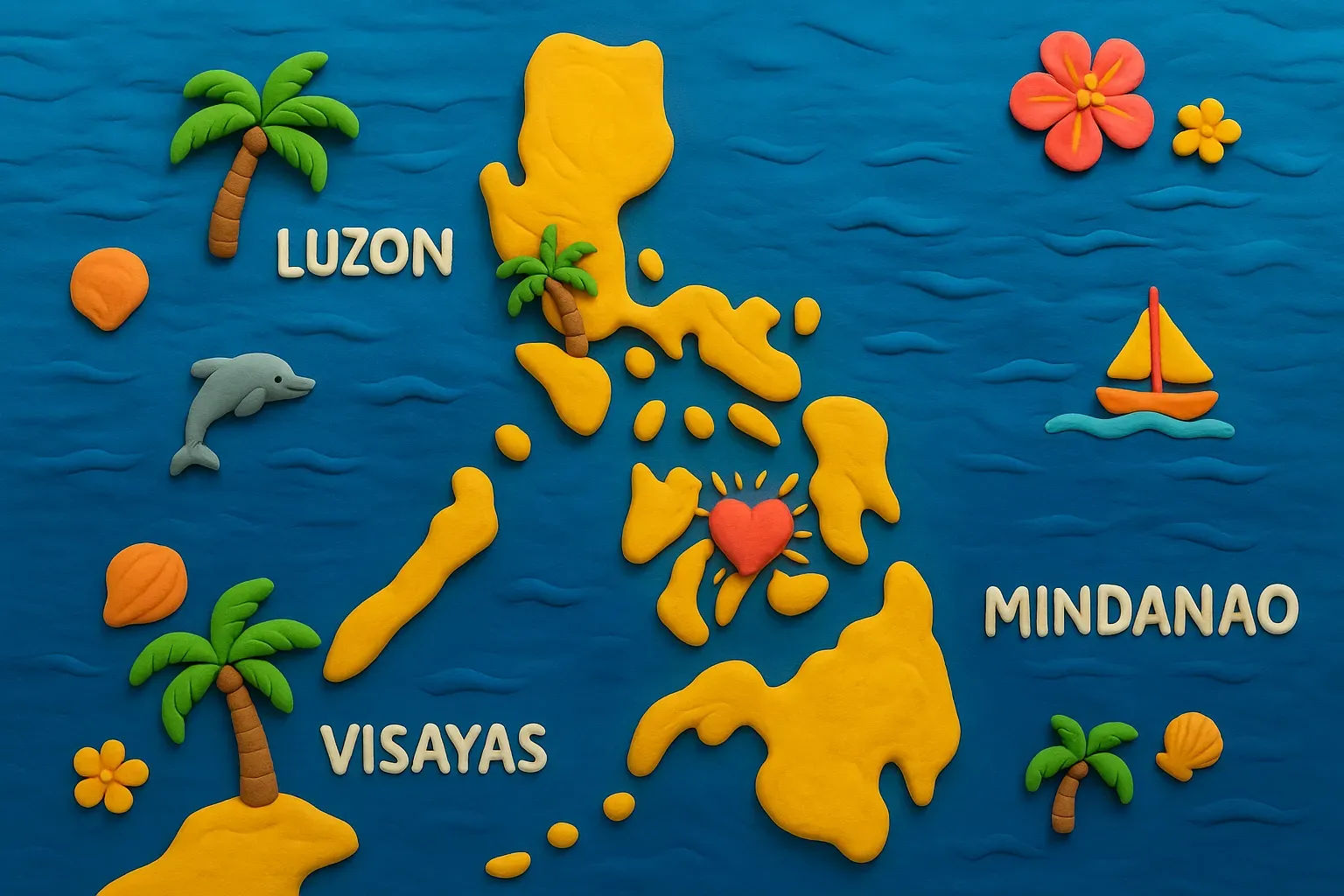
Cebu: A Journey Through History – Ang Puso ng Pilipinas
Cebu – The Heart of the Visayas
Cebu, ang labing karaan nga pinuy-anan sa Pilipinas, is more than just a picturesque tourist destination. Kini ang nag-unang sentro sa kasaysayan sa Pilipinas, a place where ancient traditions, colonial resistance, and the dynamism of modernity are uniquely intertwined. Ang kasaysayan sa Cebu usa ka mikrokosmos sa pagkatawo sa Pilipino mismo: usa ka istorya sa kahanga-hangang katatagan, paghahalo ng kultura, ug sa walay hunong nga pag-iral sa usa ka katawhan. This report traces the development of Cebu from a powerful pre-colonial kingdom to its current role as a dynamic economic center. It is a narrative of people, commerce, and the unbroken spirit of the Cebuano ancestors. Ang kasaysayan sa Cebu dili lang usa ka koleksyon sa mga petsa, apan usa ka buhing istorya nga nag-umol sa talagsaon nga pagkatawo sa isla sulod sa gatusan ka tuig.
The Age of the Rajahs and the Golden Era of Trade (ca. 1000–1521)
Ang Rajahnate sa Sugbu – Usa ka Himsog nga Gingharian
Dugay na sa wala pa moabot ang mga taga-Europe, ang lugar nga atong nailhan karon nga Cebu usa ka mauswagong gingharian, nailhan nga Rajahnate of Sugbu. This pre-colonial kingdom was a highly developed, Indianized mandala polity, with its origins rooted in Visayan folklore. Ang leyenda nag-ingon nga kini gitukod ni Sri Lumay, a ruler of half-Malay and half-Tamil descent from Sumatra. Ang kapital sa gingharian gitawag og Singhapala, a term from Tamil-Sanskrit meaning "Lion City" – an etymological root that connects it with the modern city-state of Singapore. Kini nagpakita sa usa ka lawom nga cultural ug linguistic interconnectedness sa tibuok Southeast Asian nga rehiyon. Ang katilingban sa Sugbu hierarchically organized. Sa ibabaw mao ang magmamando, gitawag nga Rajah or Datu. Sa ubos kanila mao ang Timawa, a warrior class that acted as feudal noble fighters, ranking above the Uripon, who were commoners, serfs, and slaves. Kining estruktura susama ra sa Tagalog Maharlika class, indicating a complex, organized social form that was far from the image of a primitive, isolated island society
Asia's Trade Hub
Ang geographic location sa Cebu naghimo niini nga natural nga sentro sa commerce sa Southeast Asia. Sa wala pa ang 16th century, the Rajahnate of Sugbu already had flourishing trade relations with the great empires of the region. Documented connections to the Majapahit and Srivijaya, as well as a bustling trade with the Chinese Empire, attest to Cebu's role in an established, pre-European global trade network. Ang mga Chinese records, sama sa mga sinulat sa 13th-century chronicler nga si Zhao Rukuo, vividly describe how merchants from China brought porcelain, wine, rice, and silk to Cebu to trade for local goods like
agarwood, lakawood, beeswax, and tortoiseshell. Ang paglungtad sa ingon niini nga organisado nga gingharian nga adunay layo nga commercial ties ug usa ka complex socio-religious structure nagpakita nga ang pag-abot sa mga Europeans dili usa ka panagtagbo sa usa ka wala ma-explore o backward nga katilingban. Instead, it was the disruptive confrontation of two globalized systems:
an emerging European trade route and an already established, pan-Asian one. Ang Rajahnate sa Sugbu usa ka highly developed nga sibilisasyon, firmly anchored in Asia, whose political and economic network was not discovered by the later colonization, but rather essentially disrupted in favor of a new, Europe-centric axis.
Ang Kultura sa Pre-colonial Era
Ang kultura sa pre-colonial Cebu usa ka rich and syncretic mixture. Ang mga relihiyon niadtong panahona naghiusa sa animismo, Hinduismo, ug Budismo. Ang mga archaeological findings gikan sa 1921, including a crude Buddhist medallion and a copper statue of the Hindu god Ganesha, nagsuporta niining assumption, although these artifacts were destroyed in World War II and only black-and-white photos remain. Genetic studies on the peoples of Cebu and Bohol have also shown a South Asian or Indian admixture of 10 to 20 percent, confirming the cultural and genetic link to the Indian subcontinent. Ang mga martial arts usab highly developed. Ayon sa oral tradition, the oral tradition speaks of two dominant fighting systems, Pangamut and Pang-olisi. Ang estilo ni Rajah Humabon sa Cebu giingon nga gilangkuban sa upat ka hampak ug usa ka tusok, while the style of the Lord of Mactan, Lapu-Lapu, included six strikes and two thrusts. Ang pag-amping sa pagpasa niining mga techniques sulod sa gatusan ka tuig, combined with the records of Spanish chroniclers, naghimo niini nga posible nga ma reconstruct ang practical application niining mga martial arts sa present.
A Fateful Day and the First Filipino Hero (1521)
The Meeting of Two Worlds
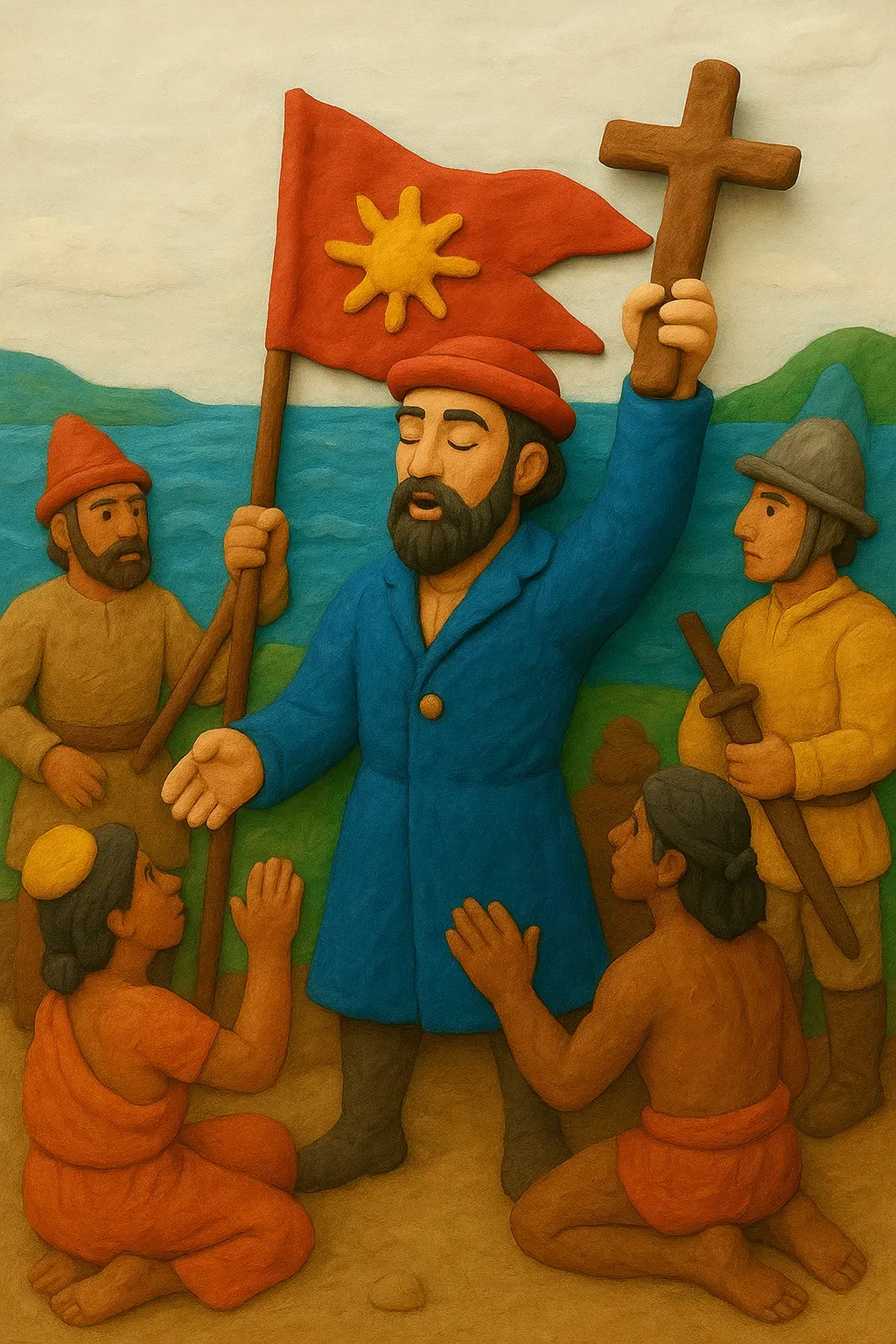
On April 7, 1521, Portuguese explorer Ferdinand Magellan, sailing under the Spanish flag, landed in Cebu. Magellan, who was supposed to find the Spice Islands via a westward route, was kindly received by Rajah Humabon, the ruler of Sugbu. Ang duha nag-sealed sa ilang alliance with a traditional ritual blood compact, the Sandugo, to affirm their friendship. Shortly after, on April 14, Magellan converted Humabon and about 400 of his followers to Christianity and baptized them. Isip gasa ngadto sa asawa ni Humabon, he presented a statue of the Child Jesus, known as the Santo Niño, which is revered to this day as a sacred symbol of the Catholic faith in Cebu and is the inspiration for the annual Sinulog Festival. But the relationship was complex. Ang panagbangi tali ni Humabon ug Datu Lapu-Lapu sa duol nga isla sa Mactan dili lang usa ka purely personal dispute. Lapu-Lapu was described as a pirate who raided trade ships en route to Sugbu. Tungod kay ang trade maoy fundamental sa poder ni Humabon, Lapu-Lapu's activities posed a direct attack on Sugbu's economic and political dominance. When Magellan sided with Humabon and demanded the submission of Lapu-Lapu, he intervened in an already simmering, complex power struggle. Busa, ang sunod nga Labanan sa Mactan dili lang usa ka pagsukol batok sa mga langyawng invaders, but also the continuation of an internal conflict, in which the Europeans acted as welcome, albeit misguided, allies. Lapu-Lapu's Unwavering Resistance Datu Lapu-Lapu, the ruler of Mactan, refused to submit to the Spaniards or Rajah Humabon. Iya kining nakita nga usa ka pag atake sa iyang sovereignty. On April 27, 1521, Lapu Lapu challenged the Spaniards to a duel, and the legendary Battle of Mactan commenced. This day has gone down in history as the first documented victory of natives against European invaders in the region.
The Battle of Mactan – Usa ka Masterpiece sa Local Tactics
Magellan underestimated the determination and tactical brilliance of Lapu-Lapu's warriors. Ang panag-away nahitabo atol sa low tide, which prevented the Spanish boats from getting closer and using their cannons effectively due to massive rocks and corals on the shore. This forced the Spaniards to disembark and face the battle on the beach, where their freedom of movement was limited. Only 49 of Magellan's men went ashore, while the Mactanons mobilized hundreds of warriors armed with makeshift swords, spears, and shields. They targeted the unprotected legs of the Spanish soldiers with poisoned arrows and utilized their local fighting techniques, which resemble the Filipino martial art Arnis. The battle lasted just over an hour and ended with the death of Magellan, who was surrounded and killed by the Mactanons.
Ang Legacy sa Victory
The Battle of Mactan is considered a milestone in Philippine history. Lapu-Lapu is now celebrated as the first Filipino hero who successfully resisted European aggression. His statue, which shows him in traditional Bahag (loincloth) and with a sword and shield, is a central sight at the Mactan Shrine. Ang irony sa history mao nga si Lapu-Lapu halos dili gani ma-mention sa early Spanish records, as the Spanish historical works determined the country's narrative. Apan sa modern times, his legacy has been revived. Ang siyudad sa Lapu Lapu City ug ang tinuig nga Kadaugan sa Mactan (Victory in Mactan) honor him and the bravery of the early Cebuanos. Ang Labanan sa Mactan ay hindi lamang isang makasaysayang pangyayari, kundi isang simbolo ng lakas ng loob at determinasyon ng mga Pilipino na ipagtanggol ang sarili laban sa anumang anyo ng dayuhang pananakop.
In the Storm of World History (1898–1946)
American Colonization – The Promise of Democracy
After 333 years of Spanish rule, the archipelago was handed over to the United States during the Spanish-American War. The US presented its colonization as an act of "benevolent assimilation" with the goal of preparing the Filipinos for statehood. Gipromote nila ang education, hygiene, and infrastructure ug gi-introduce ang American style institutions. This legacy is still visible in Cebu today, such as the six-lane Osmena Boulevard and the Capitol, the seat of government for the Visayas region, which was built in 1937 and is a replica of the White House in the US. English was made the official language to prepare the people for democracy. But American rule was not a radical break from the past. Instead, it was a continuation of the Spanish practice of elite rule. The Americans gave the existing political dynastiessuch as the powerful Osmeña family from Cebu, control over the new institutions. Kini nga mga pamilya naggamit sa formal democratic structures to consolidate and expand their own power and wealth. The American promise of a substantive democracy therefore remained unfulfilled. Politics became a family business, a reality that still exists today.
World War II – Resistance and Tragedy
Ang Japanese occupation during World War II usa sa pinakangitngit nga mga panahon alang sa Pilipinas. Japanese troops landed in Cebu on April 16, 1942, which they used as a strategic staging point for the invasion of the southern island of Mindanao. Ang poorly equipped Filipino and American defenders, who had no artillery or anti tank guns, were quickly overwhelmed. Ang Japanese occupation gimarkahan sa brutality, as symbolically evidenced by the capture and execution of Chief Justice Jose Abad Santos in Barili, Cebu, in May 1942.
The Unwavering Cebuano Guerrillas
Despite the defeat, local resistance forces organized themselves. Ang mga Cebuano guerrillas played a decisive role in supporting the American reconquest. On March 26, 1945, the American Americal Division landed in Talisay and advanced quickly to secure Cebu City for the Filipino people. Human sa months of fierce fighting, in which the Philippine guerrilla forces also played a major role, the Japanese forces in Cebu surrendered on August 28, 1945. World War II was a crucial moment for the formation of a national Philippine identity. The collective trauma and resistance forced Filipinos from all walks of life and regions to work together. Ang papel sa Cebuano guerrillas dili lang usa ka side note but an essential part of one of the first national resistance efforts initiated by the Filipinos themselves.
The Path to Modernity: Tradition and Transformation (1946–Today)
The Republic of the Philippines – A Long Shadow of the Past
The Philippines gained formal independence in 1946. Apan, ang mga challenges nga resulta sa over 300 years of colonial history nagpabilin. Ang political landscape sa Cebu, similar to the rest of the country, continued to be dominated by powerful political dynasties such as the Osmeñas, the Duranos, and the Cuencos. These families used the institutions of the young republic to promote their own interests and perpetuate the problems of corruption and social inequality that had been established during the colonial era.
Cebu Today – A Dynamic Hub of Culture and Economy
Despite these challenges, Cebu has developed into a thriving economic center. It is considered the cultural heart of the Visayas island group and has developed into an emerging metropolis with about 800,000 inhabitants. Ang siyudad wala makalimot sa iyang rich past, but honors it in modernity. Along Colon Street, the oldest street in the country, which commemorates Magellan's landing in 1521, you can find historical buildings from the colonial era.
The Soul of Cebu – Festivals as Lived History
Ang unique identity sa Cebu buhi gihapon karon sa iyang mga tradisyon ug festivals. The Sinulog Festival, usa sa kinadak-an ug labing mabulukon nga selebrasyon sa nasud, commemorates the gift of the Santo Niño and the introduction of Christianity. Gisaulog niini ang faith and cultural synthesis that arose from the meeting of old traditions and the new faith. At the same time, the spirit of resistance is celebrated in the Kadaugan sa Mactan, an annual festival that reenacts the legendary Battle of Mactan and the triumph of Datu Lapu-Lapu. These celebrations are more than just entertainment; they are a living connection to history and an expression of the unwavering spirit of the Cebuano people
Conclusion: Cebu’s Unique Identity
Cebu is not just an island with a long history, but a living testament to the power of cultural synthesis and resilience. Ang kanyang natatanging pagkakakilanlan ay nagreresulta mula sa malalim na ugat sa kanyang pre-kolonyal na pamana sa kalakalan, the unwavering resistance of Datu Lapu Lapu against the first wave of colonization, and the complex but formative experience of over 400 years of colonial rule. The history of Cebu shows that the Filipino people were not just passive recipients of foreign cultures, but actively shaped their own identity by absorbing elements from various influences – be it from Asia, Spain, or America – and connecting them with their own, unmistakable spirit. The legacy of Cebu is the legacy of a people who have fought for and preserved their place in world history.