Each temple has a song. My friend Koei recently translated these into English. I've set them to simple music so pilgrims who are not comfortable with Japanese language and traditional singing style can still perform the pilgrimage in the traditional way -- singing the songs as offerings to the temple deities. If you follow the link to my YouTube channel (Just Walk -- Japan) you can find all the songs.
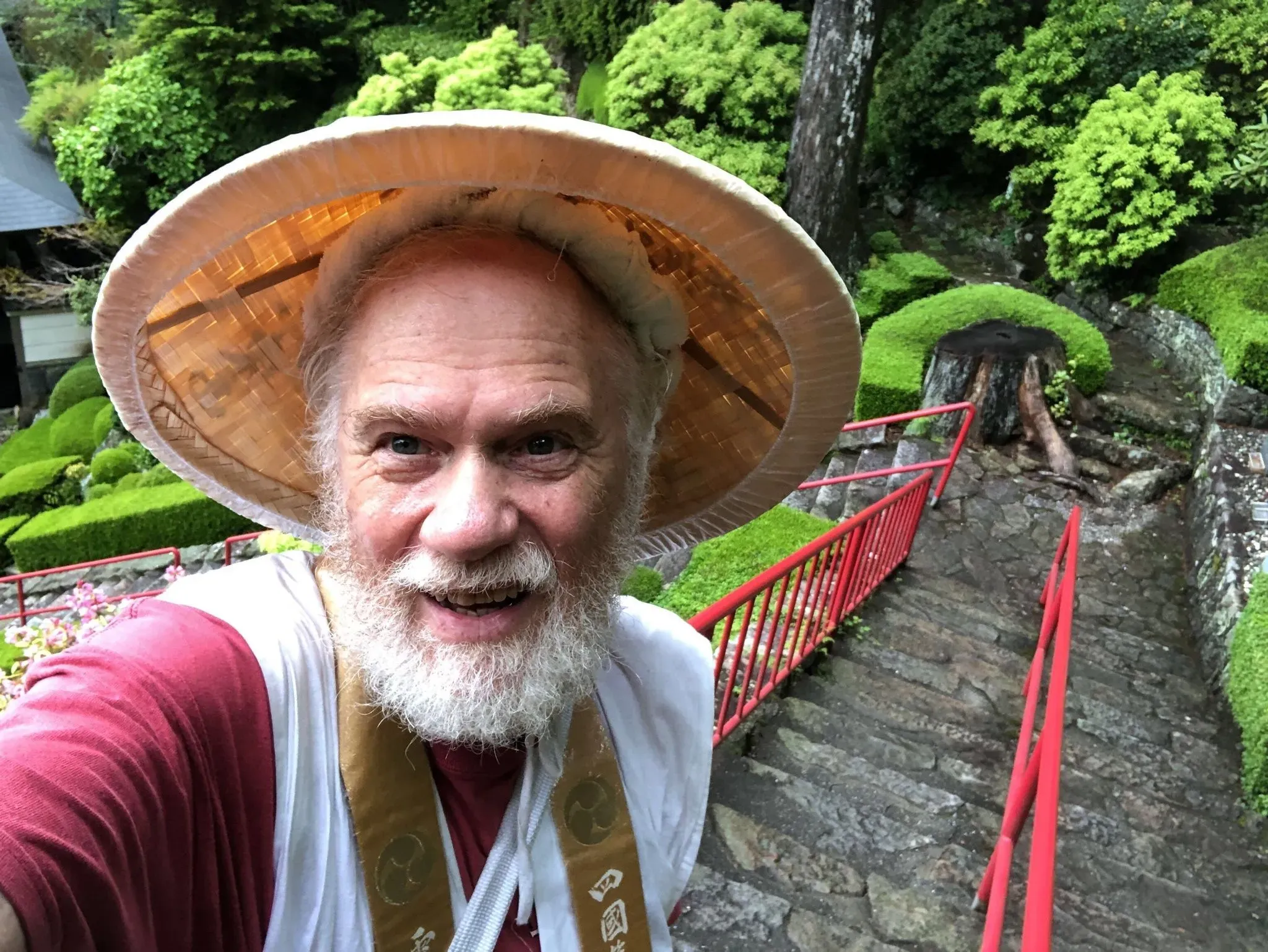
Pilgrimage of Gratitude
Join in on the sacred Shikoku 88 Pilgrimage, embracing the spirit of giving thanks and giving back. Let us follow this path together, giving thanks for all it has meant to pilgrims over the centuries. Let us help prepare the way for all the pilgrims to come.
The Shikoku 88 Pilgrimage
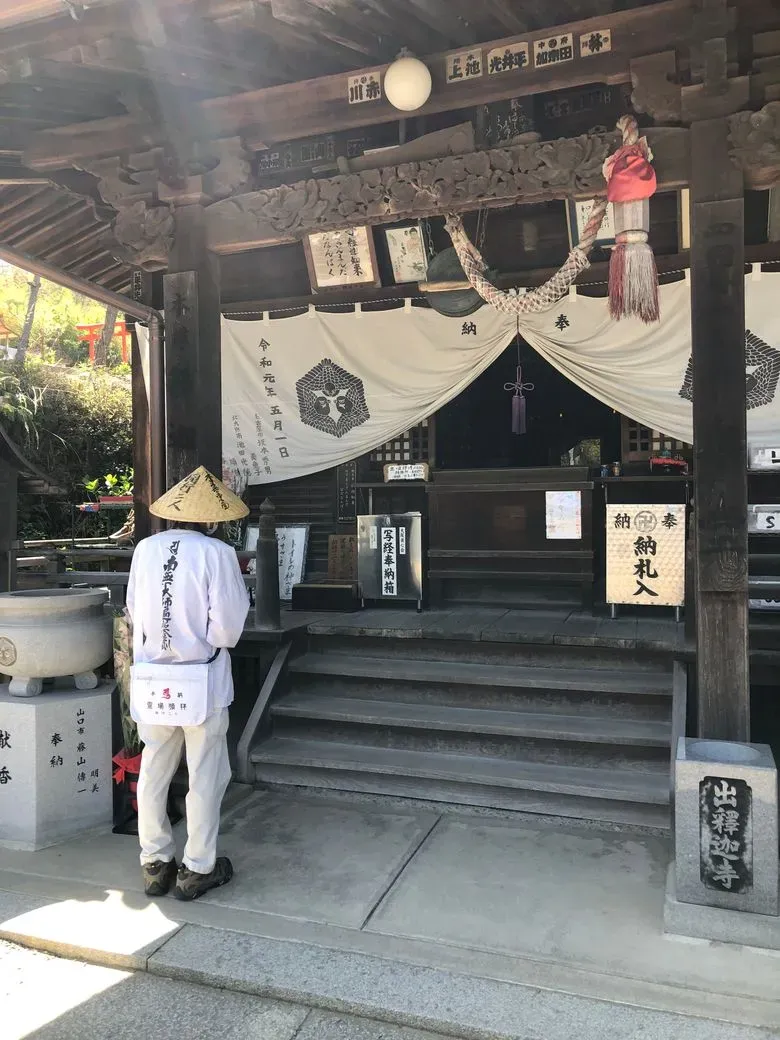
The Pilgrimage
The Shikoku Pilgrimage is many things to many people. To some it's hard training, physically and mentally. To others it's a memorial journey, to remember loved ones. Many people see it as a deep dive into Japanese culture and natural beauty.
At its core, it is a Buddhist practice performed as an act of devotion to the Buddhist priest Kukai/Kōbō Daishi. If you walk by the shortest route it's 1137.6 km and typically takes about seven weeks.
These days, few pilgrims just walk. Most go by car. Some take bus tours, public transit, or bikes. But some walk, sometimes taking a short bus or train ride. I have gone all these ways. This time I will just walk. I will stay in local inns and occasionally at temples. I'll document my journey with daily videos, as I have done many times before.
88 Temples in 100 Days
In 2026 I will walk the pilgrimage one last time, to give thanks for all who make this the experience of a lifetime and to "pay it forward" by talking with the priests, innkeepers, and all the other people who support the pilgrimage to help them prepare for the future -- a future where most pilgrims will be from outside Japan.
This is an important task. The population of Japan is decreasing, nowhere faster than on the island of Shikoku. Pilgrimage inns are closing as the owners reach their 70s, 80s, and even 90s. The local economy is suffering. But this also happened in the rural areas of northern Spain. Since the boom in Camino Santiago pilgrims, many of those villages have recovered. The villages and towns of Shikoku can also recover -- if they prepare. It all starts with the temples and the surviving pilgrim's inns. They must know how to prepare for a future where most pilgrims are from outside Japan. This is my task.
How You Can Help and Follow Along
I am raising funds to make this possible. If you contribute, you will be included in my prayers at each temple and also in the after-credits of the videos that will document this pilgrimage, during and after.
Everyone will be able to follow along, viewing daily video reports. Those who contribute financially will be able to get in touch with me quickly and ask questions as I go along. Some people may be able to walk with me part of the way.
Gallery

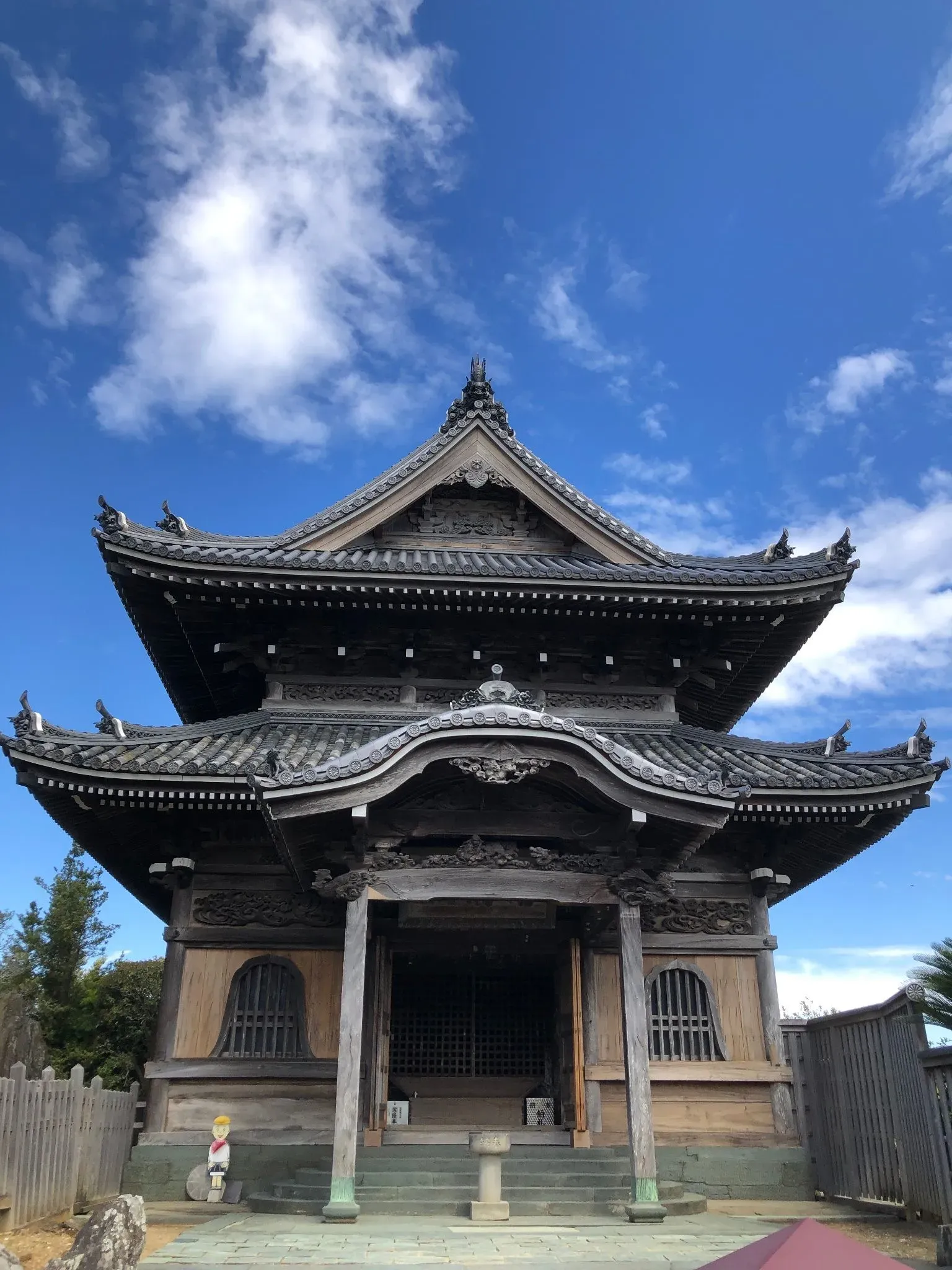
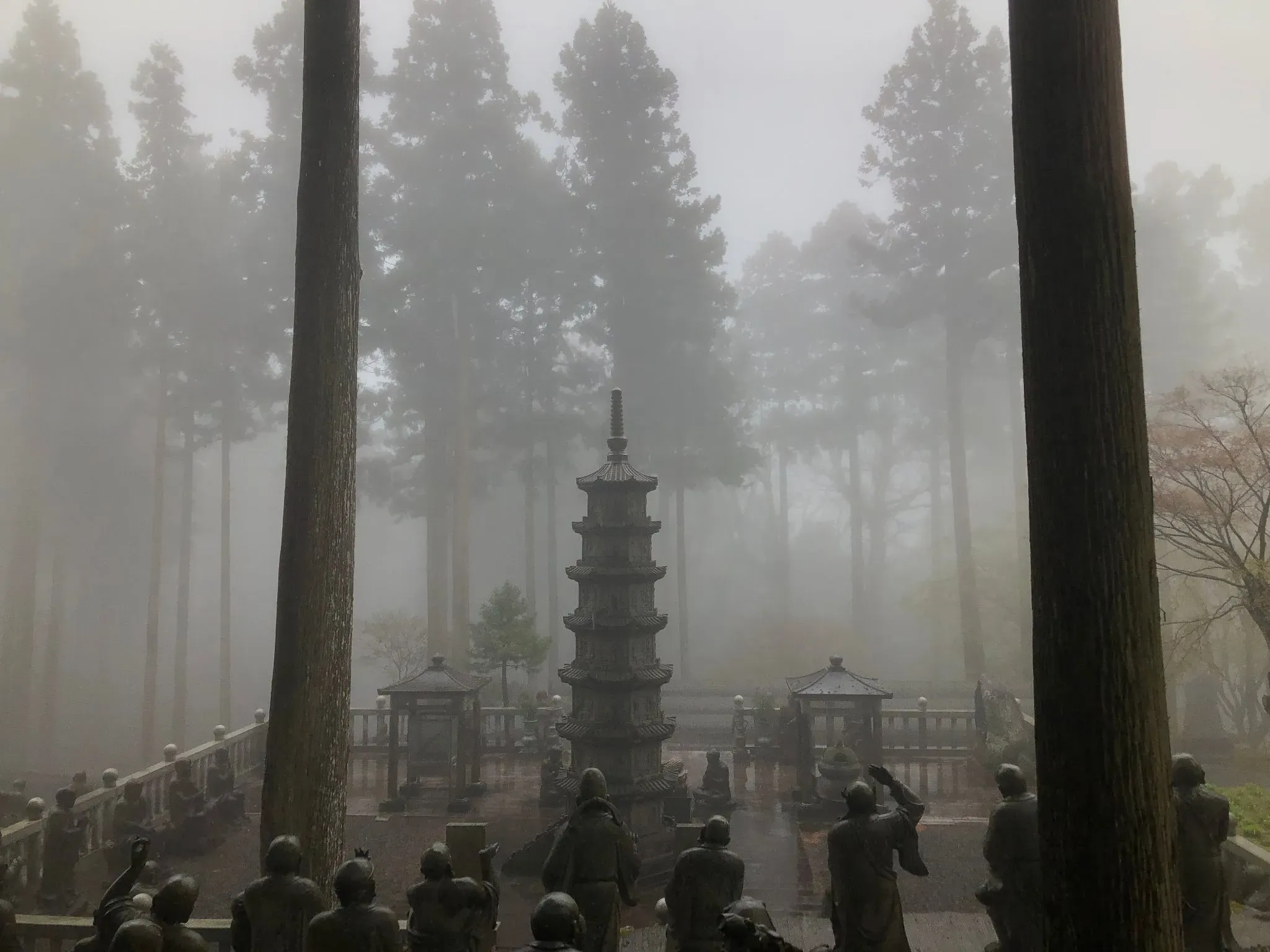
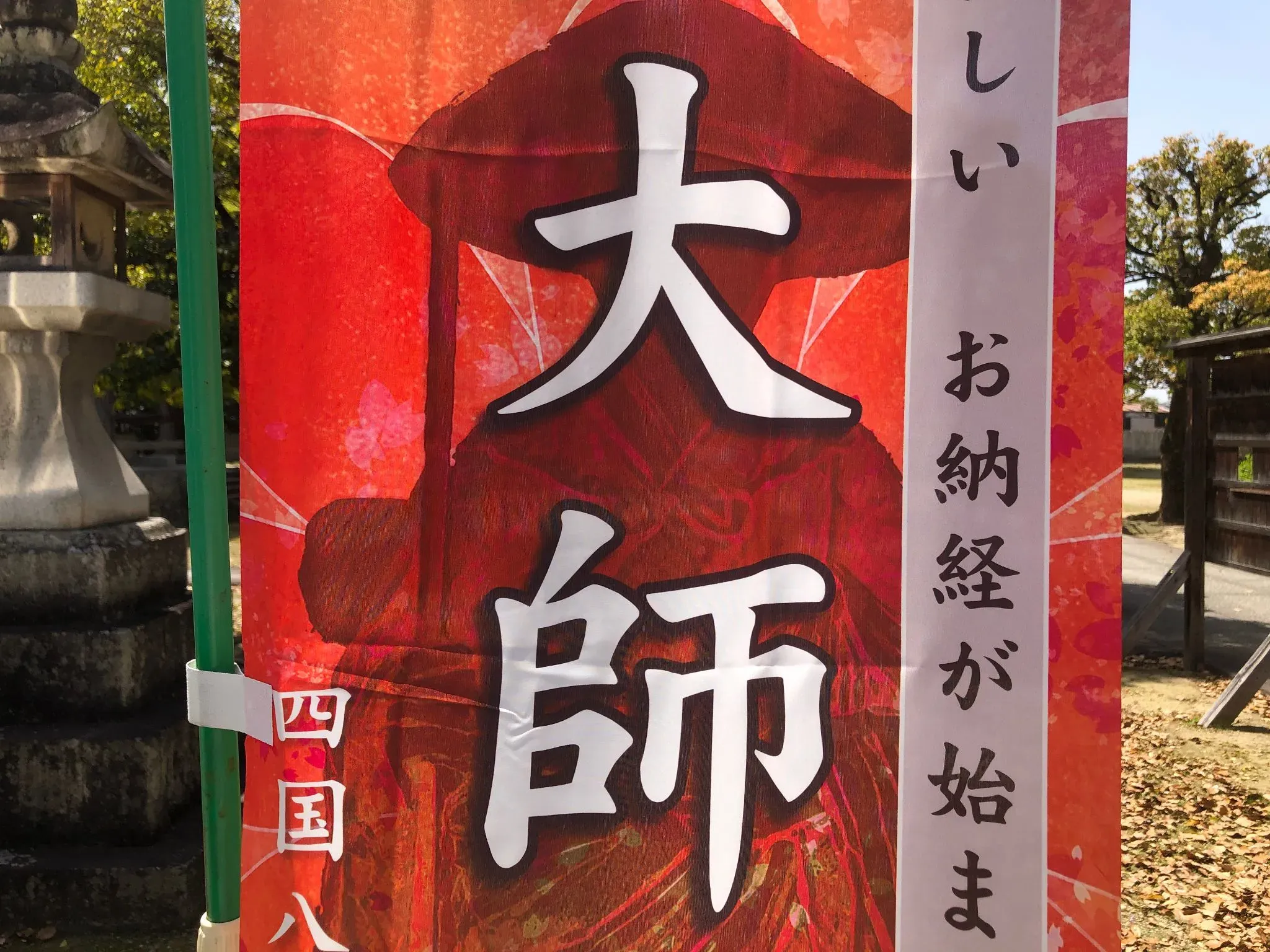
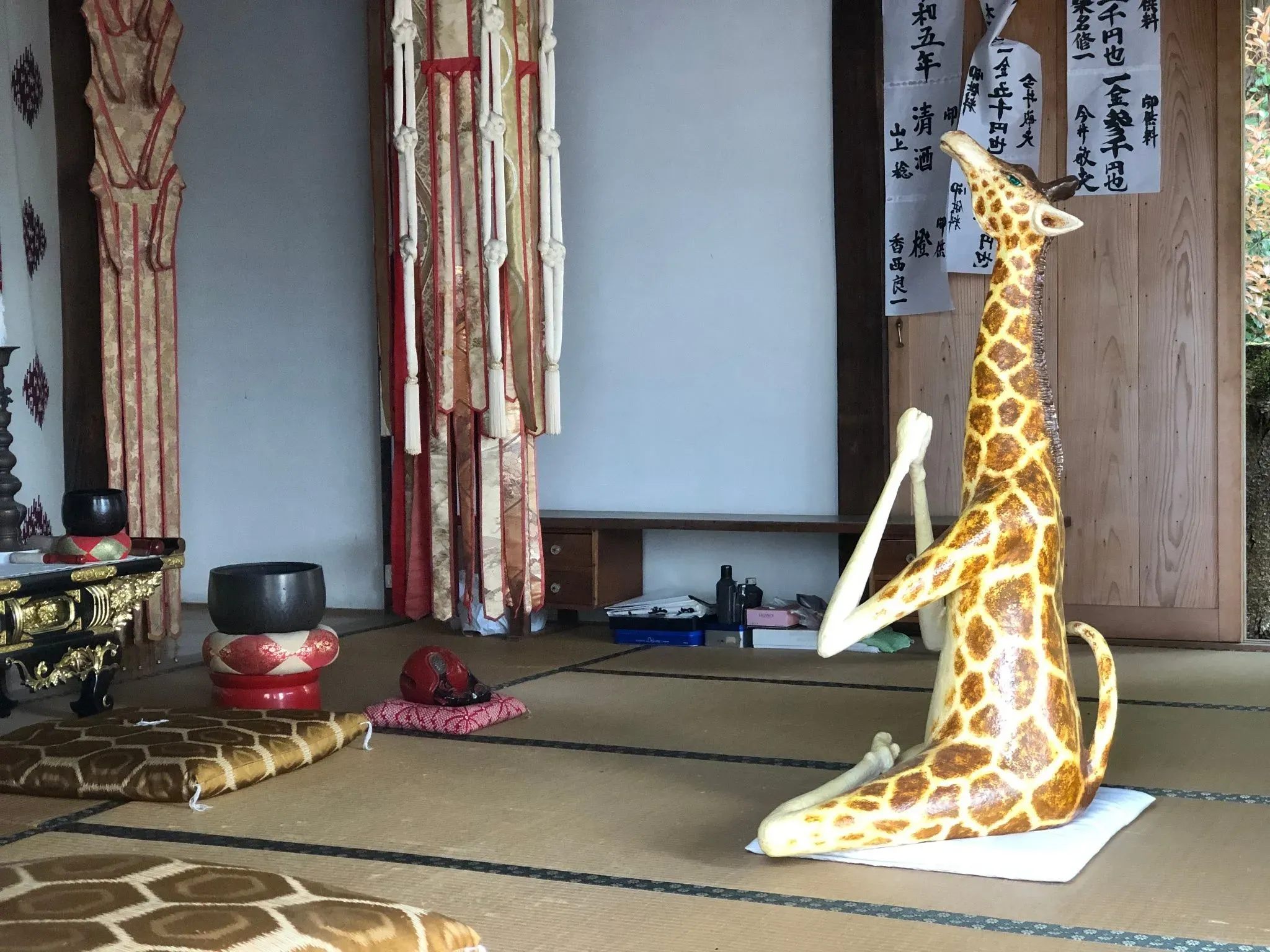
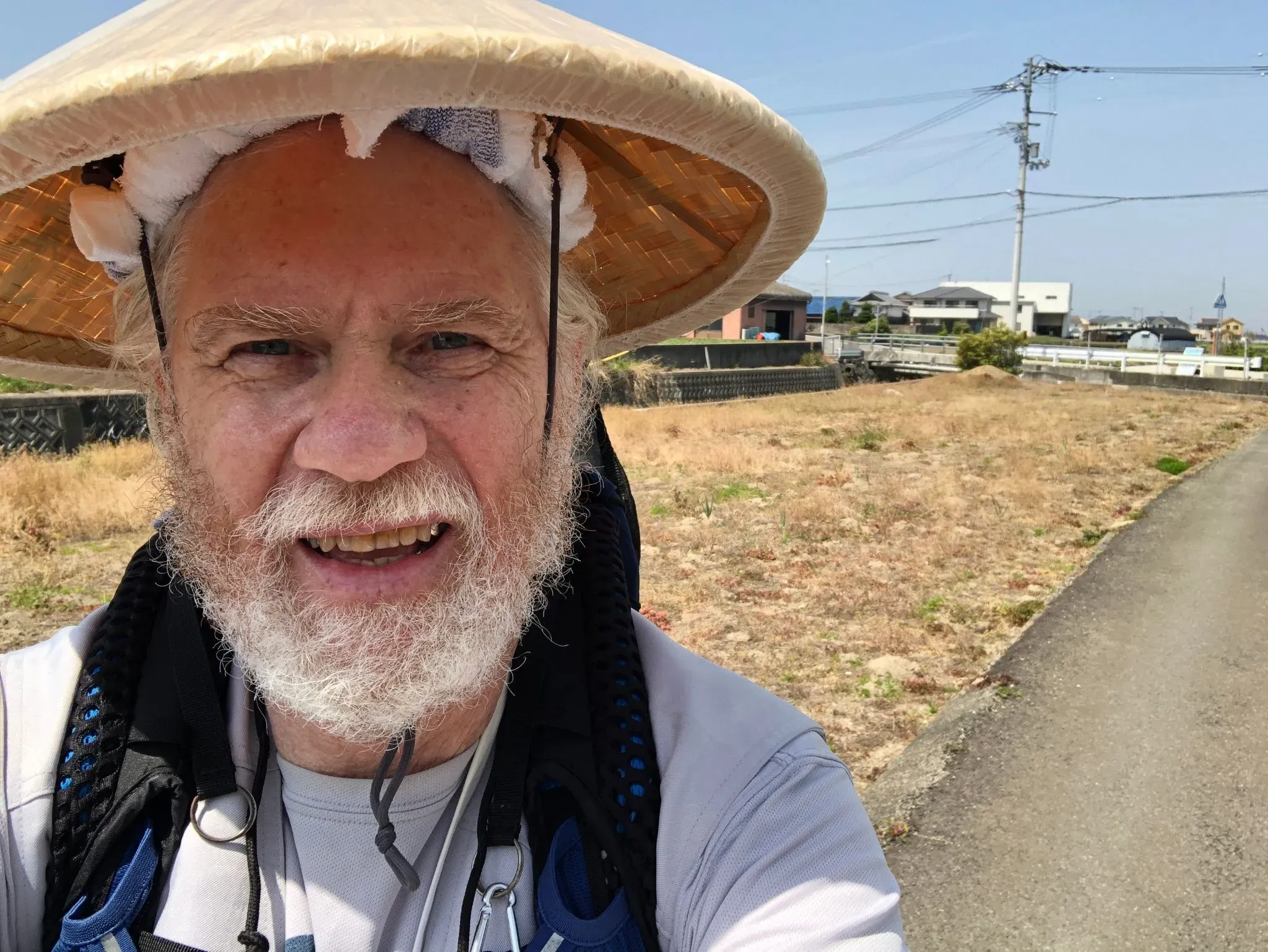
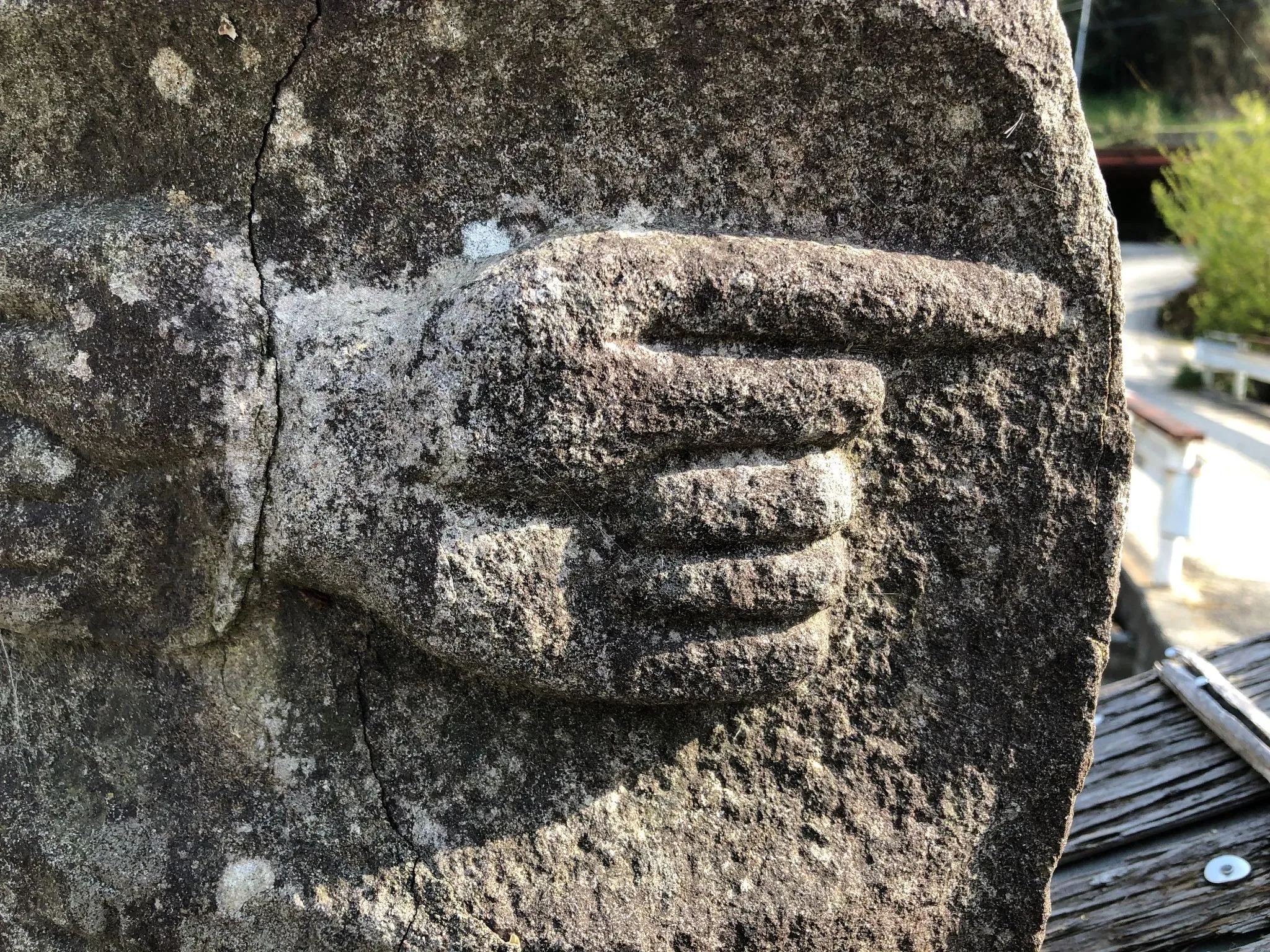

Temple Routine
When I visit the pilgrimage temples, I will go through a routine based partly on the oldest known pilgrimage routine and partly on the modern routine followed by most pilgrims. However, I will do almost all of it in English and some of it will be sung rather than chanted. Here is the routine I've sketched out. (It is definitely subject to change both before and during my walk.)
At the entrance: (1) Gasshō (2) Song for Shinnen "I Am So Thankful"
Ablutions
Name slip
Donation
Heart Sutra (sing Koei's translation)
Temple song -- sing the temple song three times. (Koei's translation)
Gohonzon shingon -- recite the mantra of the temple honzon (main deity) in Sanskrit, Japanese, and English. Sing a song of that deity, if there is one.
Kōmyō Shingon -- Mantra of Light -- in Sanskrit, Japanese, and English.
Daishi Hōgō -- Namu Daishi Henjo Kongo -- 3 times
Give thanks to those who help maintain the pilgrimage -- priests, innkeepers, trail maintainers, etc.
Give thanks to all my supporters.
Go to the Daishi-do and do a short version of this routine.
Go to the stamp office, get nokyo (temple stamp) and talk with the head priest about making Buddhism more accessible to foreign pilgrims.
Make a short video telling temple history, stories, special features, and maybe my memories of earlier visits.
About Don
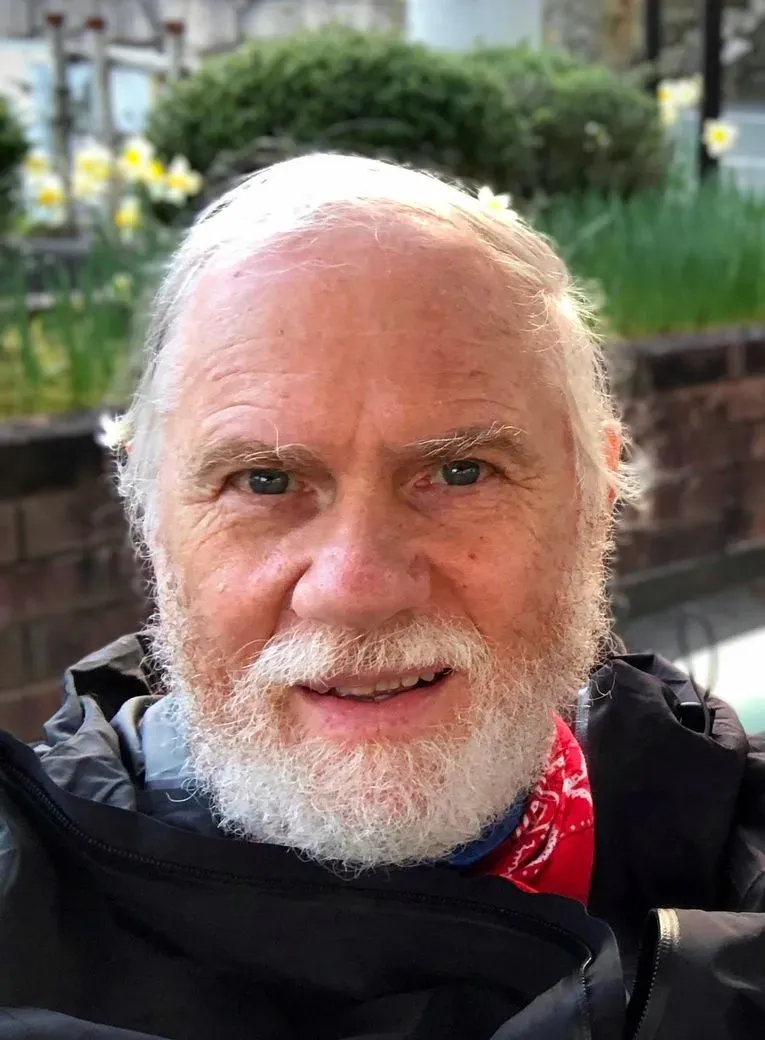
Don Weiss
I had my first taste of the pilgrimage in 1980. Since then, it has gradually taken over my life. Now, at 76, I live along the pilgrimage route and spend my days helping others have the same profound experience.
(I also bake bread and write music.)
After my two walking pilgrimages in 1993 I wrote a book , Echoes of Incense -- a very personal account of my experiences. It's no longer available in print, but you can find it on Kindle in English and also in Japanese.
Crowdfunding
My crowdfunding appeal is on GoFundMe. Please donate what you can.
[Principal supporter: OHENRO.ONLINE. https://konnichihello.com/ohenro/en/]
The Songs of the Pilgrimage
Frequently Asked Questions
Where can I learn more about the pilgrimage?
Start your research here
The best places to start your research are by looking around this website:
Reading this free ebook:
http://henro88map.com/pdf/Henro-ENG.pdf
And ordering the Route Guide (the pilgrims’ bible):
http://www.shikokuhenrotrail.com/shikoku/pilgrimagebooksGuidebooks.html#88RouteGuide
The app Henro Helper is also very useful.
When you are planning exactly where to stay, these two websites are very useful (in addition to Google Maps):
https://henroyado.com/inns?pref=tokushima
NOTE: Google Maps, etc, is useful for finding stores, restaurants, and accommodations but DO NOT trust it for navigation. The henro path has lots of mountain trails and most of them are not on Google Maps. It will lead you wrong. There are also many short trail segments in cities, towns, and rural areas that also are not on Google Maps. Follow the signs and use the Route Guide. You can supplement those with the Henro Helper app or with other apps like maps.me, organic maps, etc, as long as you have downloaded the .kmz file for the henro path and also the offline maps for that app.
What are some common misconceptions about the pilgrimage?
Nope! Nope! Nope!
Common misconceptions about the Shikoku Pilgrimage
A lot of what you read about the Shikoku Pilgrimage is wrong. This is just as true for books and magazines as it is for websites and online discussions. What you hear about it from other pilgrims is just as bad, just as likely to be wrong – or worse, only half-right, and you don't know which half.
What I tell you here is probably accurate. (Trust me! I’ve walked the pilgrimage five times, cycled most of it, driven all of it, I live in Tokushima and I spend much of my time talking about it with pilgrims and pilgrimage lovers.)
1. There is an official route that most pilgrims follow.
NOPE!
The aim of the pilgrimage is to visit 88 temples with strong connections to Kobo Daishi. There is a traditional order to visit them, but nobody really cares if you visit some out of order, do the pilgrimage in sections, drive, take the bus, walk, or cycle. The main English guidebook “Shikoku Japan 88 Route Guide” by Naoyuki Matsushita shows the shortest walking route with a number of options. Sometimes the options take you by a more scenic or more historical way. Sometimes they take you to additional temples which some pilgrims visit, but which never got a number (or got one of a different set of numbers). The main Japanese guidebook uses a different map, though both books are based on the same original guidebook, which was written almost 50 years ago by Tateki Miyazaki. In many cases, you will find that Japanese walking pilgrims often take regular car roads even when there is a marked trail which may be shorter, quieter, and more beautiful. Non-Japanese like me will sometimes take those roads (more food options, etc). You can go any way you like. There is no official route. Also, there is no rule that you have to walk all of the route, or any of it.
2. The traditional way to do the pilgrimage was to camp out or sleep in free accommodations provided by temples or by local people.
NOPE!
There have always been a few people who have done the pilgrimage this way,
More misconceptions
7. Vegetarian food is easy to find and commonly served at the temple shukubo (lodging houses).
NOPE!
A couple of the temple shukubo on the pilgrimage route serve vegetarian food, but most do not. One of the most popular temple shukubo is at Anrakuji, Temple Six. They've had a shukubo there for hundreds of years. The temple website says this about meals, “Dinner includes tempura, simmered dishes, ...” They can substitue vegetable tempura for shrimp, but the soups and sauces are almost always partly fish-based and they cannot make special substitue food for you.
8. Buddhist priests in Japan are normally vegetarians.
NOPE!
Some certainly are vegetarians, but most are not. At least, that has been my experience. I have many friends who are priests, have eaten at many temples, and have lived at a temple.
9. Women traveling alone in Japan don't get hassled by men, especially if they are wearing pilgrim’s clothes.
NOPE!
Sadly, this is not true. There have been at least three incidents I know of in the past year when foreign women walking alone have been hassled by aggressive men. In the most serious incident, a man exposed himself to a woman walking the pilgrimage solo. She reported this to the police. I don't know what happened later. You could say these incidents are statistically rare, and I've never heard of a rape or attempted rape of a pilgrim, but still...
10. You can reserve your pilgrimage accommodations online.
Yes and no
This one is part true and becoming more true every year, but there is a long way to go. For most places where pilgrims usually stay, you must phone to make a reservation. Even if the inn or hotel has a web page with a reservation function or email address, you can’t count on that working. I always try using those but perhaps half the time either they don’t work or I get incorrect information. It’s usually necessary to call. (No, WhatsApp doesn’t work either.) Many inns list a FAX number next to their phone number on the web.
How can I keep my pack really, really light?
Travel LightReally light!Lighter than that!!!
Anyone can do the Shikoku Pilgrimage with a pack weighing under 5 kg, plus whatever snacks and drinks they want for the day. Many days you don't need to carry any snacks or drinks – you can buy them along the way.
In this FAQ I’ll explain WHY you should go light, HOW you can, WHAT I carry, and what you think you need but DON’T.
WHY you should travel light
The Shikoku Pilgrimage is longer, harder, and less well-organized than other similar pilgrimage routes. It is 1137.3 km if you don’t take any detours and you never get lost. Since you will do both (trust me), assume you will travel 1200 km or more. Also, there are thousands of meters up and down (details here). If you walk the whole route, it will take 6-8 weeks.
Some trails have luggage delivery service. The Shikoku Pilgrimage does not. There is luggage delivery service in only one place, arranged by the kind-hearted owners of the inns on either side of the mountain trail to Shosanji – Temple 12. The famous takkyubin (Japanese package delivery companies) don’t have same-day service on Shikoku. You can hire a taxi to take your bag from one inn to the next, but will cost a few thousand yen each time.
Another reason you should carry everything you need with you is because, at some point during your pilgrimage, you may not make it to your planned destination due to weather, illness, injury, mental stress, or some other problem. If you have sent your bag ahead, you will be without a change of clothes. (If this happens, you MUST call your reserved lodging and let them know you won't be staying there.)
Packing light -- part 2
HOW to travel light
Traveling light is a Japanese tradition. When you see Japanese pilgrims, you may notice that their packs are smaller than the packs of most foreign pilgrims. They understand the system. The lodgings along the pilgrimage route have yukata that you can sleep in. Most Japanese will wear the yukata to dinner in the inn. You can also wear the yukata while your clothes are being washed and dried in the coin-operated washers and dryers that nearly all the inns provide. (Some are free for pilgrims – others cost 100-200 yen for the washer plus 100-200 for the dryer. A few only have washing machines.) All inns have hair dryers, soap, shampoo, small towels, and body wash. In addition, you will pass stores every day. You can replace your used-up toothpaste, sunscreen, insect repellant, etc. at any convenience store or supermarket. (Convenience stores also stock underwear, caps, gloves, and catalytic heat packets.) If you need something more, the towns have stores with shoes, pants, rain-gear, etc. You can buy a cheap umbrella (300 yen), use it for one day, and leave it at your inn for the next pilgrim. If worse comes to worst, you can order almost anything from Amazon Japan and have it delivered to an inn one or two days ahead (call and ask the inn). (Exception: People like me with very large feet can only buy shoes and socks at a few places in Japan. Amazon.jp has a very limited selection of large-size, high-quality trail runners and hiking shoes.)
What I carry
Clothing (I wash clothes every other day – it keeps my pack light)
0330 – 2 tee-shirts
0201 – lightweight knit top
0070 – undershorts
0325 – puffy (very light down jacket) in stuff sack
0059 – knit cap in cool weather, baseball-type cap in warm weather
0118 – socks (I wear Smartwool socks from REI)
0301 – rain pants (I wear them or a yukata at the inn when I wash my hiking pants)
0317 – Goretex jacket
0033 – gloves in cool weather
0050 – two bandanas (they have so many uses)
0030 – net bag for laundry (I often share a washing machine with others)
TOTAL for clothes – 1834 g
Henro goods (in a big ziplock bag)
0479 – nokyocho (stamp book)
0098 – name slips (100 name slips and two pens) (I don't carry candles or incense.)
TOTAL 0577 g
Electronics
My phone, charging cable, plug, and extra battery are always in the pockets of my vest. Sometimes I carry an iPad and other electronic items, but of course these aren’t necessary.
Medical, toiletries, repairs
0042 – towel (A few inns and temples don't provide free towels. Don't forget your towel!)
0120 – tooth care, nail clippers, etc.
0031 – bandaids and alcohol wipes
0090 – repair kit (needle and thread, strong tape, etc.)
TOTAL – 283 g
Other
I carry a lightweight cotton shoulder bag/tote bag (75 g) that I use for shopping and when I am leaving my pack behind for a day hike up a mountain, etc. This is enough because I always wear a many-pocketed vest – an important part of my pilgrimage gear.
0140 – two lightweight water bottles (sometimes empty, sometimes full)
1179 – pack
0148 – pack cover
0075 – cotton shoulder bag/tote bag
My backpack is an Osprey Exos 48 large men’s pack. I remove the “brain” from the pack. The pack weighs 1179 g. I carry at least two large plastic bags so everything in the pack stays dry even in an all-day rain. This pack is much bigger than necessary for what I carry. I use it because it is tall enough that I can keep 100% of the weight on the waist-belt – no weight at all on my shoulders. You can put a finger under the shoulder straps when I wear it.
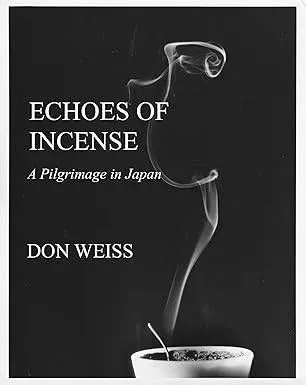
Echoes of Incense -- A Pilgrimage in Japan
In January, 1993 I set out to walk the pilgrimage twice. The first time I went alone and I walked gyaku uchi -- in reverse order. After I finished, I set out again, this time with my wife, going jun uchi -- in the regular order. I wrote a book, Echoes of Incense, A Pilgrimage in Japan. It had English and Japanese versions on facing pages. It has long been out of print, but I recently converted it to an ebook. It is available on Kindle, separately in English and in Japanese. (The price is very low.)