Exploring Science & Security
Dive into the latest insights and discoveries in Physics, Astrophysics, Geophysics, Geology, Math, and Cryptography, brought to you from Malta's 2TTLog0s expertise hub.
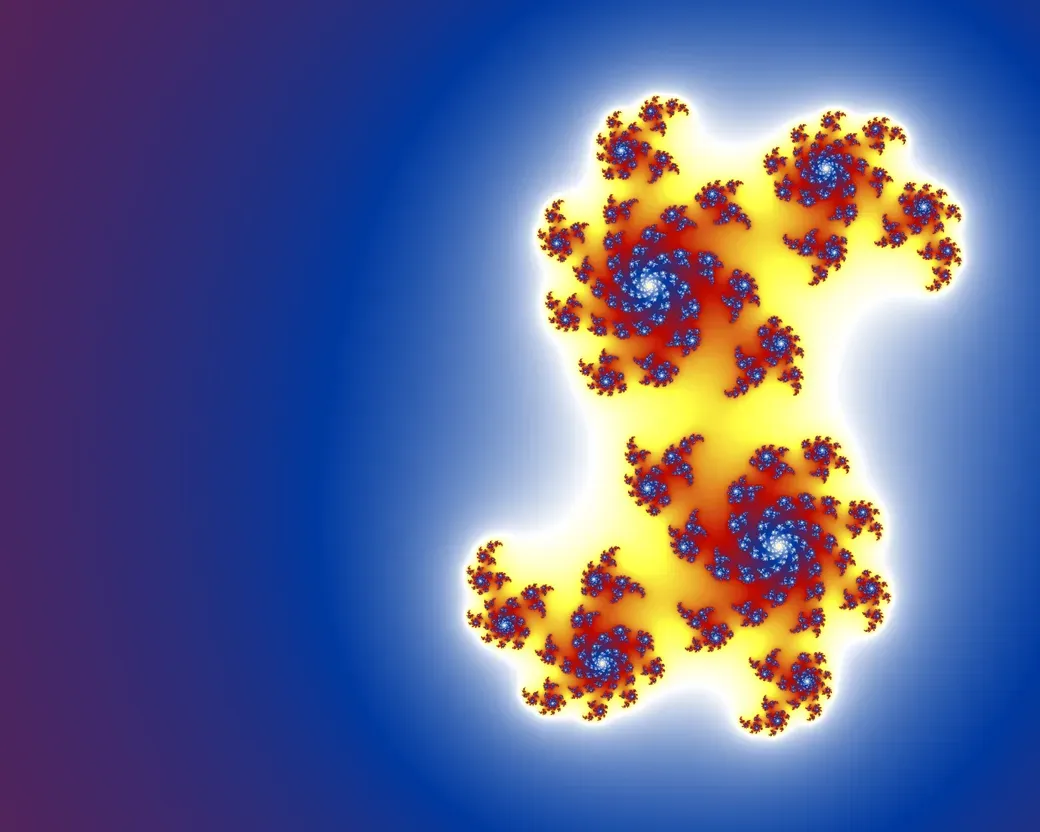

Riemann's Hypothesis (Pet Project)
The Riemann hypothesis is a conjecture in number theory stating that all non-trivial zeros of the Riemann zeta function $\zeta(s)$ have a real part equal to $1/2$. These non-trivial zeros lie within the "critical strip" where the real part is between 0 and 1, but the hypothesis asserts they all lie specifically on the "critical line" where $\text{Re}(s) = 1/2$.Mathematical Significance Prime Number Distribution: The hypothesis is central to number theory because it is deeply connected to the distribution of prime numbers, which are often referred to as the "atoms of arithmetic". Mathematical Status: It is widely considered the most important unsolved problem in pure mathematics. It was identified by David Hilbert as one of his 23 mathematical challenges for the 20th century, and it is currently one of the seven Millennium Prize Problems established by the Clay Mathematics Institute. Equivalent Statements: Numerous theorems in mathematics begin with the phrase "assuming the truth of the Riemann hypothesis," and the hypothesis is equivalent to various other mathematical statements, including specific bounds on the sum-of-divisors function and the error term in the Prime Number Theorem. Physics and the Riemann Hypothesis As you have examined in your work, Spojrzenie fizyka na hipotezę Riemanna , the problem intersects significantly with physics, particularly in areas like quantum chaos. Quantum Energy Levels: Researchers have observed striking similarities between the distribution of the Riemann zeros and the energy levels of classically chaotic systems, as described by random matrix theory. Physical Interpretations: There have been various attempts to treat the Riemann zeta function through the lens of physics, such as the Hilbert-Pólya conjecture, which posits that the zeros correspond to the eigenvalues of a self-adjoint operator (a Hamiltonian). Moments of Zeta: Methods from quantum physics, specifically using random matrix theory, have provided new ways to calculate the moments of the Riemann zeta function, a challenging task in pure mathematics. Despite extensive numerical evidence supporting the hypothesis—having been verified for the first 10 trillion zeros—a formal proof remains elusive.
Read More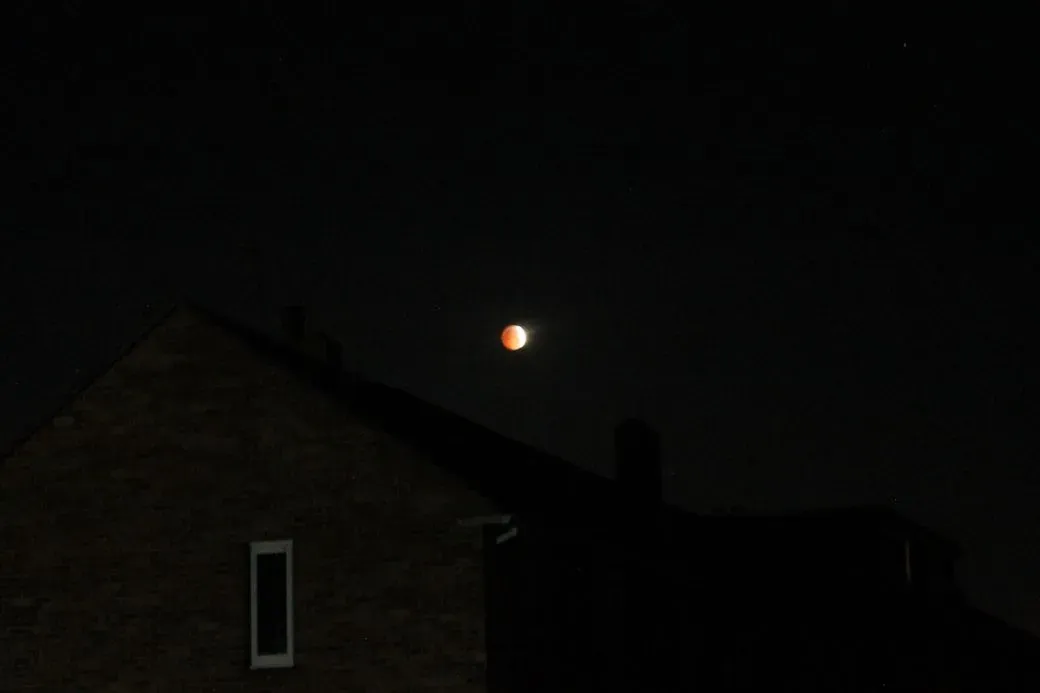
Eclipse of the Moon on 28th of August!
Lunar Eclipse: August 28, 2026 On August 28, 2026 , a partial lunar eclipse will be visible from the United Kingdom. Key Details for the UK: Type : Partial Lunar Eclipse. Visibility : The UK will have a good view of this event, as it occurs during the late evening and early morning hours. Magnitude : This eclipse will have a relatively high magnitude, meaning a significant portion of the Moon will pass through Earth's umbral shadow, turning a dark reddish-brown color. Timing (Approximate BST): Eclipse Begins: The Moon enters the penumbra (faint outer shadow) in the late evening. Partial Phase Begins: The visible darkening of the Moon begins as it enters the umbra. Maximum Eclipse: The peak occurs in the early hours of August 28th. This event precedes the highly anticipated total solar eclipse that have been occured earlier in the same month ( August 12, 2026 ), making August 2026 a significant month for stargazers in the UK. PS. Author of raw quality photo: myself at about 5 am, Havant.
Read More
Perseid meteor shower - August 2026
Perseid meteor shower (Perseids) in the UK, August 2026 Key dates • Active period: 17 July – 24 August 2026 • Peak: Overnight 12–13 August 2026 (night of Wednesday 12 August into the early hours of Thursday 13 August) The predicted maximum is around the early hours of 13 August (roughly 02:00–04:00 UT / BST, depending on the exact model). Activity builds in the nights leading up to the peak and tails off afterward. Why 2026 is excellent The peak coincides with a new Moon (on 12 August), so there is essentially no moonlight to wash out fainter meteors. Conditions are among the best in recent years. Under ideal dark skies you could see up to ~100–150 meteors per hour (zenithal hourly rate); realistic rates from good UK sites are typically lower but still impressive (dozens per hour at peak). Best viewing times in the UK • Meteors can appear after sunset on 12 August (the radiant in Perseus is always above the horizon from the UK). • Prime window: roughly midnight to 5:30 am BST on 13 August, when the sky is darkest and the radiant is higher. • Rates generally improve after midnight as Earth turns into the debris stream. How and where to watch • No special equipment needed — just your eyes. Binoculars or telescopes limit your field of view. • Find a dark location away from street lights and light pollution (rural areas, hills, coasts, national parks). Look toward a wide, unobstructed view of the sky. • Face generally north-east (toward Perseus, near the “W” of Cassiopeia), but meteors can streak anywhere. • Allow 20–30 minutes for your eyes to adapt to the dark; avoid phone screens. • Dress warmly, take a reclining chair or blanket, and be patient. Extra note A partial solar eclipse is also visible from the UK on the evening of 12 August, just before the meteor shower peak night. Check a local weather forecast closer to the date for cloud cover, as clear skies are essential. Sources such as the Royal Museums Greenwich and the BBC provide good UK-specific guidance.
Read More
Sun eclipse in Poland and UK
Beautiful Sun eclipse photos taken in Toruń, Poland by count Maciej Orzeszko (coat of arms: The Ship) and my good Friend from first, Polish geophysical company Geofizyka Toruń (mostly land surveys that times) ;). I took some photos as well locally in Havant, UK with my mirror Canon camera but most of them aren't successful and need to process/enhance them either in Linux GIMP software or Google Colab Jupyter Notebook (Python). To be continued... ;)
Read More
Planets alignment same day like Sun eclipse!
On August 12, 2026, skywatchers are treated to a six-planet alignment (often called a "planet parade") stretching across the pre-dawn sky. The event is part of an extraordinarily rare astronomical triple-header—coinciding on the exact same day with a Total Solar Eclipse and the peak of the Perseid Meteor Shower . How to View the Planetary Alignment A planetary alignment doesn't mean the planets form a straight 3D line in space. Instead, they appear arranged along the ecliptic (the Sun's apparent path across our sky) from Earth's perspective. Best Time: 30 to 60 minutes before local sunrise. Best Direction: Look toward the eastern sky, stretching upward toward the south/southwest. Planetary Lineup & Visibility Planet Visibility Viewing Tip Saturn Easiest High in the sky (in Pisces), shining with a steady golden tint. Mars Easy Moderately high in the pre-dawn sky with its signature reddish tint. Mercury Tricky Sits low on the eastern horizon; view before the dawn glare washes it out. Jupiter Challenging Extremely bright, but sits very low near the horizon—requires an unobstructed view. Uranus Optics Needed Faint; requires binoculars and a star map app to locate near Taurus. Neptune Optics Needed The dimmest planet; requires a small telescope . Why August 12, 2026 is Special August 12, 2026 features three distinct headline events back-to-back within 24 hours: The Pre-Dawn Planet Parade: The 6-planet alignment described above. The Total Solar Eclipse: Sweeping across Greenland, Iceland, and mainland Europe (notably Spain) later in the day. The Peak Perseid Meteor Shower: Thanks to the New Moon required for the solar eclipse, the night sky will be exceptionally dark—creating prime viewing conditions for up to 50–100 meteors per hour.
Read More
Sun eclipse - 12th of August 2026
A major solar eclipse will be visible from England (and the rest of the UK/Ireland) on Wednesday, 12 August 2026.0 It is a total solar eclipse along a path that crosses Greenland, the western tip of Iceland, and northern/eastern Spain (plus a tiny bit of northeastern Portugal). England and the UK lie outside the path of totality, so the view from the UK is a deep partial eclipse. This will be the deepest solar eclipse visible from the UK since the 1999 total eclipse (which was total in parts of Cornwall and Devon).4 Coverage in England / UK • Roughly 90–96% of the Sun will be covered, depending on location. • Best views (highest coverage) are in the south-west: ◦ Isles of Scilly / Hugh Town ≈ 96.4% ◦ Cornwall (Penzance, Truro, etc.) ≈ 95–96% ◦ Pembrokeshire / south-west Wales ≈ 94% • London, Manchester, Birmingham, etc. ≈ 91–92% • Northern Scotland is a bit less (around 89–91%).2 The further south-west you are, the deeper the partial eclipse. Approximate timings (British Summer Time / BST) Times vary slightly by location (earlier in the north/east, later in the south-west). All times are local: Location First contact (starts) Maximum Ends Edinburgh / Glasgow ~18:08–18:09 ~19:05–19:06 ~20:00 Manchester / Liverpool ~18:13 ~19:10 ~20:03–04 London / Bristol / Cardiff ~18:17 ~19:12–19:13 ~20:06 Truro / Cornwall ~18:18 ~19:16 ~20:10 Maximum lasts only a short time (the peak coverage is brief). The whole partial phase lasts about 1 hour 45–50 minutes.1 The Sun will be low in the western / west-northwestern sky (around 9–16° altitude at maximum, depending on location), so you need a clear, unobstructed view toward the west/north-west horizon. It occurs near sunset, which can make for dramatic views if the weather cooperates, but also means buildings, trees, or hills can easily block it. Safety Never look directly at the Sun without proper protection, even during a partial eclipse. Use certified ISO 12312-2 eclipse glasses (or a safe solar filter on binoculars/telescope). Ordinary sunglasses, home-made filters, or phone cameras are not safe. A simple pinhole projector is a safe alternative that projects the crescent shape of the Sun. Extra notes • A total solar eclipse will be visible in parts of Spain (e.g., Bilbao, Zaragoza, Valencia area, and the Balearics), Iceland, and Greenland for those willing to travel. • Later the same night the Perseid meteor shower peaks under a new (dark) Moon, so clear skies could give a double treat. • Weather is the big unknown — August in the UK is often cloudy, and historical data suggests a decent chance of cloud, especially in the north-west. The south-east statistically has a slightly better chance of clearer skies.7 For precise local times and coverage for any town, sites like timeanddate or the Royal Observatory Greenwich guides are excellent. Enjoy the show safely if the skies cooperate!
Read More
Decoding the Earth's Secrets: The Role of Mathematical Models in Geology and Geophysics
Mathematical models have become indispensable tools in geology and geophysics, enabling scientists to interpret complex data and predict natural phenomena. By applying advanced mathematical techniques, researchers can simulate earth processes such as tectonic plate movements, seismic wave propagation, and mineral formation. These models help transform raw geological data into meaningful insights, revealing patterns that are otherwise hidden beneath the surface. At 2TTLog0s, we leverage these models to enhance our understanding of Earth's dynamic systems, combining physics and mathematics to address real-world challenges. Bridging Disciplines for Innovative Solutions The integration of math, physics, and geosciences paves the way for innovative approaches in environmental monitoring and resource management. For instance, cryptographic algorithms inspired by mathematical principles are being used to secure sensitive geological data against cyber threats. Additionally, through geophysical surveys enhanced by computational models, we can better assess earthquake risks and optimize the extraction of natural resources with minimal environmental impact. This interdisciplinary synergy at 2TTLog0s not only advances scientific knowledge but also contributes to sustainable development initiatives in Malta and beyond.
Read More
Mastering Data Analysis in Geophysics: A Step-by-Step Guide
Analyzing geophysical data can be challenging, but breaking down the process into manageable steps makes it more approachable. Start by collecting high-quality data through surveys or experiments, ensuring accuracy and consistency. Next, preprocess your data to remove noise and correct any errors. This may involve filtering signals or normalizing measurements to prepare for detailed analysis. Using specialized software tools, apply mathematical models to interpret the data and extract meaningful patterns related to geological structures or physical properties. Effective Techniques for Geophysical Data Analysis Once your data is preprocessed, employ visualization methods such as contour maps or 3D modeling to better understand spatial relationships. Statistical analysis plays a crucial role in validating findings and identifying anomalies. Integrating insights from physics and geology helps contextualize results, leading to more accurate interpretations. By following these steps carefully, geophysicists can enhance their understanding of subsurface features and contribute valuable knowledge to the scientific community.
Read More
Emerging Trends in Cryptography: Preparing for Quantum Computing
The field of cryptography is rapidly evolving due to advancements in quantum computing, which pose potential risks to current encryption methods. Traditional cryptographic algorithms like RSA and ECC could become vulnerable to quantum attacks, prompting researchers to explore quantum-resistant algorithms. Organizations worldwide are investing in post-quantum cryptography to safeguard sensitive information against future threats. Staying informed about these developments is crucial for businesses and individuals relying on secure communication. Impact of Quantum Computing on Cryptography Quantum computing's ability to solve complex problems exponentially faster than classical computers challenges existing security protocols. This has accelerated the development of new cryptographic standards designed to withstand quantum decryption attempts. Collaboration between academia, industry, and government agencies is fostering innovation in this space. As these quantum-resistant algorithms mature, they will become integral to maintaining privacy and security in the digital age.
Read More
Inside 2TTLog0s: How We Integrate Physics and Math to Solve Complex Problems
At 2TTLog0s, our approach blends physics and mathematics to tackle some of the most intricate challenges in geophysics and geology. Our team leverages advanced mathematical models to simulate physical processes, enabling precise predictions and analyses. This interdisciplinary methodology allows us to create innovative solutions tailored to the unique characteristics of Malta's geological landscape. Collaboration and continuous learning are central to our work culture, driving us to refine techniques and stay at the forefront of scientific research. Behind the Scenes: Our Analytical Process We begin every project by thoroughly understanding the problem and gathering comprehensive data. Using mathematical algorithms, we develop simulations that replicate natural phenomena such as seismic activity or mineral distribution. These simulations are iteratively tested and improved based on real-world observations. Our commitment to accuracy and scientific rigor ensures that our findings support effective decision-making for clients and contribute to broader scientific knowledge.
Read More