The Project Amiatinus
Will be available open source (free)
Andrew Lehti’s journey into biblical studies did not begin with faith, but with skepticism. Once an avid atheist opposed to religion, he approached the Bible not as a believer seeking affirmation, but as a critic searching for flaws. What began as an attempt to dismantle religious claims grew into something unexpected within his reconstructions temporally viewing it with Ancient Latin eyes: scientific, and a pursuit of historical and linguistic precision, free from the distortions of denominational agendas.
Introduction to the Project Amiatinus
Andrew Lehti’s journey into biblical studies did not begin with faith, but with skepticism. Once an avid atheist opposed to religion, he approached the Bible not as a believer seeking affirmation, but as a critic searching for flaws. What began as an attempt to dismantle religious claims grew into something unexpected: a pursuit of historical and linguistic precision, free from the distortions of denominational agendas.
Over the course of more than a decade—and some 35,000 hours of study—Lehti immersed himself in ancient manuscripts, languages, and the histories of civilizations that shaped scripture. His starting point was deceptively simple: What is the name of God? This question exposed a striking fact—that the divine name had been silenced, rewritten, or forgotten across centuries. From there, inconsistencies across Bible translations pulled him deeper into the work of transcription, transliteration, and translation.
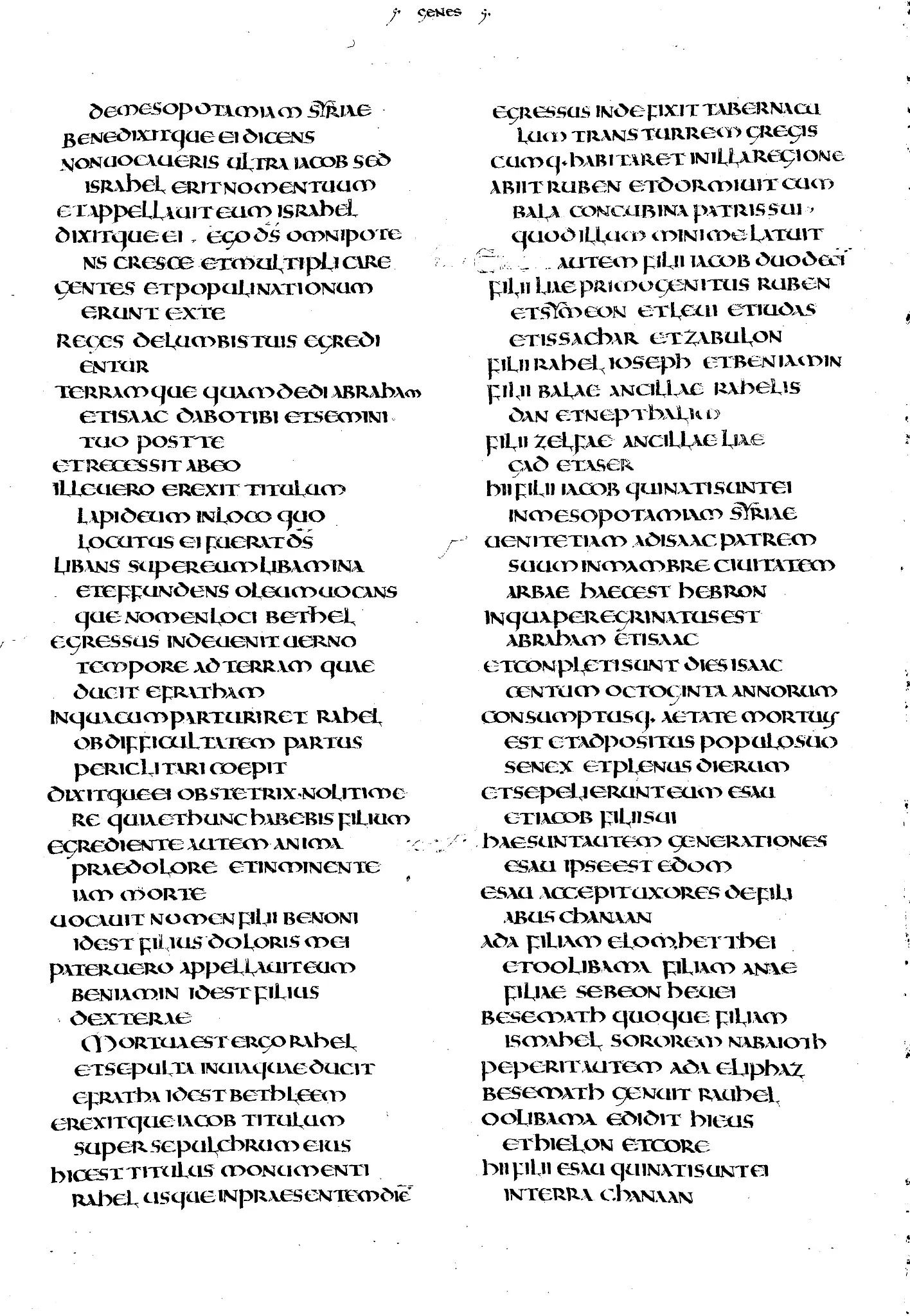
The Codex Amiatinus, a seventh-century manuscript long regarded as one of the most faithful witnesses to Jerome’s Vulgate, became the centerpiece of this investigation. Where digital “transcriptions” often failed to match the original pages, Lehti returned to the physical manuscript itself, painstakingly reconstructing verses and testing traditional readings against linguistic evidence. This process revealed startling mistranslations: for instance, passages historically used to condemn homosexuality actually targeted pedophilia. Latin diminutives such as masculus (a young boy) had been flattened into “male,” erasing critical distinctions preserved in Hebrew (ish vs. zachar) and Greek (arsen). Similar distortions were uncovered in German translations, where “Knaben” (boys) quietly shifted into “Mann” (men) in the twentieth century.
Beyond single verses, Lehti tracked patterns of omission across canons: six chapters of Esther and two of Daniel disappeared in parallel from Jewish, Catholic, and Protestant Bibles, despite being present in earlier sources. Such alignments suggested not accidental error but deliberate harmonization across traditions—acts that rewrote Israel’s divine chosenness and reshaped theology to suit imperial priorities.
This project is not fueled by belief, nor by a desire to defend or attack faith. As Lehti emphasizes, he does not believe in the Bible’s divine claims, and thus has no reason to smuggle doctrine into his work. His commitment is to precision, truth, and transparency. By integrating history, linguistics, cognitive psychology, and manuscript analysis, Project Amiatinus seeks to recover the Bible as it was understood 1,500 to 2,000 years ago—before centuries of dogma and cultural bias calcified its interpretation.
The Bible itself warns of corruption, distortion, and false teachers. Yet the evidence shows that corruption often took the form not of moral failure alone, but of scribal decisions, canonical reshaping, and semantic drift. This work argues that fidelity requires more than repeating tradition: it requires the courage to confront where words have been bent, meanings obscured, and truths lost.
Project Amiatinus is not about tearing down scripture, nor about defending it. It is about restoring clarity where confusion has reigned, and about reexamining sacred texts with the tools of scholarship rather than the chains of creed. Its guiding principle is both simple and radical: precision for truth.
Questions on the Amiatinus Project
Can I access the restored texts from Project Amiatinus?
No, not at the moment, though, it will be made available in the near future.
Who is Andrew Lehti?
Andrew Lehti is a Polymath Autodidact, and is the founder of Project Amiatinus. He began the project as an atheist, aiming to test whether the Bible contained distortions, while on his journey to reconstruct or verify parts of history. Over more than 35,000 hours of study between interdisciplinary fields, he immersed himself in ancient languages, manuscripts, and comparative analysis across traditions.
Why does Project Amiatinus focus on translations from Latin, Hebrew, and Greek?
These are the original languages of the Bible texts. Project Amiatinus studies these languages closely to preserve critical distinctions that are often lost, discarded, or merged in modern translations.
Is Project Amiatinus attempting to promote or attack any religion?
No, the project does not aim to promote or attack any faith. It seeks truth and precision in biblical texts, free from denominational bias.
What are some examples of mistranslations found?
One example is the Latin word masculus, meaning 'young boy,' which was translated simply as 'male,' erasing important distinctions also preserved in Hebrew and Greek texts. Andrew Lehti has written nearly 100 pages of text on just this single word: which includes his evidence, documentation, and reconstructions. This word is extremely important for a few stories within the bible which causes it to become far more logical than ever.
What kind of distortions has Project Amiatinus uncovered in the Bible?
Project Amiatinus has found mistranslations and omissions, such as verses historically interpreted against homosexuality actually condemning pedophilia, and missing chapters in Esther and Daniel across various Bible versions, suggesting intentional theological edits.
How does Project Amiatinus differ from traditional Bible studies?
Unlike traditional studies influenced by theological perspectives, Project Amiatinus uses extensive manuscript comparison and linguistic analysis to restore the Bible as it was understood 1,500 to 2,000 years ago.
What is Project Amiatinus?
Project Amiatinus is an initiative started by Andrew Lehti focusing on studying and restoring the Bible based on ancient manuscripts, especially the Codex Amiatinus, to reveal its original meaning free of later doctrinal alterations.
How can I support or get involved with Project Amiatinus?
You can support Project Amiatinus by staying updated on the project, sharing its findings, and participating in discussions aimed at exploring biblical history and textual accuracy.
What chapters are missing in many Bible versions according to Project Amiatinus?
Whole chapters of Esther and Daniel are missing in parallel across Jewish, Catholic, and Protestant Bibles, likely due to theological alignment rather than chance errors.
What is the Codex Amiatinus and why is it important?
The Codex Amiatinus is an ancient manuscript of the Vulgate Bible, praised for its faithful translation of Hebrew texts before the corruption of the Holy Roman Empire. It serves as the primary source in Project Amiatinus' efforts to restore the Bible to its original text.

Why Choose the Amiatinus, a Latin Codex, Instead of the Hebrew or Greek Codices?
Biblical translation and textual transmission are not a simple process of preserving an original text. If you knew the history, you’d recognize that the Hebrew text is heavily compromised, much like the later Vulgate editions. To claim Hebrew as the original is misleading and oversimplified. St. Jerome’s work with the Hebrew, which took him years, was hailed as a perfect translation at the time. However, the Hebrew text and translations were changed after Catholic interpretation.
The language itself was decimated, and most of their holy manuscripts were burned by the Holy Roman Empire. The Amiatinus is the only book that did not suffer the corruption of the Roman Empire, their crusades, their inquisitions, and their ethnic cleansing of Judea, which happened after 70 CE when the Roman Empire destroyed the Second Temple. The oldest and most complete living manuscript is from the 12th century.
The Hebrew language itself suffered repeated ruptures: temple destruction (70 CE), dispersal, book burnings under the Holy Roman Empire, and the decline of Hebrew as a living language. Earlier fragments, like the Dead Sea Scrolls (3rd century BCE-1st century CE), have similarities and variations from the MT (Masoretic Text), the Septuagint (Greek translation, 3rd–2nd century BCE), and the Samaritan Pentateuch. Many argue that Jerome had access to Hebrew manuscripts closer to what the Dead Sea Scrolls later revealed. Jewish communities preserved Scripture mostly through oral tradition, which, as you know, is already heavily faulty.
This isn't a simple "Oh, this is the right one." It involves heavy reconstruction. By Jerome’s time (4th century CE), the “Hebrew” he accessed was likely closer to what we see in the Dead Sea Scrolls than the medieval MT, but already fragmented and shifting. Jerome spent over a decade with Hebrew manuscripts and Jewish teachers. His Vulgate was considered definitive in his day because it was the first to attempt a Hebrew-directed Latin translation rather than relying on the Septuagint.
Later Catholic editors revised Jerome’s work to fit doctrinal interpretation, smoothing or outright altering parts. Many of these changes made it into the Hebrew bible. The words which Latin changed the definitions of, also were changed in the Hebrew texts. The sheer size of the Holy Roman Empire, the lengths they would go to is nothing surprising.
So, the Vulgate we inherit is not identical to Jerome’s own. The Amiatinus is the earliest and only complete of the various Vulgate translations; yet, until I completed a transcription of it a few years ago, it lacked any transcriptions. There are still none that aren't combining the new Vulgate texts. Compared to even surviving Hebrew manuscripts, Amiatinus is more likely to have kept the readings that were more authentic to pre-Roman or pre-Rabbinic traditions.
So long as we are temporally translating. Just like how words such as "gay" used to mean something else, there are many words in Latin that used to mean something else. Latin has many different versions throughout its 2000 year history.
In-depth Manuscript Analysis
Project Amiatinus, initiated by Andrew Lehti, represents a monumental scholarly endeavor to re-examine the Bible through a lens free from religious bias. With over 35,000 hours devoted to scholarly academic works; he includes transliteration, and translation of ancient manuscripts—most notably the Codex Amiatinus—this project stands apart in its rigorous approach to uncovering the original meanings embedded within biblical texts. The Codex Amiatinus is renowned as a faithful representation of the Vulgate, providing a critical foundation for accurate biblical scholarship.
Revealing Hidden Mistranslations and Their Implications
The research conducted by Project Amiatinus has brought to light significant mistranslations that have historically altered the Bible’s messages. For instance, verses traditionally used to condemn homosexuality were found to originally address pedophilia, with the Latin term "masculus" (young boy) inaccurately generalized to "male," erasing crucial distinctions also present in Hebrew and Greek. Additionally, the project identified the synchronized omission of entire chapters from Esther and Daniel across Jewish, Catholic, and Protestant Bibles, suggesting theological motives behind these omissions rather than mere errors. This meticulous scholarship challenges long-held interpretations and invites a reevaluation of biblical texts based on historical accuracy.
A Commitment to Truth Beyond Denominational Lines
Unlike faith-based or polemical approaches, Project Amiatinus is anchored in the pursuit of truth, aiming to restore the Bible as it was understood 1,500 to 2,000 years ago. By stripping away centuries of doctrinal editing, it seeks to present an unvarnished historical text, free from the biases of any particular religious tradition. This dedication to precision and transparency makes Project Amiatinus a unique and authoritative resource for scholars, theologians, and anyone interested in the authentic origins of biblical scripture.