Holiday Gift Drive Labeling and Check-In Guide
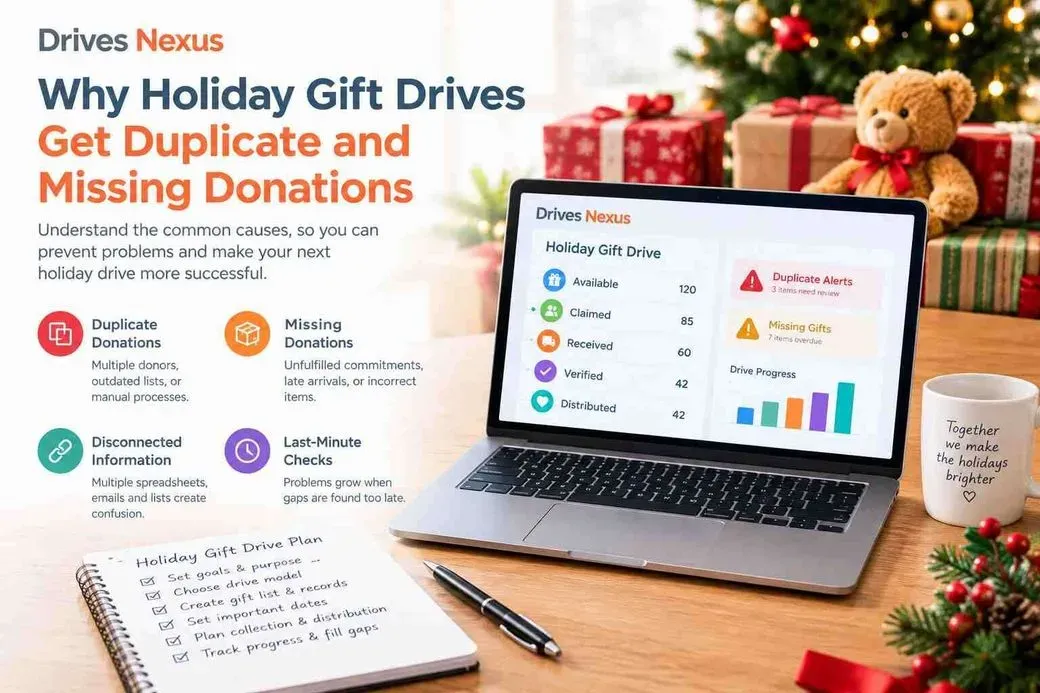
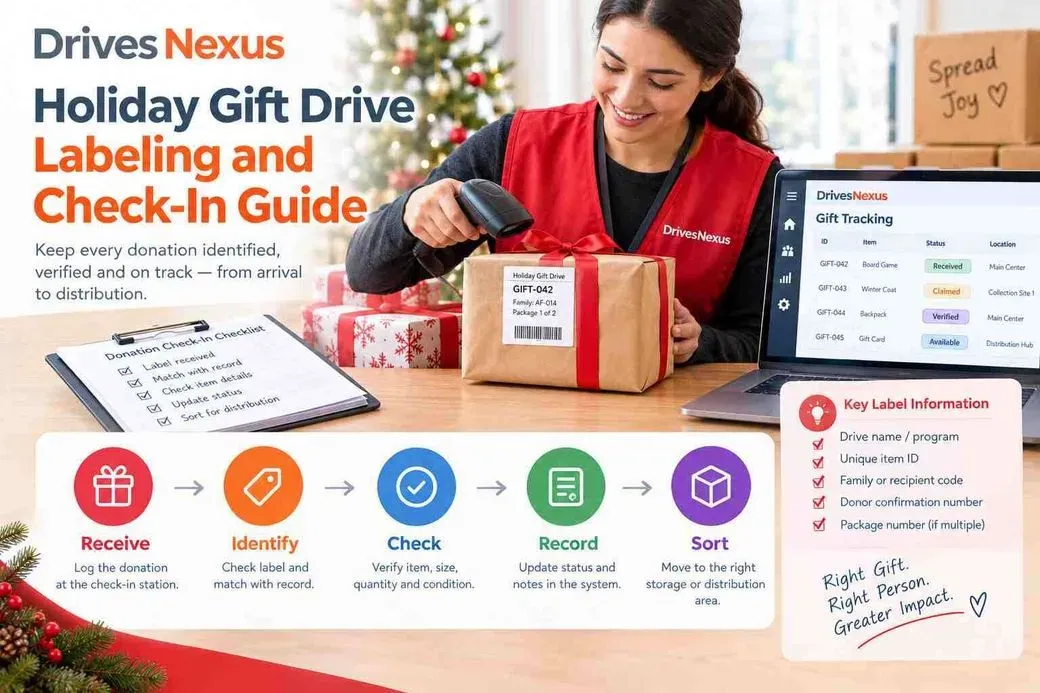
A holiday gift drive does not end when donors purchase or deliver their gifts. Nonprofits also need a reliable way to identify each donation, confirm that it matches the original request, and move it to the correct storage or distribution area. Without a consistent check-in process, a gift may arrive without a label, get recorded against the wrong request, or become separated from the recipient it was intended to support. These problems can create extra work for volunteers and make final distribution more difficult. A clear holiday gift drive labeling and check-in process helps teams keep physical donations connected to their records from arrival through distribution. Why Gift Labels Matter During a busy holiday drive, volunteers may receive many similar items in a short period. Several coats may have the same color, multiple boxes may contain toys, and one family may receive several separate packages. A general description such as “winter coat” or “toy box” may not be enough to identify the correct donation. Each gift should have a label or identifier that connects it to the appropriate gift record. This helps volunteers confirm what arrived without relying on memory, handwritten notes, or separate email conversations. 1. Establish a Standard Label Format Decide what information every gift label should contain before the drive begins. The exact fields will depend on how the organization manages its gifts. A label may include: Holiday drive or program name Unique item or gift ID Family or recipient code, where applicable Donor confirmation number Package number for multiple packages For example: Holiday Gift Drive | Item GIFT-042 | Family AF-014 | Package 1 of 2 Use fictional examples in public instructions and avoid putting unnecessary personal information on labels. If a donation contains multiple packages, number them consistently. A label showing “Package 1 of 2” helps volunteers recognize that another package may still be outstanding. 2. Match Every Gift to Its Record When a donation arrives, volunteers should compare its label with the current gift record. The record should help answer three questions: Which gift was expected? Does the delivered item match that requirement? Where should the gift go next? A unique ID is more reliable than matching items by description alone. If a label is missing or the identifier cannot be matched, do not guess the intended recipient. Set the item aside in a designated holding area and record it as an unmatched donation until the team can identify it. 3. Create a Consistent Check-In Station A designated check-in station gives volunteers one clear place to process incoming donations. A practical workflow is: Receive → Identify → Check → Record → Sort First, receive the gift and locate its label or confirmation information. Next, match it with the expected record. Check the item, size, quantity, and condition as required by the program. Record the arrival and any problems, then move the donation to the appropriate staging area. This process should be followed even when several gifts arrive together. A box being delivered does not automatically prove that every item expected inside has arrived. 4. Separate Received Gifts From Verified Gifts A gift may physically arrive but still require further checking. For example, a nonprofit may receive a winter coat that has the wrong size or a toy that does not match the requested item. The donation has arrived, but it may not satisfy the original need. Keep the stages distinct: Received: The physical gift has arrived. Verified: The gift has been checked and meets the requirement. Exception: The gift is unidentified, incorrect, damaged, incomplete, or otherwise needs attention. The exact status names can vary, but volunteers and staff should understand what each one means. 5. Handle Unlabeled or Incorrect Donations Carefully Not every donation will arrive exactly as expected. Some may have missing labels, unclear descriptions, incorrect sizes, or damaged packaging. Create a simple exception process rather than allowing these items to enter the main sorting area without identification. For each exception: Record what physically arrived. Note the date and collection location. Keep any available donor or confirmation information. Place the gift in a designated holding area. Assign someone to resolve the issue. Update the record once the item has been identified or a decision has been made. This prevents unresolved donations from becoming mixed with gifts that are already verified and ready for distribution. 6. Use the Same Process at Every Collection Location Multiple collection locations can make holiday gift drives more convenient for donors, but they also introduce additional handoffs. Every location should use the same labeling instructions, check-in steps, and reporting process. Assign a coordinator to each site and establish how often records must be updated. When gifts move from a partner location to a central facility, record the transfer. Include what was transferred, where it came from, where it went, and who handled the handoff. Otherwise, a donation may appear missing at one location even though it has already been delivered to another. 7. Keep Digital Records and Physical Gifts Aligned Labels are most useful when they correspond to one current gift record. When a Holiday donation arrives, update its status rather than leaving the team to reconcile it later from memory. If an item has been received but still needs verification, make that visible so another volunteer does not assume it is ready for distribution. For larger drives, this becomes particularly important when multiple volunteers update records or hundreds of individual gifts must remain connected to specific recipients. A spreadsheet may be sufficient for a small drive with simple needs and one collection location. More complex programs may benefit from a connected donation-drive management process that keeps gift records and status updates organized. Drives Nexus helps nonprofit teams organize donation-drive needs and track what donors have selected, what has arrived, and what still requires attention. Final Check-In Checklist Before moving gifts to the sorting or distribution area, confirm that: Every identifiable gift has the correct label or identifier. The item matches its expected record. Quantity, size, and condition have been checked where required. The arrival has been recorded. Incorrect or unmatched donations are separated and logged. Multi-package deliveries have been reconciled. Transfers between collection locations are recorded. Verified gifts are placed in the correct staging area. A consistent check-in process gives nonprofit teams a clearer picture of what they actually have—not just what donors promised to provide. Frequently Asked Questions What should be written on a holiday gift label? Use the information needed to identify and route the donation, such as the drive name, unique gift ID, recipient or family code where applicable, confirmation number, and package number. Should every gift have a unique ID? For exact-item drives, a unique identifier helps connect the requested item with its donor selection, physical label, check-in record, and distribution process. What should volunteers do with an unlabeled gift? Place it in a designated holding area, record the available details, and assign someone to identify it before connecting it to a recipient or gift request. Is receiving a gift the same as verifying it? No. Receiving confirms that the physical item has arrived. Verification checks whether it matches the requirement and is suitable for the intended use. How should nonprofits handle donations from multiple locations? Use consistent labeling and check-in instructions at every site, assign a location coordinator, and record transfers so gifts are not lost or counted twice.