Top Technology Trends & Latest News

Stay updated with the latest technology trends, breaking tech news, emerging innovations, and industry insights shaping the future of digital transformation and business.

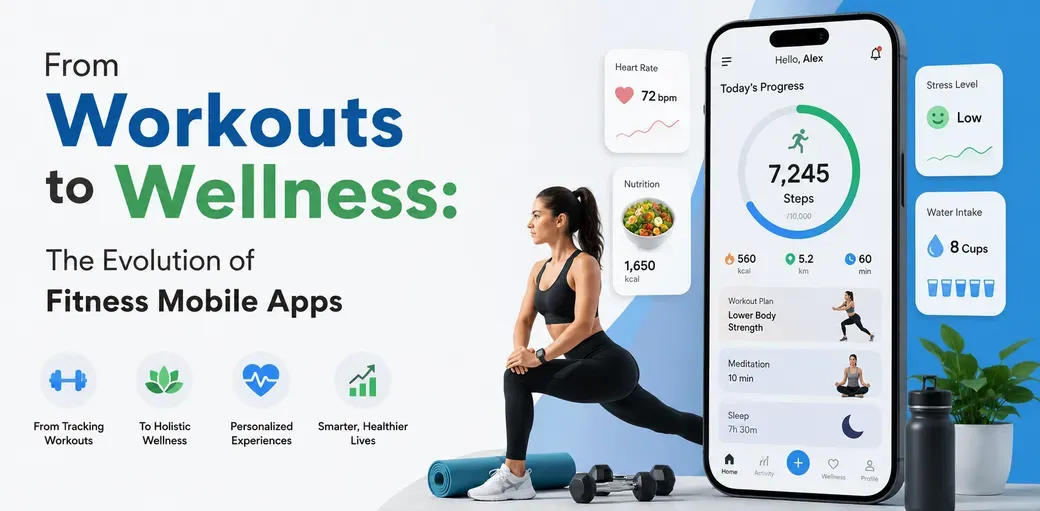
From Workouts to Wellness: The Evolution of Fitness Mobile Apps

Fitness mobile applications have changed greatly throughout the decade. Simple step counters, workouts, or calorie calculators have turned into advanced fitness technologies that help users take care of their body and mind at once. Today’s customers no longer need applications that would simply notify them about the number of calories they lost during exercise. Instead, they expect from fitness technologies individual training programs, nutrition advice, sleep tips, stress reduction techniques, wearable technology integration, progress tracking, virtual coaching, and useful health suggestions all at once. This shift in the development of fitness applications provides numerous possibilities for gyms, fitness brands, personal trainers, health care organizations, wellness companies, and entrepreneurs. It allows businesses to leverage mobile technology and provide their services not only in a fitness center but to users anywhere and anytime. The change in the development of fitness applications also demonstrates the change in consumer behavior. Fitness has become a part of a healthy lifestyle for consumers and not just an additional activity. Thanks to the intelligence and connectivity of today’s technology, fitness applications become more and more wellness-based ecosystems that include training, nutrition, recovery, behavioral and preventive health. From Basic Workout Trackers to Digital Wellness Platforms Fitness apps at their early stage were oriented mostly at activities of each person. One could record exercise, count reps, run miles, and measure the number of burnt calories. Such apps were rather helpful but their functionality remained rather primitive since it was aimed only at the activity tracking. With the development of smartphones and wearable devices, the amount of data gathered by fitness applications increased dramatically. Information about heart rate, sleeping time, number of steps, workout intensity, calories, and other factors could be constantly collected. This gave a chance to give a user not just numbers but also some analysis of his actions and behavior. Depending on goals and personal characteristics, such platform could offer some recommendations to its user. Thus, it could recognize that a person exercised intensively during several days and recommend some rest. If another person did nothing, he might be recommended some simple workout. Understanding individual wellness instead of tracking activities became one of the most crucial stages in the development of fitness applications. 1. Personalized Workouts Have Become the New Standard The first-generation fitness apps often offered similar exercise regimens for all of their users. Newer applications will tend to offer personalized programs, taking into account the characteristics of each user. Users can input their age, weight, experience, preferred types of workouts, availability of equipment, goals of exercising, and workout duration time. This way, the app will be able to suggest suitable exercises to the user. Personalization can continue even after the initial onboarding process. For instance, if the app notices that the user completes only some kinds of workout but not others, the next set of suggestions can be adjusted. This allows offering more flexible options and giving users a feeling that the app adapts to them rather than just offering a set of exercises. 2. Fitness Apps Now Cover More Than Exercise One of the biggest changes in the fitness industry is the expansion from workout tracking to complete wellness management. Modern applications can combine several areas, including Workout planning Nutrition tracking Sleep monitoring Meditation Stress management Hydration tracking Weight management Recovery monitoring Activity tracking Goal management This broader approach recognizes that fitness results are influenced by multiple lifestyle factors. A user may exercise consistently but still struggle to reach their goals because of poor nutrition, inadequate sleep, or insufficient recovery. By bringing these elements together, wellness applications can provide users with a more complete understanding of their lifestyle. 3. Wearable Devices Have Changed Fitness Tracking Wearable technology has played a major role in the development of modern fitness applications. Smartwatches, fitness bands, heart-rate monitors, and other connected devices can continuously collect information throughout the day. Fitness applications can use this data to provide more accurate insights into activity levels and exercise performance. For example, wearable integration can provide information about: Heart rate Steps Calories burned Distance traveled Exercise duration Sleep patterns Workout intensity Resting heart rate Instead of requiring users to manually enter every activity, connected devices can automatically transfer information to the application. This reduces friction and allows users to monitor their progress with greater consistency. 4. Artificial Intelligence Is Making Fitness More Intelligent AI is expected to become a vital technology in the future generation of fitness apps. An AI algorithm can process huge amounts of data from users and detect any patterns that could be hard to detect manually. In addition, the use of AI technology can help in creating a virtual fitness trainer that answers questions, explains exercises, makes suggestions, and provides motivation for the user. Finally, one more application of the AI in the future is a self-adjusting workout plan. If the performance of the user changes in any way, then the AI algorithm will be able to adjust the intensity, time, or frequency of exercises. This makes fitness applications more responsive and creates an experience that can evolve with the user. 5. Nutrition Has Become a Core Part of Fitness Apps Fitness and nutrition are closely linked, hence why many health-oriented platforms today are integrating features that concern nutrition. A user is able to log meals, control caloric consumption, monitor macros, and set dietary objectives. Some apps offer a food database and tailored recommendations. Advanced solutions will correlate workouts with nutritional data to give more relevant recommendations. In one case, a user engaging in strength training may get recommendations about protein consumption, while a user who aims at weight loss may get recommendations concerning caloric balance. Integration of nutrition makes a fitness app into a complete lifestyle app. 6. Gamification Improves User Engagement One of the biggest challenges for fitness applications is maintaining long-term user engagement. People may download an application with strong motivation but stop using it after a few weeks. Gamification helps address this challenge by introducing elements commonly found in games. Fitness applications may use: Daily challenges Achievement badges Streaks Points Levels Leaderboards Rewards Personal milestones These features can make routine activities more engaging. For example, a user may be motivated to maintain a workout streak or complete a weekly activity challenge. Social competition can also encourage participation when users compare progress with friends or community members. 7. Social Features Are Creating Fitness Communities Fitness is no longer restricted to personal endeavors only. Through social functionalities, users can connect with their friends, coaches, personal trainers, and fellow fitness enthusiasts. Users have the ability to post updates, compete in challenges, join groups, and interact with other users. Through community-based functionalities, fitness brands can foster a sense of accountability within their customers. The knowledge that one’s friends and teammates will be able to see their progress could make a person more willing to stick to regular physical activity. Social features have helped turn certain fitness apps into online communities, not just fitness trackers anymore. 8. Virtual Coaching Is Expanding Access to Fitness Guidance Personal training has, in the past, always been a service that necessitates the user’s presence in a gym or training personally with a trainer. Mobile applications have made this practice obsolete by making the coaching services available directly to the smartphones. A user can enjoy workout guidance, video guidance, workout schedules, progress monitoring, and communication within the application. Virtual coaching may also make fitness instruction more affordable to individuals who cannot afford conventional personal training due to time and cost constraints. Digital coaching offers fitness firms the advantage of reaching more customers without necessitating physical sessions for all clients. 9. Mental Wellness Is Becoming Part of Fitness Wellness is no longer limited to physical performance. The inclusion of such aspects as mental well-being, stress, relaxation, mindfulness, and emotional health is becoming popular in fitness applications. Current apps could provide such features as meditation sessions, breathing exercises, stress management, relaxation content, and mindfulness programs. It demonstrates that well-being is determined by both physical and psychological components. For companies, adding well-being features would provide more possibilities for customer involvement as the application would be used for multiple purposes in a day, not only during workouts. 10. Fitness Apps Are Becoming More Data-Driven Data has become one of the most valuable components of modern fitness platforms. Every workout, activity, meal, sleep session, and goal can generate information that helps users understand their progress. Dashboards can transform this information into visual reports and trends. Users may be able to compare: Weekly workout frequency Monthly activity levels Weight changes Workout duration Calories burned Running distance Personal records Sleep trends These insights help users understand whether their current routines are producing progress. For businesses, aggregated and properly protected data can also provide valuable information about feature engagement and user behavior. The Role of Fitness Application Development As fitness applications become more advanced, businesses need to think beyond basic workout tracking. A modern platform may require user profiles, wearable integrations, recommendation engines, video streaming, subscription management, analytics, notifications, social functionality, and secure cloud infrastructure. Effective fitness application development focuses on bringing these components together within a scalable architecture. The development process should begin with understanding the target audience and business model. A platform designed for professional athletes may require very different functionality from one created for beginners, home workouts, corporate wellness, or weight management. A clear product strategy helps businesses prioritize features and create a more focused application. The Importance of User-Friendly Design Advanced features alone do not guarantee the success of a fitness application. If users find the interface confusing, they may stop using the platform regardless of how powerful its technology is. A successful application should provide simple navigation, clear instructions, readable dashboards, intuitive workout discovery, and easy progress tracking. The onboarding process should also avoid unnecessary complexity. Users should be able to understand the application's value quickly and begin using important features without going through excessive steps. What the Future Holds for Fitness Apps Future of fitness app development services should relate to increasing personalization, automation, connectivity, and wellness. Virtual coaches based on AI technologies will evolve into more intelligent systems able to adapt training programs according to actual performance. Wearable technology will gather more accurate data, thus making it possible to make more precise recommendations. Other promising technologies, such as computer vision and augmented reality, will develop new approaches to instructing people and analyzing their movements. Integration of exercise, nutrition, recovery, sleep, and mental wellness into one platform might become another direction in the future. Conclusion Fitness applications have gone a long way from simple pedometers to a fully integrated digital environment capable of helping with exercising, nutrition, recovery, mental well-being, training, and lifestyle. This provides great possibilities for companies to create personalized digital products that are able to provide additional value in addition to the traditional physical services. Modern innovations such as personalization, AI algorithms, integration with wearables, engagement, data analytics, and various wellness solutions make applications much more helpful and engaging. Nevertheless, effective fitness applications should not just consist of various features but also have intuitive interfaces, secure and reliable technologies, scalable architecture, and an understanding of the requirements of users. With further technological development, applications for fitness are expected to become even more personalized and intelligent. It is no longer going to be enough to track the activities; it will be needed to understand and improve the overall well-being of users.

Milkrun app, grocery app, app, iphone

What Makes a Grocery Delivery App Successful in a Competitive Market?

Market competition has increased a lot in the grocery delivery market because people are now increasingly favoring shopping for their necessities through apps. But simply designing an app with provisions for product offerings, an online payment gateway, and delivery tracking features is not enough in today’s competitive environment to attract customers. The successful grocery delivery app must provide convenience, reliability, personalization, and easy ordering as per the needs of the customer. Several factors need to be kept in mind for doing so, including the design of the app, provision of the right products, speedy deliveries, provision for personalization, security of the payment gateway, affordable prices, and customer support. 1. Simple and User-Friendly App Experience A successful grocery app should make every step of shopping simple, from product discovery to checkout. Clear navigation, smart search, quick reordering, and an easy checkout process can reduce user effort. A smooth interface also encourages customers to complete purchases and return to the app regularly. 2. Real-Time Inventory Management Accurate inventory helps customers see which products are actually available. Real-time stock updates can reduce cancellations, unavailable-item complaints, and order changes. Businesses can also use inventory data to monitor product demand and maintain better stock levels across stores and fulfillment centers. 3. Fast and Reliable Delivery Customers expect groceries to arrive within the promised timeframe. Flexible delivery slots, accurate ETAs, real-time tracking, and optimized routes can improve delivery reliability. A consistent delivery experience builds trust and gives businesses a stronger advantage in a competitive grocery market. 4. Personalized Shopping Experience Personalization can make grocery shopping more relevant for individual customers. Apps can recommend products based on previous purchases, preferences, browsing activity, and shopping patterns. Personalized suggestions and reminders can improve engagement while encouraging customers to place repeat orders. 5. Smart Product Search Customers should be able to find products quickly without browsing multiple categories. Smart search, filters, autocomplete, and AI-powered suggestions can simplify product discovery. A faster search experience saves time and makes the overall grocery shopping journey more convenient. 6. Secure Payment Options Offering multiple trusted payment methods can make checkout more convenient. Customers may prefer cards, digital wallets, bank transfers, or cash on delivery. Secure payment processing also helps protect sensitive information and creates greater confidence when completing grocery orders. 7. Loyalty and Rewards The loyalty program is another approach that can be used to incentivize people to make future orders through the same grocery shopping site. The reward points, cash back, special discounts, and the benefits of free delivery are some of the aspects that will make customers more loyal to the business. 8. Real-Time Order Tracking Real-time tracking will inform the customers about the delivery of their order in real time. Customers will know the current status of their delivery, driver's location, estimated arrival time, and push notifications that will remove any doubt from them. 9. Flexible Delivery Options There are many preferences that customers may want for their delivery. Therefore, offering scheduled, standard, and express delivery options to them will give them flexibility. This will also help businesses use their existing delivery capacity efficiently. 10. Responsive Customer Support Efficient customer service becomes necessary in case there is a delay in the order, a lack of some products, difficulties in payment, and delivery problems. In-app chat, AI assistants, frequently asked questions, and human customer service might become helpful in solving such issues. 11. Competitive Pricing and Offers Competitive pricing may affect customer choice. Companies can offer discount programs, bundle packages, loyalty rewards, and seasonal offers to customers. There will be no need to reduce prices all the time. The company will be able to offer customers clear pricing and clear delivery costs. 12. Easy Reordering There are a lot of grocery customers that buy the same household products again and again. There is a possibility to implement the feature that will enable customers to repeat their previous orders without looking for all the products again. 13. AI-Powered Recommendations AI can help in analyzing the shopping behavior of consumers and making product suggestions based on their interests. Instead of suggesting random popular products, the application will suggest complementary products, frequently purchased products, or alternatives. This would make shopping more convenient for consumers. 14. High App Performance It is crucial for a grocery app to perform well regardless of whether the users are shopping during peak times. Optimal page design, optimized APIs, scalable infrastructure, and proper testing are ways through which crashes and loading can be prevented. This ensures that customers do not abandon their orders. 15. Scalable Technology Scalability of technology is essential for any grocery platform to ensure that there will be no negative impact on performance as the users, number of products offered, orders, and deliveries grow. Future of Grocery Delivery Apps The grocery delivery app development company is expected to become increasingly technology-driven as businesses compete on convenience, personalization, delivery speed, and customer experience. AI, automation, predictive analytics, smart inventory management, voice interfaces, and personalized shopping experiences can help platforms respond to changing customer expectations. Conclusion Grocery delivery application development should involve not only an online catalog and online checkout process but also People require a convenient system that will assist them in finding goods, purchasing, ordering, and problem-solving. Hence, companies should use intuitive interface design, correct inventory management, secure payment methods, flexible delivery services, customization, customer support, and scalable technology. However, with an appropriate approach, grocery delivery app development could lead to building a platform that would be convenient for customers and productive for businesses. Analysis of customer behavior and improvement of the shopping experience should allow companies to outstand among other retailers.

The D1w seamlessly integrates all the features of POS devices with the functionality of a weighing scale, for businesses which require pay-by-weight services or self-service weighing.

How Digital Grocery Businesses Can Improve Profitability Through Automation

Today, the grocery business sector has moved far beyond just selling products online and handling deliveries. Consumers need accurate stock management, timely delivery, a recommendation system, flexible delivery slots, and online payment. At the same time, there is stiff competition and pressure on the grocery companies to control their expenses and make good profits. With the help of technology, grocery companies can save on unnecessary expenses and offer quality service. Automation doesn’t mean replacing all human activities with computer activities; it just means that, with the help of technology, repetitive processes can be automated, and employees can do tasks that involve decision-making and dealing with consumers. What Does Automation Mean for a Digital Grocery Business? Automation involves using software, artificial intelligence, machine learning, APIs, and connected systems to perform tasks with minimal manual intervention. For a grocery business, this can include: Automatically updating inventory after an order Assigning orders to suitable delivery partners Sending real-time order notifications Identifying products that are likely to run out Generating personalized product recommendations Automating customer support responses Detecting unusual transactions Creating sales and operational reports Managing recurring grocery orders When these processes work together, businesses can operate more efficiently without continuously increasing their workforce and operational costs. 1. Automate Inventory Management Inventory management is among the most significant profitability problems that face the grocery industry. Excessive inventory may spoil products, whereas insufficient inventory will lead to losses and dissatisfied clients. Automated solutions help link inventory with orders, warehouses, store locations, and suppliers. As soon as a product is purchased by a client, the amount of goods in inventory can be reduced automatically. The next level of automated inventory management software helps make predictions about future needs based on the analysis of past experience, seasonality, promotions, and buying habits. For instance, an online grocery company may discover that particular drinks are being sold considerably more often in summer than in other periods, and therefore advise increasing the inventory ahead of time. This helps businesses maintain healthier inventory levels while reducing waste and unnecessary storage costs. 2. Reduce Manual Order Processing Manually processing every grocery order requires employees to verify products, check availability, update order status, communicate with customers, and coordinate delivery. Automation can connect these activities into a single workflow. Once an order is placed, the system can automatically: Confirm the order. Check product availability. Send the order to the appropriate fulfillment location. Generate a picking list. Assign delivery requirements. Notify the customer. Update the order status. This reduces administrative workload and allows employees to process a higher number of orders without increasing operational resources at the same rate. 3. Optimize Delivery Operations Delivery costs can have a major impact on grocery profitability, particularly when orders are delivered individually over long distances. Automation can help businesses improve delivery efficiency by considering factors such as: Customer location Driver availability Delivery time slots Traffic conditions Order priority Vehicle capacity Distance between multiple orders A smart system can group suitable deliveries or recommend efficient routes for drivers. For businesses investing in on-demand grocery delivery app development , automated dispatching and route optimization can become important components of the platform. They can help reduce unnecessary travel while allowing businesses to provide customers with accurate delivery estimates. 4. Use Automated Demand Forecasting Predicting demand manually can be difficult because grocery purchasing behavior changes frequently. Weather, holidays, weekends, local events, promotions, and seasonal trends can all influence what customers purchase. Automated forecasting systems can analyze historical and real-time data to identify potential demand patterns. For example, the system may recognize that: Ice cream demand increases during hot weather. Baking ingredients sell more around holidays. Certain household products have predictable monthly demand. Fresh produce requires different stocking patterns than packaged products. These insights allow businesses to plan procurement more effectively and reduce the financial impact of both overstocking and stockouts. 5. Automate Product Recommendations A digital grocery store has thousands of products, and customers may not always know what to purchase next. Recommendation engines can analyze previous purchases, browsing activity, search behavior, cart contents, and product relationships to suggest relevant items. For instance, a customer purchasing pasta may receive recommendations for pasta sauce, cheese, or related ingredients. The benefit goes beyond convenience. Relevant recommendations can increase average order value without requiring businesses to spend heavily on additional customer acquisition. A well-designed recommendation system can also create personalized shopping experiences for different customer segments. 6. Automate Customer Support Customer service is essential for grocery businesses because delivery delays, missing products, substitutions, refunds, and payment issues can generate frequent support requests. Automation can handle common questions through chatbots and self-service features. Customers can automatically receive information about: Order status Delivery estimates Payment confirmation Cancellation policies Refund status Product availability Delivery instructions More complex cases can be transferred to human support agents. This approach allows support teams to spend more time resolving complicated problems instead of repeatedly answering basic questions. 7. Reduce Food Waste Through Smarter Automation Food waste can directly affect grocery profitability, particularly for businesses handling fresh produce, dairy, meat, bakery products, and other perishable goods. Automation can monitor inventory age, sales velocity, expiration dates, and demand patterns. When products approach their recommended selling period, the system could help businesses take action through: Discount recommendations Promotional campaigns Bundle offers Stock redistribution Procurement adjustments This can help retailers recover more value from products that might otherwise become unsellable. 8. Automate Marketing Campaigns Marketing automation allows grocery businesses to communicate with customers based on their behavior rather than sending the same message to everyone. For example, an automated campaign could target: Customers who have not ordered recently Users who abandoned their carts Customers who frequently purchase specific categories New customers who have completed their first order Customers eligible for loyalty rewards Businesses can automate emails, push notifications, SMS messages, and in-app promotions according to predefined customer journeys. This makes marketing more targeted and can improve campaign efficiency while reducing manual campaign management. 9. Make Payments and Refunds More Efficient Payment-related processes can also benefit from automation. A grocery platform can automatically confirm successful transactions, update order statuses, generate invoices, and initiate refund workflows when required. For example, if an ordered item is unavailable and the customer has already paid, the system can calculate the applicable refund and trigger the appropriate process according to the business's refund rules. Reducing manual payment administration can minimize errors and make financial operations easier to manage. 10. Detect Suspicious Transactions Profitability is not only about increasing revenue. Businesses also need to prevent avoidable financial losses. Automated fraud detection can analyze unusual transaction patterns, repeated failed payments, suspicious account activity, unusual order values, and other signals. The system can flag potentially risky transactions for additional verification. This allows businesses to introduce stronger controls without manually reviewing every order. Build Automation Into the Grocery App Experience Automation becomes more powerful when it is integrated directly into the customer-facing application and business management system. A modern grocery platform can connect customers, store managers, warehouse teams, delivery partners, and administrators through a unified ecosystem. For businesses working with a grocery delivery app development Company , it is important to discuss automation requirements during the planning stage rather than treating them as an afterthought. The application can be designed to support automated workflows across ordering, inventory, delivery, customer engagement, and reporting. Measure Automation With Business Metrics Automation should always be evaluated according to measurable business outcomes. Businesses can track metrics such as: Metric How Automation Can Help Order processing time Reduces repetitive manual tasks Delivery cost per order Improves routing and driver allocation Inventory waste Improves demand forecasting Average order value Enables personalized recommendations Customer support cost Automates routine inquiries Order accuracy Reduces manual processing errors Customer retention Enables personalized engagement Fulfillment efficiency Coordinates multiple operational processes Monitoring these metrics helps businesses identify which automated processes are generating measurable value. Challenges Businesses Should Consider Automation can deliver significant benefits, but it also requires careful planning. Businesses should consider: Data Quality Automated systems depend on accurate data. Incorrect inventory quantities or outdated product information can lead to poor decisions. System Integration Inventory, payment, delivery, CRM, accounting, and marketplace systems may need to communicate with each other. Initial Investment Automation requires investment in software development, infrastructure, integrations, testing, and maintenance. Employee Training Employees need to understand new workflows and know how to handle situations that require human intervention. Customer Privacy Businesses should implement appropriate security and privacy measures when collecting and processing customer data. The Future of Grocery Automation Future advancements in grocery automation will involve intelligent, fast, and integrated processes. More and more organizations are adopting artificial intelligence, predictive analysis, real-time inventory management, and automated delivery solutions to cut down operational inefficiencies. Future developments in grocery app development can enable businesses to build intelligent apps that perform repetitive functions for them while enhancing customer experience. Some future functionalities of automated systems can include prediction of purchasing behavior, optimization of inventories, customized product suggestions, and efficient coordination of deliveries with minimum manual interference. With advancements in automation, grocery businesses will be able to avoid wastage of resources, keep operating costs under control, and process orders effectively. Conclusion Automation can prove itself an effective profitability approach for digital groceries. Starting from inventory forecasting, optimization of deliveries, through personalized recommendation systems to automated customer support – technologies can help to save on routine tasks and to optimize the utilization of business resources. At the same time, automation should not mean the automation of everything at once. Companies should pay attention to those aspects of their operations which are the most resource-intensive, time-consuming, and error-prone. In case of a correct technology stack, proper integration, data approach, and optimization, grocery businesses will be able to organize themselves in a more efficient way.