Innovate, Integrate, Elevate with iNest Web

Discover how iNest Web Pvt. Ltd. turns your innovative ideas into scalable, revenue-driven IT solutions, empowering businesses in Noida and beyond to achieve digital excellence.

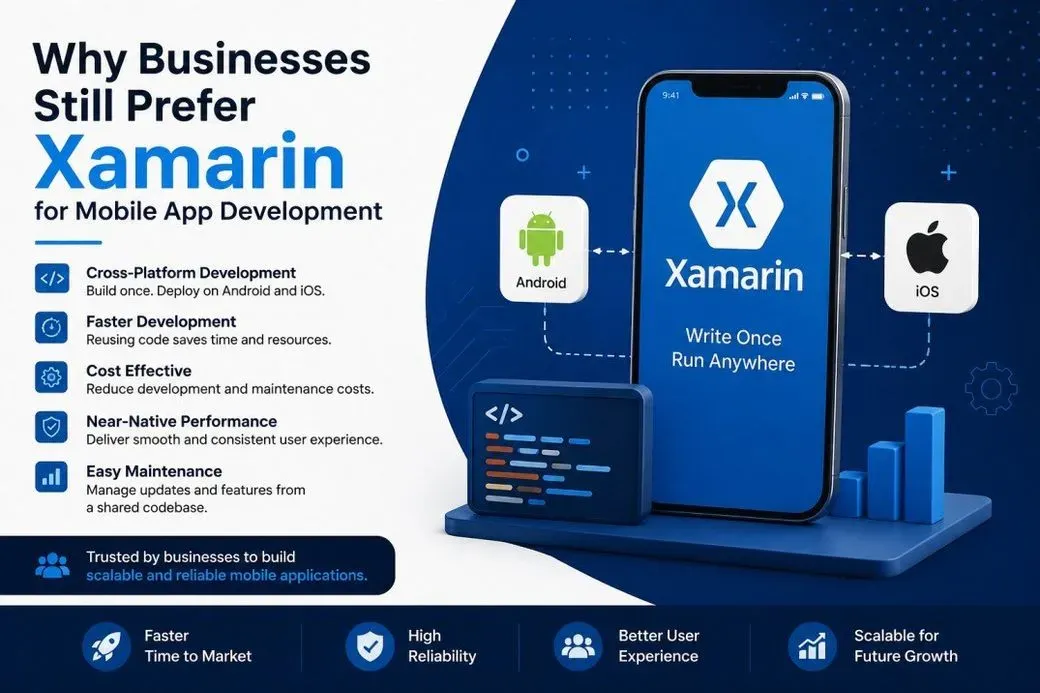
Why Businesses Still Prefer Xamarin for Mobile App Development

Introduction Building a mobile app today is not just about having an Android version anymore. Most businesses want their application to work properly on both Android and iOS without spending twice the budget or managing two completely separate projects. That’s one reason Xamarin still gets attention, especially from companies looking for a practical cross-platform solution. Instead of developing everything from scratch for different operating systems, businesses can use Xamarin mobile app development services to simplify the process and reduce unnecessary development work. The Problem with Separate App Development A few years ago, creating separate apps for Android and iOS was common. It still happens, of course, but maintaining two different codebases usually means more cost, more updates, and more time spent fixing the same issue twice. For many businesses, that setup simply becomes difficult to maintain over time. Cross-platform frameworks changed that conversation, and Xamarin became one of the options companies started considering when they wanted a balance between performance and development efficiency. Why Xamarin Still Works for Many Businesses What makes Xamarin useful is fairly straightforward. Developers can reuse a large portion of the same code across platforms while still building apps that feel close to native. That doesn’t mean every project becomes easier overnight, but it does reduce a lot of repetitive work during development. For startups and mid-sized businesses especially, this can save both time and resources. Companies like InestWeb work with Xamarin to help businesses create applications that are easier to manage without completely sacrificing performance or user experience. Development Becomes Easier to Manage One thing businesses usually notice is that updates become less complicated. When apps are built separately, even small changes often need to be repeated for multiple platforms. With Xamarin, much of that process becomes more centralized, which helps development teams work more efficiently. It also becomes easier to maintain consistency between Android and iOS versions instead of treating them like two unrelated products. Not Every Business Needs a Fully Native App There’s a common assumption that every business needs separate native apps for the “best” performance. In reality, that depends on the project itself. For many business applications, service platforms, internal systems, or customer-facing apps, Xamarin provides enough flexibility without dramatically increasing development complexity. That’s why businesses still continue exploring Xamarin mobile app development services, even with newer frameworks available in the market. Choosing the Right Development Team Matters The framework alone doesn’t decide whether an app succeeds. The development approach matters just as much. Businesses usually benefit more from working with teams that understand scalability, user experience, and long-term maintenance rather than focusing only on coding. An experienced development company can help structure the application properly from the beginning, which avoids unnecessary problems later. Conclusion Mobile app development has become more demanding than before, especially for businesses trying to maintain applications across multiple platforms. Using Xamarin mobile app development services gives companies a more manageable way to build and maintain cross-platform apps without doubling development effort. For businesses that want a practical balance between cost, speed, and usability, Xamarin still remains a relevant option today.

3D render of cloud computing concept

Optimizing Your Web Application for Scalability: Key Strategies

Building a web application that can handle increasing user demand without compromising performance is crucial for long-term success. One effective approach is to design your application architecture to be modular and scalable from the outset. This involves using microservices or containerization technologies that allow individual components to be scaled independently based on demand. Additionally, leveraging cloud infrastructure with auto-scaling capabilities ensures that resources dynamically adjust to traffic spikes, helping maintain a seamless user experience. Implementing Load Balancing and Database Optimization Another vital aspect is implementing load balancing to distribute incoming traffic evenly across servers, reducing the risk of overload on any single resource. Optimizing your database queries and using caching mechanisms can significantly speed up data retrieval times, further enhancing performance. By focusing on these strategies, businesses can future-proof their applications, ensuring they remain responsive and reliable as their user base grows and evolves.

Laptop with code, plant, and mug on desk.

Emerging Trends in Software Development for 2024

The software development landscape continues to evolve rapidly, with several key trends shaping the industry in 2024. One prominent trend is the increased adoption of artificial intelligence and machine learning to automate coding, testing, and deployment processes. Developers are leveraging AI-powered tools to enhance productivity and reduce human error, resulting in faster delivery cycles and more robust applications. Additionally, low-code and no-code platforms are gaining popularity, enabling businesses to develop custom solutions with minimal coding expertise, accelerating digital transformation efforts. Focus on Cybersecurity and Remote Collaboration With the rise of remote work, there is a growing emphasis on cybersecurity measures integrated into development pipelines to protect sensitive data and maintain compliance. Developers are also adopting advanced collaboration tools that support distributed teams, facilitating seamless communication and agile workflows. Staying abreast of these trends allows businesses to harness the latest technologies and maintain a competitive edge in the digital economy.

three men sitting on chair beside tables

A Day in the Life at iNest Web: Crafting Custom IT Solutions

At iNest Web, our team thrives on creativity and collaboration to deliver tailor-made software solutions that drive business growth. Each day begins with brainstorming sessions where developers, designers, and project managers converge to align on client goals and innovative ideas. This collaborative environment fosters continuous learning and problem-solving, ensuring that every project is approached with fresh perspectives and technical excellence. Behind the Scenes: Quality Assurance and Client Engagement Quality assurance is a cornerstone of our development process, involving rigorous testing phases to identify and resolve issues before deployment. We also maintain open communication channels with clients, providing regular updates and incorporating feedback to ensure the final product exceeds expectations. This behind-the-scenes commitment to quality and client satisfaction is what sets iNest Web apart in delivering impactful IT solutions.