Leah Alexis Adams - Against All Odds
After a life-altering diagnosis, Leah Alexis Adams was faced with a future of fear and uncertainty.
By Keira Cherry
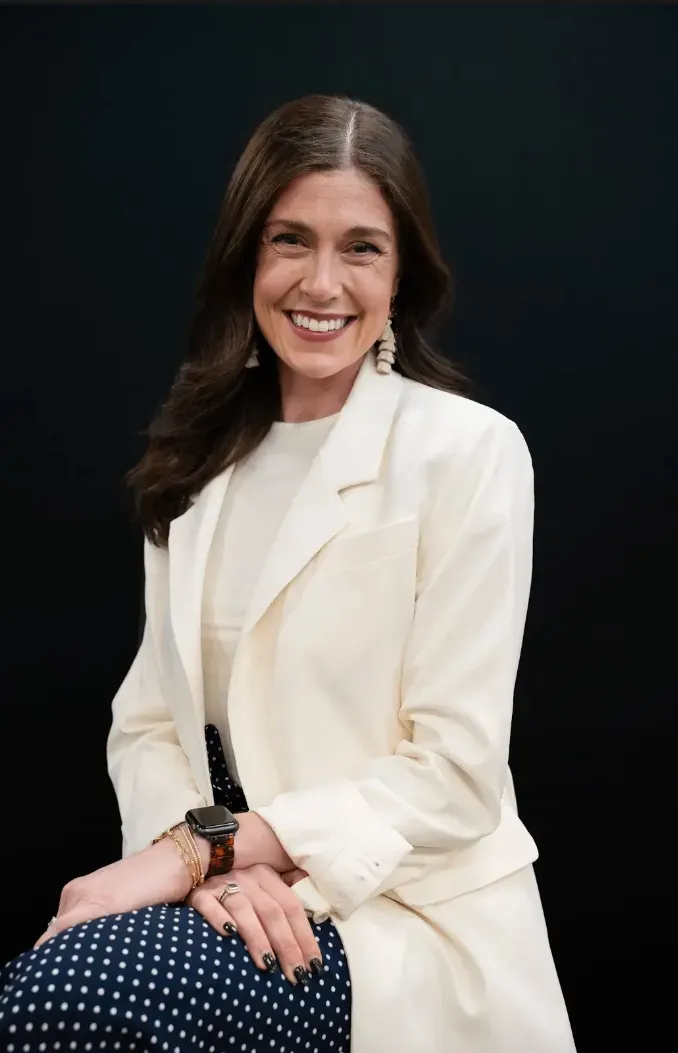
A professional headshot of Leah Alexis Adams was provided by her.
“Before I was diagnosed with melanoma, I thought I was doing everything right. I loved being outside, running, and staying active. Like so many people, I grew up believing a tan meant “healthy.” Sunscreen wasn’t something I wore daily, and I never thought twice about skipping long sleeves or sun-protective clothing. I lived my life fully, but I didn’t realize how much silent damage the sun was causing beneath my skin.”
Leah Alexis Adams is a 32-year-old cancer survivor from Cleveland, Ohio. She was first diagnosed with melanoma (the deadliest form of skin cancer) at age 26. At the time of diagnosis, she was unaware of exactly what melanoma was and only understood the fear she felt. It started as a mole that was pointed out by her mother. Adams said, “ It was different from the others — something in my gut told me to get it checked.”
“You have melanoma”
Leah Alexis Adams shares her scar from her Melanoma diagnosis.
After getting a biopsy, she received a call from her dermatologist with the results and heard the words, “You have melanoma.”
Adams described feeling shocked by the results; she felt that she was so young and healthy and couldn’t believe this was happening to her. The questions immediately began flooding in: “How bad is it? What stage? What does this mean for my future?”
When informed of Adam’s diagnosis, her husband, Jeff Kretschmar, recalled feeling incredibly worried.
“The moment I heard the word ‘cancer,’ my mind went to the worst possible place,” Kretschmar said. “That phone call, and her diagnosis, felt like it suddenly put that future in jeopardy. Still, I didn’t want her to see how worried I was. I knew she would need my support, so I tried to stay strong and steady for her.”
Adams described feeling tremendous gratitude for all of the support that she had around her at the time. Naturally, most people want to appear strong and put together but sometimes life can kick you down.
“My lifestyle was vibrant and busy — I poured myself into running, spending time with friends and family, and just enjoying life. Cancer felt like something distant, something that happened to other people, not to me. Looking back, I see how unprepared I was for the word ‘melanoma’ to enter my story.” Adams said.
Talking melanoma
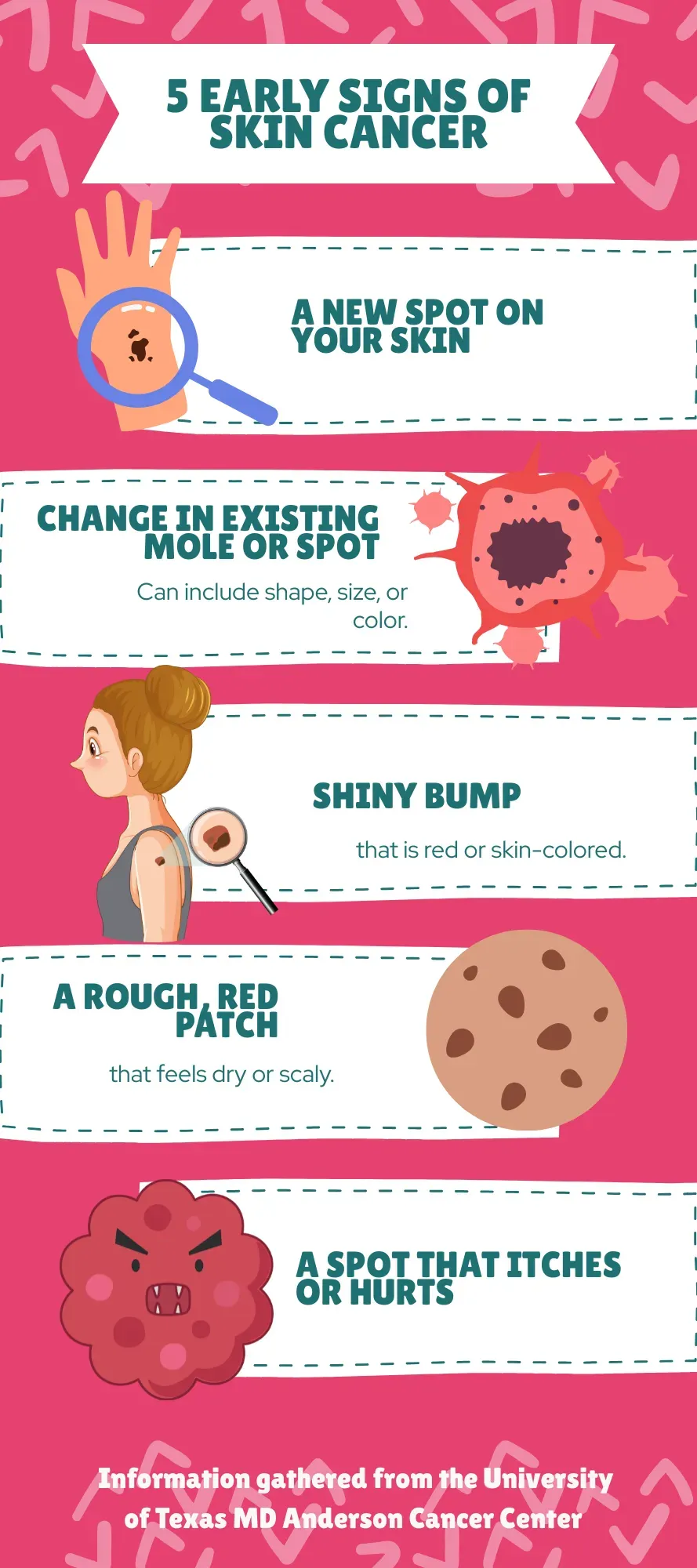
An infographic created by Keira Cherry that informs of 5 early signs of spotting skin cancer with information provided by The University of Texas MD Anderson Cancer Center.
In her research, Keira identified several notable statements from accredited medical professionals.
Early detection is an important factor to watch out for because the earlier you discover something, the better your chances of survival are. Everyone should be doing at-home checks for any suspicious skin conditions and follow up with your doctor because catching it early can make all the difference.
According to Jeffrey Cohen, MD, MPH, from the Yale Medicine website, “The majority of first-time cases of melanoma are found by patients themselves,” Dr. Cohen notes, stressing the importance of self exams to assess moles — common skin growths that typically appear as small, dark spots,” according to the Yale Medicine Website.
It’s easy for survivor patients to dwell on the negative and worry about the cancer coming back leading them radically overthink.
Dr. Patel, a medical oncologist and associate professor, agreed, “If you play the ‘what if’ game, you’ve expended the sands in the hourglass on a negative emotion when there are plenty of things to feel positive or grateful for,”” according to the Melanoma Research Alliance website.
Life After Diagnosis
After diagnosis, Adam’s outlook on life was altered: “Suddenly I understood how quickly life can change, and how important it is not to take a single day for granted.” Dark times followed after diagnosis, fear set in deep, and the unknowns continued to haunt. “Every skin check felt like it could change my future in an instant. Living with that kind of anxiety was exhausting, and there were days it felt heavier than the physical recovery.”
Remission brought relief to both Adams and her husband.
“Leah received exceptional care, and her regular skin checks have shown no new melanoma. It has now been about six years since her diagnosis. We were married this summer, and we are looking forward to a long, happy, and healthy life together,” said Kretschmar.
Adams described leaning on her close friends and family because communication helped with the fear. In addition, her love for running gave her an outlet.
“Running gave me space to process, to let out stress, and to feel strong when so much felt out of my control,” said Adams.
Adams also mentioned journaling as a way that she managed her emotions, as well as learning to advocate for herself. By speaking out on the internet about Melanoma, she can educate others and feel a sense of “purpose to the pain.”
Advice from a Survivor
A video shared on Leah Alexis Adam’s Instagram (@theleahalexis) to address comments regarding her being a survivor.
With all that she knows now, there’s so much she would love to tell her younger self, such as, “I know you think tanning makes you beautiful, and that skipping sunscreen is fine, but it’s not. All those days you spent in the sun without protection, chasing a tan, they added up in ways you didn’t realize.” She admits that she should’ve protected her body, but instead of blame, she chooses to learn.
To anyone who is newly diagnosed or is close to someone who is, Adams has a message:
“You are not alone. I know how overwhelming and terrifying those first days feel — the fear, the uncertainty, the questions you don’t even know how to ask yet. But take it one step at a time.
Advocate for yourself, ask every question, and don’t be afraid to push for answers. Lean on your support system, because you don’t have to carry this by yourself. And remember that melanoma is serious, but there is also so much hope. Treatments and research have come so far, and people are living full, meaningful lives after a diagnosis.
It’s ok to feel scared, but don’t lose sight of your strength. You are stronger than you think, and you can get through this.”