Alberta's Weird War
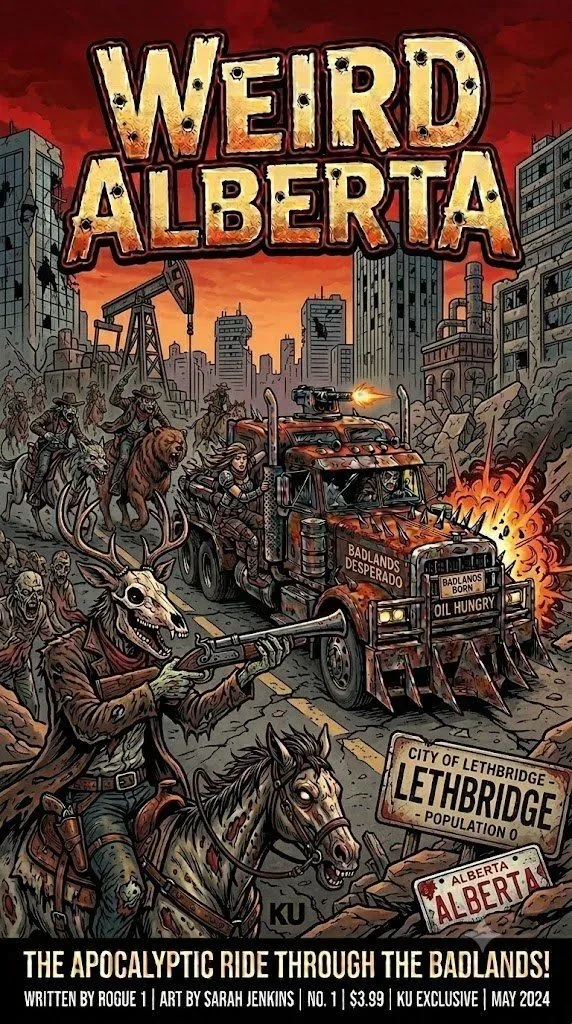
Alberta in 2026: Old Grievances, New Territory
Growing up in Alberta in the 1970s and 80s meant absorbing a particular political common sense: government exists to build hospitals, pave roads, and otherwise stay out of the way. The grievances were real — Ottawa was distant, the National Energy Program genuinely damaged the province — but so was the counterweight: Peter Lougheed's brand of conservatism was institution-minded, pragmatic, and constitutionally serious.
What's unfolding in 2026 feels like a significant departure from that inheritance.
The Sovereignty Turn
The UCP's current direction has accelerated well beyond "Fair Deal" politics into territory that's harder to categorize as conventional conservatism. The International Agreements Act, enacted in late 2025, allows Alberta to challenge or refuse enforcement of federal-signed international agreements in areas of provincial jurisdiction. Meanwhile, Premier Smith has announced a ten-question October referendum covering immigration controls, constitutional amendments, and — added in May 2026 — whether Alberta should pursue a path toward a binding separation vote.
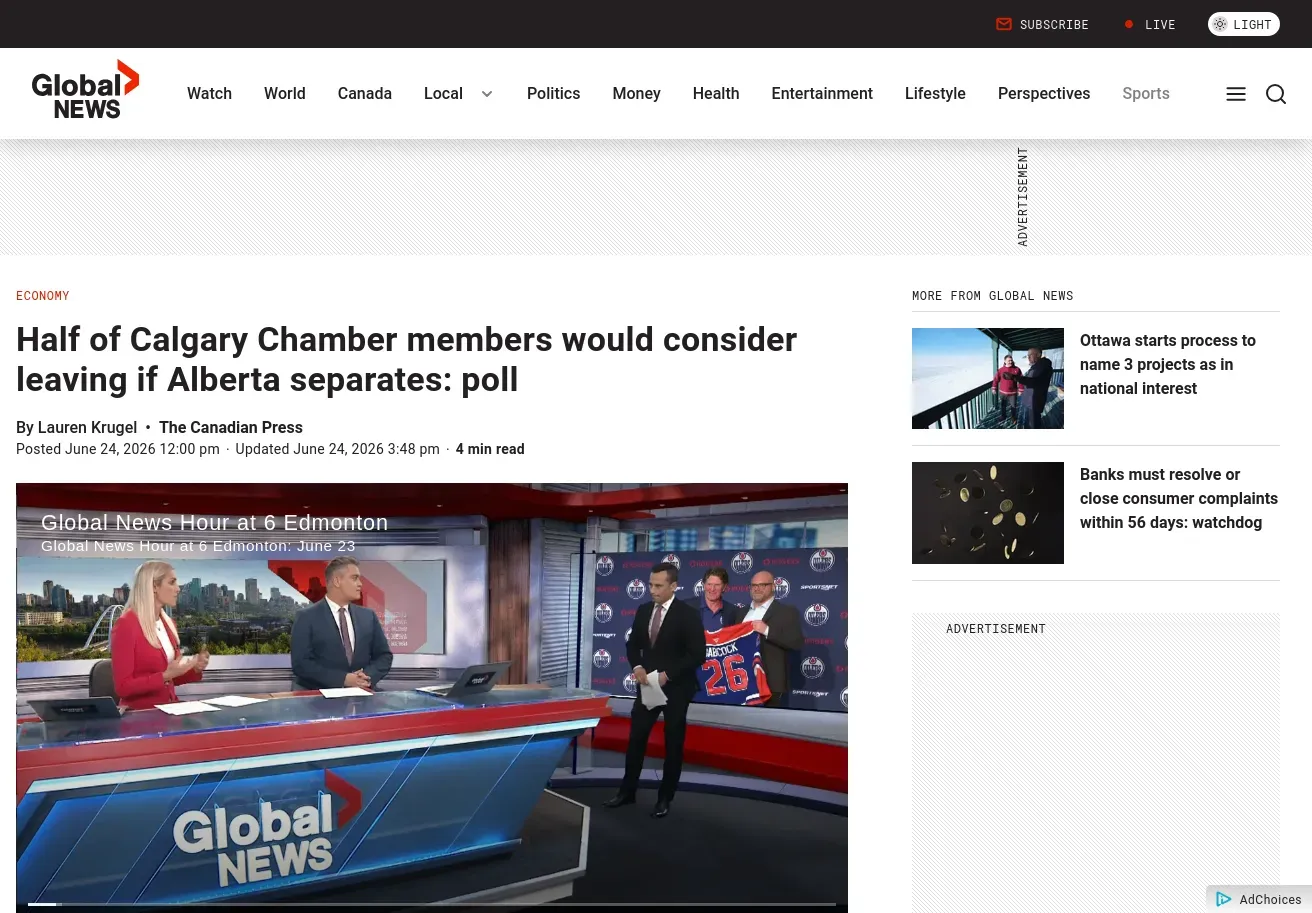
The province's political polarization has, however, largely become a UCP-specific phenomenon. Research from the IRPP suggests that what looks like an Alberta problem is more precisely a UCP voter problem — the rest of the province has grown less resentful and warmed to the federation, particularly following the change of federal government.
The Election Integrity Debate
One of the referendum questions asks whether Albertans support requiring proof of citizenship — such as a passport, birth certificate, or citizenship card — to vote in provincial elections. The government has also announced citizenship markers on driver's licences. Critics have raised pointed concerns: the UCP has not established the existence of widespread voter fraud, and since existing licences have 10-year expiry periods, there would be no way to distinguish citizens from non-citizens at the polls until 2036 regardless. The Tyee identified seven additional concerns about privacy and potential downstream uses of the data.
These measures parallel U.S. Republican proposals — notably the SAVE Act — and the continental political alignment is not lost on observers.
The Treaty Question
Perhaps the most consequential dimension of Alberta's current moment involves its relationship with First Nations — and here the legal and moral stakes are highest.
On February 26, 2026, the Assembly of Treaty Chiefs, representing Treaties 6, 7, and 8, passed a unanimous vote of non-confidence in the UCP government — the first in its history — citing failure to uphold Treaty-based constitutional responsibilities, promotion of separatism, and the creation of unsafe conditions for Indigenous peoples.
The legal challenges have followed. In May 2026, an Alberta Court of King's Bench judge struck down approval of the separation referendum petition, ruling that the chief electoral officer had failed to consider that Albertan secession would violate Indigenous rights protected by Treaties with the Crown. The challenge was brought not by Ottawa or opposition parties, but by Sturgeon Lake Cree Nation, Athabasca Chipewyan First Nation, and the Blackfoot Confederacy.
Political scientists say Indigenous Treaty rights represent a significant legal hurdle for separatists, and have brought the secession debate into uncharted constitutional territory. In late May, thousands rallied across Alberta in a province-wide Day of Protest, with Indigenous leaders joining to speak to what Sturgeon Lake Cree Nation Chief Sheldon Sunshine called "a relentless attack on Treaty by all levels of government, particularly the UCP."
The Alberta-Ottawa MOU represents a partial attempt at de-escalation — committing to a new Indigenous co-owned West Coast pipeline and streamlined project reviews — but polling suggests the deal has done little to move opinion among the UCP's core supporters, who remain near a political precipice regardless of federal concessions.
For those of us who came of age here, none of this is easy to watch. The Alberta that shaped a generation was argumentative, proudly self-reliant, and occasionally ornery — but it operated within recognizable democratic norms. The question in 2026 isn't whether Alberta has legitimate grievances with federal policy (it does, and always has). The question is whether the current government's response to those grievances is strengthening the province's institutions — or hollowing them out.
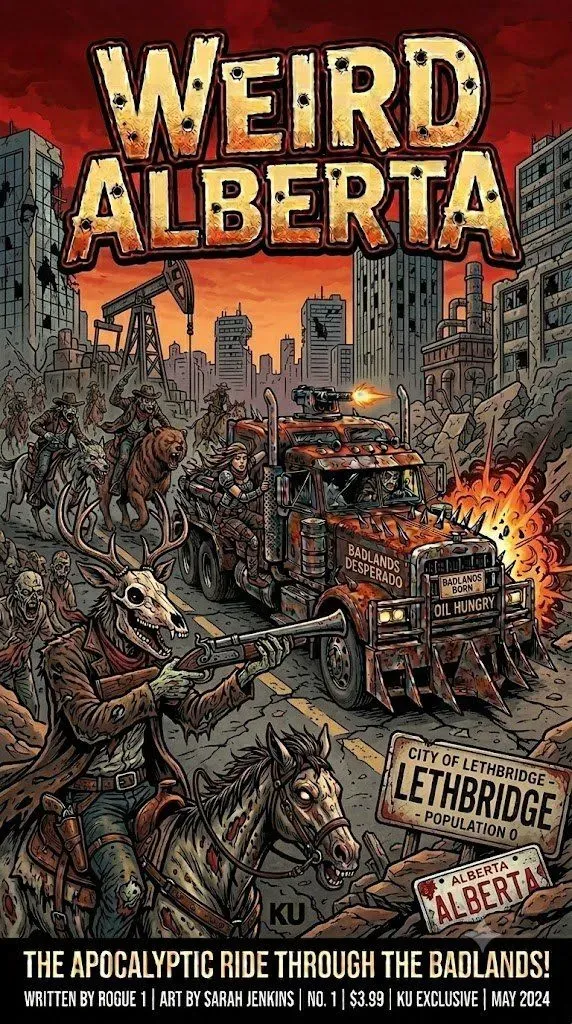
The Weird War, it turns out, isn't just a comic book title.
SUPPORT INDEPENDENT RESEARCH
To keep this project ad-free and private, we don't use corporate payment processors. Support the mission via Interac e-Transfer:
Email: hackergoose74@gmail.com Secret Question: (None - Autodeposit Enabled)