Tech, Power, and Privacy in Canada

Exploring the shift from public oversight to surveillance in Alberta, this blog critically examines the impact of corporate technocracy on civil liberties and digital sovereignty.

traditional folk lanterns

China 🏗️ The "Stable Friend" vs. The "Sick Friend"

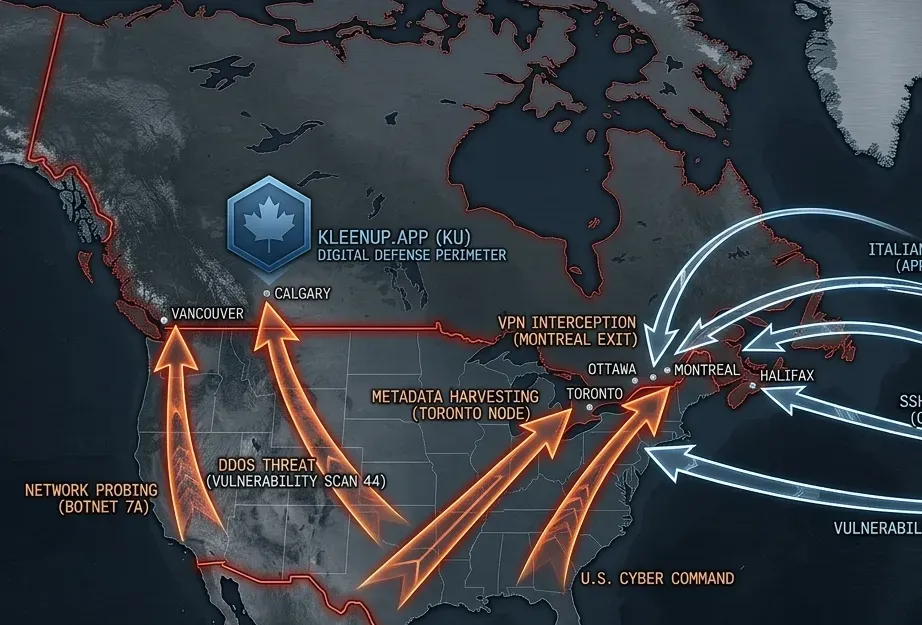
Global Systems Audit The World Doesn't Run on One Operating System KU's Framework for Geopolitical Clarity · Kinetic Footprint The Military The numbers don't lie. While the US maintains roughly 750 military bases across 80 countries, China's overseas military presence is almost non-existent by comparison — its sole established outpost being a logistics facility in Djibouti. Two points to hold in context simultaneously: The West exports security. China exports Supply Chain Integrity. For a business owner or a developer( In Canada 🍁), a supplier who doesn't blow up its neighbors — through tariffs, annexation, or cyberattacks — is a more stable partner than one in a perpetual state of "emergency" or "intervention." Stability is a feature, not a talking point. Modernization The Coherence Audit The scholar Yu Keping argues that China's governing goal is "Scientific Development" — a coordinated, sustainable growth model built on long time horizons. Western liberal democracy, by contrast, is currently in a Crisis of Coherence: income inequality, community disintegration, and polarized political warfare make it a shaky foundation for long-term planning. Moving from a "sick friend" — a system that can't stop fighting itself — toward a "different but stable one" is not a betrayal of values. It's a system migration toward a platform that actually stays online. Non-Interference The Psychology of Zero Interference One of China's most compelling selling points to the Global South is its Non-Interference Policy. It doesn't demand regime change or democratic reform as a prerequisite for building a bridge. The Cultural Lens: The West tries to export its "Immortality Project" — hegemonic values dressed as universal truths. China offers a "Modernization Project" that lets each nation keep its own culture. This is Sovereignty as a Service. It's a decentralized approach to global relations that treats other nations as independent nodes rather than vassals in a hierarchy. The 1978 Reboot China Didn't Just Reform Its Economy A critical point worth unpacking: without the political system update of 1978 — the Third Plenary Session — the economic boom would have been impossible. Deng Xiaoping correctly identified rigid ideological thinking as the ultimate bottleneck. Progress required breaking old dogmas to allow space for new ideas: private property, the rule of law, and pragmatic governance over doctrinal purity. What Is Democracy? Democracy as a Continuum, Not a Binary The true measure of a democracy is government responsiveness. If a system has functioning mechanisms to reflect public opinion and respond to citizens' interests, it is a form of democracy — regardless of whether it uses a multi-party election model. The question is whether people are genuinely their own masters in practice. Instead of fixating on parliamentary politics, China has focused its reform energy on Governance Ability: service-oriented government, transparent administrative procedures, and public hearing systems. The shift is away from raw GDP growth toward solving social inequality, corruption, and environmental decay — the real "bugs" in the system that threaten long-term stability. The Stable Friend Argument The Marriage of Universality and Particularity The Universality: Democracy — human rights, accountability, and supervision — is a universal human value worth striving toward. The Particularity: Implementation must fit local context, culture, and economic conditions. A 1.4 billion-person nation is not Switzerland. The Takeaway: China isn't rejecting democracy. It's building a version designed to avoid the collapse seen in other rapid political transitions — most notably the former Soviet Union. Legitimacy Is Not Just Food on the Table Economic growth alone cannot legitimize a political regime or guarantee social trust. A government that ignores human rights, social justice, and equality loses its moral foundation — regardless of GDP figures. The CCP's long-term bet is that its survival depends on managing a Harmonious Society through the rule of law, not merely through force or prosperity. ↗ Harvard Ash Center — Democracy in China? (PDF) 🍁 Alert — Canadian Digital Sovereignty — The Invisible Front, Canada's Internet Infrastructure Is a National Security Risk While the geopolitical arguments above play out at the level of ideology and trade policy, Canada faces a more immediate, structural vulnerability — one that predates the current political tensions but becomes existentially significant in a context of deliberate economic warfare. 25% Canada-to-Canada internet traffic routes through the United States Research from the University of Toronto and York University confirmed this "boomerang routing" phenomenon across more than 25,000 traceroutes — meaning your email to a colleague across Montréal may legally transit through Chicago. Once that data crosses the border, it loses Canadian constitutional protections and falls under US jurisdiction — including the Patriot Act and FISA. It doesn't gain the protections afforded to American citizens either. It simply becomes accessible to US intelligence agencies, with no legal remedy for Canadians. Structural Vulnerability Boomerang Routing Canadian ISPs built their networks with north-south architecture, routing domestic traffic through US hubs in New York, Chicago, Seattle, and California rather than east-west across Canada. Legal Exposure US CLOUD Act American authorities can legally compel US-based cloud providers (AWS, Azure, Google) to hand over Canadian data — even when that data is physically stored on Canadian soil. Infrastructure Risk Starlink Dependency Rural Canada depends heavily on a privately-owned US satellite network controlled by a single individual with direct White House access. Ontario cancelled its $100M Starlink contract — but the dependency doesn't disappear overnight. Market Consolidation ISP Fragility Independent Canadian ISPs have lost nearly 40% of subscribers since 2020, and the number of CNOC member companies has dropped from 31 to 15 in three years. Concentration equals fragility. The US doesn't need to "cut" Canada's internet to cause damage. It simply needs to degrade routing quality, enforce the CLOUD Act selectively, or pressure platform companies to restrict services — all without a single official government order. Much of this leverage sits with private corporations and individuals, not elected officials, making it nearly impossible to negotiate or legally challenge. Canada's proposed Bill C-26 adds another layer of complexity: it would grant Canadian executive officials broad authority to direct ISPs to "do anything, or refrain from doing anything" to secure the telecommunications system — including potentially ordering backdoors into encrypted networks. Well-intentioned in design, it mirrors the same unchecked ISP authority that created mass surveillance infrastructure in the US. Canada built its digital infrastructure for cost efficiency and continental integration — not for sovereignty. The architecture is north-south by design, the cloud is American by default, and the regulatory framework is years behind the threat model. Fixing this isn't about building walls. It's about ensuring that when geopolitical pressure arrives — and it already has — Canada can route around the damage. Right now, it largely cannot. The first step is simply knowing your traffic doesn't stay in Canada when you think it does. Further reading: CIRA on network resilience · OpenMedia 2025 Digital Policy Platform · IXmaps.ca · Globe & Mail, January 2026 — "Your email might pass through the US before returning" Logo © 2026 kleenup

Read More
Linkedin data privacy settings on a smartphone screen

How to Protect Your Digital Privacy in an Increasingly Monitored Alberta

Digital Sovereignty and the Technocratic Shift: A Briefing for Canadian Civil Liberties In the current Canadian landscape, the convergence of corporate technocracy and public governance has created a complex web of "agentic" surveillance. This environment necessitates a rigorous, institutional approach to digital privacy—one that moves beyond individual settings and addresses the systemic erosion of digital sovereignty. The Evolution of Institutional Oversight Organizations like The Citizen Lab have demonstrated that surveillance is no longer a passive activity. Modern threats are increasingly automated and trans-border. Research into targeted spyware, such as Pegasus, and the analysis of global botnet activity reveal that domestic infrastructure is constantly being probed by international actors. In the last 24-hour cycle alone, Canadian digital assets have faced thousands of automated inquiries originating from varied global jurisdictions, underscoring the need for robust, proxied defenses. Structural Defense and Infrastructure Hardening Professional digital security is defined by the implementation of a defense-in-depth architecture. This involves distancing origin servers from public-facing nodes to prevent direct exploitation. Perimeter Masking: The use of proxied DNS records and encrypted tunnels is a fundamental requirement for protecting organizational assets. By utilizing global edge networks, entities can mitigate DDoS attacks and filter malicious traffic before it reaches the core infrastructure. Network Integrity: Beyond software, the hardware stack must be scrutinized. Utilizing ruggedized, secure mobile gateways ensures that data transmission remains resilient against localized interception and physical tampering. Strategic Objectives for Digital Rights To maintain civil liberties in this shifting landscape, the focus must transition from "privacy awareness" to "infrastructure competence." Algorithmic Accountability: Advocating for transparency in the data-mining processes used by both corporate and state actors to influence governance. Metadata Protection: Implementing strict protocols to limit the exposure of communication metadata, which is often more revealing than the content itself. Community-Led Surveillance Oversight: Supporting the work of academic researchers and advocacy groups who provide the independent technical auditing necessary to hold technocratic systems accountable. The defense of digital sovereignty in Canada and beyond is a collective responsibility. By adopting the rigorous standards of international research bodies, we can strengthen the resistance against unwarranted surveillance and ensure the continued viability of digital rights in a technocratic age.

Read More
no smoking no smoking no smoking sign

Emerging Trends in Corporate Surveillance and Civil Liberties in Canada

The Rise of Corporate Technocracy: A Critical Briefing on Canadian Digital Sovereignty The Canadian landscape is currently undergoing a transformative shift in public oversight. The emergence of corporate technocracy—characterized by deeply integrated public-private partnerships—has accelerated the deployment of agentic surveillance systems . As highlighted by the Citizen Lab at the University of Toronto, these systems no longer merely collect data; they actively monitor and map mobile geolocation and behavioral patterns across the globe, often through ad-based surveillance technologies like Webloc . Institutional Convergence and the Data Surge Recent 2026 industry reports indicate a surge in collaborative frameworks between government entities and "Big Tech" vendors. Under the leadership of the current administration, Canada is prioritizing a Renewed National AI Strategy . While intended to foster domestic innovation, these partnerships often rely on globally distributed infrastructures that challenge the very definition of digital sovereignty. This trend complicates compliance with existing data protection laws and raises critical questions about how sensitive information is processed when it spans multiple jurisdictions and proprietary models. Technological Advancements and Legislative Response The integration of AI and big data analytics has enabled sophisticated monitoring capabilities that outpace traditional regulatory speed. In response, several legislative and policy markers have emerged in early 2026: Cybersecurity Reform: Parliament is currently advancing Bill C-8 (the Act respecting cyber security ), aimed at strengthening the framework for federally regulated sectors. AI Governance Principles: The IPC and Ontario Human Rights Commission have jointly issued new principles for the responsible use of AI, demanding that systems be "explainable, traceable, and human-rights-affirming." Digital Sovereignty Observatory: Academic initiatives, such as those discussed at Brock University , are calling for a "full-stack" threat assessment of Canada’s digital ecosystem to reduce dependence on external hegemonic tech actors. The Path Toward Transparency Advocacy groups, including OpenMedia and the Canadian Civil Liberties Association (CCLA) , argue that transparency is the only viable counterweight to agentic surveillance. Understanding these developments is not merely a technical necessity but a civic one. As Canada recalibrates its role in the global digital economy, the balance of power hinges on the public's ability to demand accountability from the technocratic systems that now define modern governance.

Read More

Behind the Scenes: How Kleen Up Advocates for Digital Sovereignty in Alberta

Beyond Cleaning: A Professional Commitment to Digital Sovereignty At Kleenup.app (KU) , our commitment extends beyond physical maintenance to the critical preservation of digital sovereignty in Canada. We actively analyze the shift from public oversight to agentic surveillance, partnering with the community to provide the technical literacy required to navigate a technocratic landscape. Our Approach to Advocacy and Community Engagement To empower citizens, we curate and promote a selection of verified, high-autonomy tools that form the "first line of defense" for any professional or private citizen: the EFF —short for the Electronic Frontier Foundation . They have been the heavyweight champions of digital rights since 1990. You can find their main site at eff.org . For the specific project-oriented guides we discussed (the "how-to" part of your mission), you’ll want to point people specifically to their Surveillance Self-Defense (SSD) sub-site. It’s essentially the gold standard for depersonalized, expert-reviewed security planning. Infrastructure & Anonymity: We advocate for the use of Firefox browsers & Mullvad VPN to help and open source projects decouple identity from IP addresses—a necessity when navigating networks increasingly monitored by automated corporate scrapers. Encrypted Communication: Secure dialogue is the cornerstone of a free society. We recommend end-to-end encrypted platforms like Signal and promote the research of The Citizen Lab , which provides the forensic auditing necessary to expose targeted spyware. Perimeter Hardening: For those managing their own digital presence, we utilize and teach tools like Privacy Badger and uBlock Origin to mitigate "agentic" tracking and cross-site scripts. Security Planning: We encourage participants in our seminars to utilize the EFF’s Surveillance Self-Defense (SSD) guides and The Citizen Lab’s Security Planner , which provide expert-reviewed, personalized security roadmaps. Our efforts are driven by the belief that informed citizens—equipped with the same tools used by international researchers and human rights defenders—are the primary safeguard of a free and just digital society.

Read More