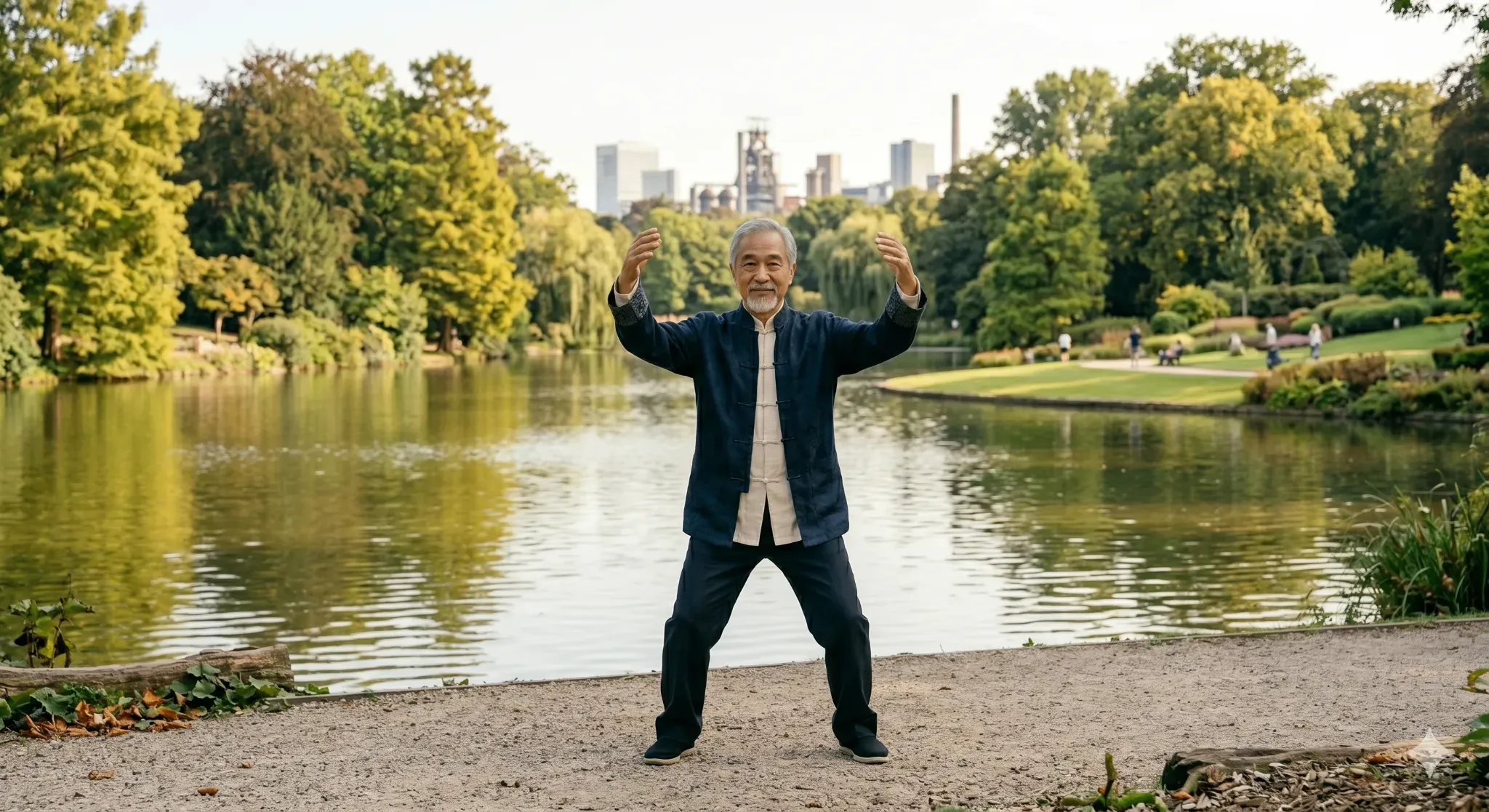
Medical Qi-Gong
Traditional Chinese Medicine (TCM) relies on several core pillars to restore balance to the body: acupuncture, herbal medicine, cupping, and medical bodywork. Among these, Medical Qi-Gong stands out as the internal energetic branch—a therapeutic system that combines focused intent, controlled breathing, and gentle, deliberate physical movements to regulate the body's autonomic nervous system and promote systemic healing.
Unlike recreational Qi-Gong, which is practiced broadly for general fitness or martial arts conditioning, Medical Qi-Gong is specifically applied as a clinical intervention. It is often prescribed by TCM practitioners to target specific energetic blockages or chronic health patterns.
Clinical Overview: How Medical Qi-Gong Functions
At its core, Medical Qi-Gong shifts the body out of a chronic sympathetic ("fight-or-flight") state and drops it directly into a parasympathetic ("rest-and-digest") state. This physiological shift lowers cortisol levels, reduces systemic inflammation, and optimizes cellular repair.
Medical Qigong: An Overview
Category
Classification: Energy Medicine & Mind-Body Therapy
Context: It is one of the four core branches of Traditional Chinese Medicine (TCM), alongside acupuncture, herbal medicine, and medical massage (Tuina).
Primary Focus Areas
Energy Regulation: Optimizing the production, circulation, and balance of Qi (vital energy) throughout the body's meridian system.
Holistic Integration: Combining specific physical postures, slow deliberate movements, deep diaphragmatic breathing, and focused mental intention (Yi).
Targeted Healing: Purging toxic or stagnant energy, tonifying (strengthening) deficient organs, and regulating chronic internal imbalances.
Expected Outcomes
Enhanced Vitality: Measurable improvements in systemic circulation, immune function, and overall cellular energy.
Accelerated Recovery: Faster tissue healing and reduction in chronic pain or systemic inflammation.
Emotional Equilibrium: Release of stored emotional trauma, leading to mental clarity, resilience, and decreased anxiety.
Nervous System Modulation
Medical Qigong acts as a profound neuromodulator, directly influencing the Autonomic Nervous System (ANS) by shifting the body out of a survival state and into a healing state.
Down-regulating the Sympathetic Nervous System (SNS): The practice actively dampens the "fight-or-flight" response. By slowing the breath and calming mental chatter, it lowers stress hormones like cortisol and adrenaline, reduces heart rate, and decreases blood pressure.
Activating the Parasympathetic Nervous System (PNS): Concurrently, it triggers the "rest, digest, and heal" response. This shifts cellular resources toward immune defense, tissue repair, and efficient digestion.
Decreased perceived stress, improved sleep quality, and reduced anxiety.
Circulation & Lymph
Using slow, rhythmic breathing and stretching to move blood and fluid.Enhanced localized tissue oxygenation and improved immune cell motility.
Pain Management
Releasing structural fascial tension and breaking up stagnation along meridians.Reduction in chronic musculoskeletal pain and improved joint mobility.
The Patient Perspective: A Comprehensive Review
1. Accessibility and Patient Autonomy
One of the most profound benefits of Medical Qi-Gong is that it transitions the patient from a passive recipient of care (such as sitting on a table receiving acupuncture needles) to an active participant in their own recovery. The movements are highly adaptable, low-impact, and can frequently be performed while seated or lying down, making it exceptionally safe for individuals recovering from severe illness, surgery, or dealing with limited mobility.
2. Clinical Efficacy for Chronic Conditions
For individuals managing chronic, stress-aggravated conditions—such as fibromyalgia, hypertension, chronic fatigue syndrome, or mild digestive disorders—Medical Qi-Gong serves as an excellent adjunct therapy. By systematically lowering the body’s baseline stress responses, it allows other modalities like acupuncture or herbal therapy to take hold more effectively.
3. The "Slow Medicine" Factor
Medical Qi-Gong requires patience. It does not offer the instant, acute sensory feedback of a deep tissue massage or the localized release of an acupuncture needle. It is a cumulative discipline. For individuals accustomed to rapid, pharmaceutical-style interventions, the subtle and progressive nature of Qi-Gong can initially feel frustrating or slow.
Final Assessment
Clinical Verdict: Medical Qi-Gong is an exceptionally low-risk, high-reward therapy. It is not a standalone miracle cure for acute pathology, but as a supportive, integrative therapy for chronic pain, stress management, and functional neurological balance, its clinical utility is profound. It bridges the gap between passive clinical treatment and long-term, self-directed wellness.
Dynamic posturing used to relieve mechanical stress and lower pain perception. Source : Alberta Association Of Nurses
Musculoskeletal Pain: Effectively treats chronic lower back pain, neck and shoulder tension, osteoarthritis, and joint stiffness by improving alignment and reducing mechanical stress on the body.
Neuropathic Pain: Eases nerve-related discomfort, such as sciatica or peripheral neuropathy, by promoting fluid circulation and reducing local tissue inflammation that can compress nerves.
Systemic Pain Syndromes: Provides relief for widespread, complex pain conditions like fibromyalgia by lowering the central nervous system's sensitivity to pain signals (central sensitization).
The Clinical Mechanism: By pairing diaphragmatic breathing with slow, mindful movement, Medical Qigong lowers blood cortisol levels and stimulates the release of endorphins (the body's natural painkillers), transforming how the brain processes chronic pain signals.