How To Plan A Trip: The Ultimate Step-by-Step Travel Guide
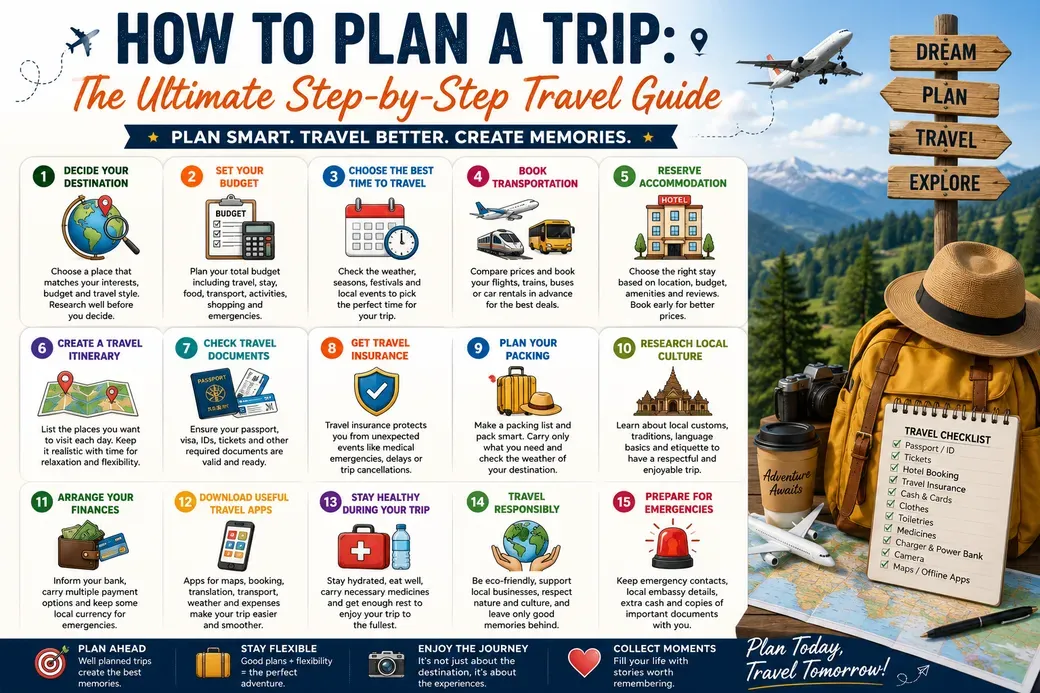
Planning a trip is one of the most exciting parts of traveling, but without proper preparation, it can quickly become overwhelming. From choosing a destination and setting a budget to booking accommodations and packing efficiently, every step contributes to a smooth and enjoyable experience. Learning How To Plan A Trip helps you save money, reduce stress, and make the most of your time away. Whether you're planning a weekend getaway, a family vacation, or an international adventure, a well-organized plan ensures a memorable journey.
This ultimate guide explains How To Plan A Trip step by step so you can travel with confidence.
Step 1: Decide Your Destination
The first step in How To Plan A Trip is choosing where you want to go. Consider your interests, budget, available vacation time, and preferred travel style.
Ask yourself:
Do you want mountains, beaches, or cities?
Are you looking for adventure or relaxation?
How far are you willing to travel?
What is your overall travel budget?
Research different destinations before making your final decision.
Step 2: Set Your Budget
Creating a realistic budget helps you avoid overspending and plan your expenses wisely.
Include costs for:
Transportation
Accommodation
Food
Local transportation
Sightseeing
Shopping
Travel insurance
Emergency expenses
Knowing your budget early makes every other planning decision easier.
Step 3: Choose the Best Time to Travel
The timing of your trip affects weather, costs, and crowd levels.
Before booking, research:
Peak tourist seasons
Off-season discounts
Local festivals
Weather conditions
School holidays
Public holidays
Traveling during the shoulder season often provides pleasant weather with fewer crowds and lower prices.
Step 4: Book Transportation
Once you've chosen your destination and travel dates, book your transportation.
Depending on your destination, you may travel by:
Airplane
Train
Bus
Car
Ferry
Compare prices across multiple booking platforms before making your reservation. Booking in advance often provides better rates.
Step 5: Reserve Accommodation
Accommodation is one of the most important parts of How To Plan A Trip.
Choose lodging based on:
Budget
Location
Reviews
Safety
Amenities
Accessibility
Options include:
Hotels
Hostels
Guesthouses
Resorts
Homestays
Vacation rentals
Booking early gives you more choices and better prices.
Step 6: Create a Travel Itinerary
Planning your daily schedule helps you make the most of your vacation without feeling rushed.
Your itinerary should include:
Major attractions
Opening hours
Travel times
Restaurant ideas
Shopping areas
Relaxation time
Avoid overloading your schedule. Leave room for spontaneous discoveries.
Step 7: Check Travel Documents
Before traveling, ensure all required documents are ready.
These may include:
Passport
Visa
Government-issued ID
Flight tickets
Hotel confirmations
Travel insurance
Vaccination certificates (if required)
Store digital copies securely on your phone or cloud storage.
Step 8: Purchase Travel Insurance
Travel insurance provides financial protection against unexpected situations.
It may cover:
Medical emergencies
Trip cancellations
Lost luggage
Flight delays
Emergency evacuation
Although optional for some trips, travel insurance offers valuable peace of mind.
Step 9: Plan Your Packing List
Packing efficiently makes your journey much easier.
Essential items include:
Clothing suitable for the weather
Comfortable shoes
Toiletries
Chargers
Power bank
Medications
Reusable water bottle
Sunglasses
Travel documents
Pack only what you need to avoid carrying unnecessary weight.
Step 10: Research Local Culture
Understanding local customs enhances your travel experience.
Learn about:
Cultural etiquette
Dress codes
Language basics
Local traditions
Tipping practices
Public behavior
Respecting local culture creates positive interactions with residents.
Step 11: Arrange Your Finances
Prepare your finances before departure.
Helpful tips include:
Inform your bank about your travel plans.
Carry multiple payment methods.
Keep some emergency cash.
Exchange currency if needed.
Use secure payment options.
Avoid carrying all your money in one place.
Step 12: Download Useful Travel Apps
Technology can simplify your journey.
Helpful apps include those for:
Maps
Language translation
Flight tracking
Hotel bookings
Expense tracking
Weather forecasts
Public transportation
Offline maps are especially useful when internet access is limited.
Step 13: Stay Healthy During Your Trip
Good health helps you enjoy every moment of your vacation.
Remember to:
Stay hydrated.
Get enough sleep.
Eat balanced meals.
Carry basic medications.
Wash your hands regularly.
Protect yourself from the sun.
Simple precautions reduce the risk of illness.
Step 14: Travel Responsibly
An important part of How To Plan A Trip is minimizing your impact on the environment and supporting local communities.
Practice responsible travel by:
Avoiding littering
Carrying reusable items
Supporting local businesses
Conserving water
Respecting wildlife
Following local regulations
Responsible travelers help preserve destinations for future generations.
Step 15: Prepare for Emergencies
Unexpected situations can happen anywhere.
Keep handy:
Emergency contact numbers
Local embassy information
Hotel address
Copies of important documents
Emergency cash
Basic first-aid kit
Being prepared allows you to respond calmly if problems arise.
Common Travel Planning Mistakes
Avoid these common mistakes when learning How To Plan A Trip:
Booking everything at the last minute.
Ignoring your budget.
Overpacking.
Forgetting travel insurance.
Not checking passport validity.
Planning every minute without flexibility.
Ignoring weather forecasts.
Skipping destination research.
Learning from these mistakes makes travel much smoother.
Benefits of Planning Ahead
Proper planning offers many advantages:
Lower travel costs
Better accommodation choices
Less stress
Improved safety
More efficient sightseeing
Better time management
Greater confidence while traveling
A well-planned trip allows you to focus on enjoying your destination instead of solving unexpected problems.
Conclusion
Knowing How To Plan A Trip is the key to creating a smooth, enjoyable, and memorable travel experience. By choosing the right destination, setting a realistic budget, booking transportation and accommodations early, preparing travel documents, packing wisely, and respecting local culture, you can avoid common travel challenges and make the most of every journey. Whether you're traveling solo, with family, or with friends, following this step-by-step guide to How To Plan A Trip will help you travel confidently, stay organized, and create unforgettable memories wherever your adventures take you.