About me

I am Eduardo Jara Castro; I study Business Administration at USFQ and am about to begin my fifth semester. This E-portfolio compiles some of the experiences I had during the PASEC service-learning course I took this summer, an experience that, truth be told, has helped me, fostered my personal growth, and changed my perspective on various matters. I completed my service hours at Fundación El Triángulo, an organization that provides support and education to individuals with intellectual disabilities; there, I primarily served as a coordination assistant for work groups and provided support for various activities.

Class Product: Sustainability


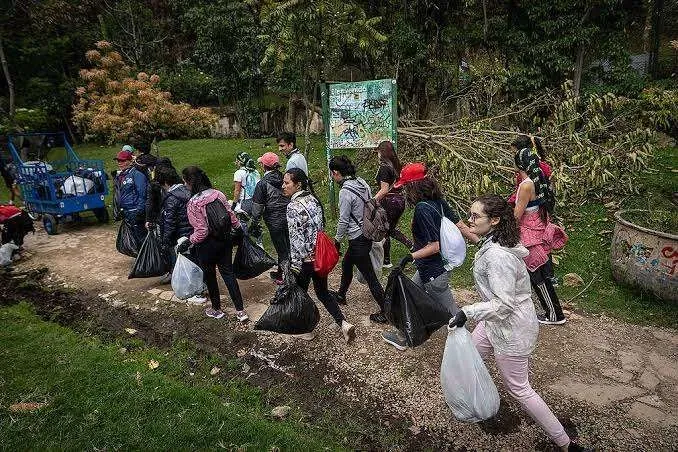
While working in the employment support division of the foundation with the company "El Ordeño," I realized that the company is environmentally friendly and places a strong emphasis on sustainability. Through this experience and close involvement, I learned that everyday practices, or common habits, can help reduce waste generation, at least from the consumer's side. I also learned the importance of sharing these practices with others; engaging the community in this way fosters the creation of healthy, clean environments, especially since common waste often ends up in the wrong places due to the general lack of concern among most people.


I found this lesson important because it raised my awareness regarding the waste we generate individually; while our personal impact might not seem huge on its own, these actions help keep our immediate surroundings cleaner—and we can always carry them out together with our community.


It had a significant impact on me both personally and professionally. On a personal level, as I already mentioned, it raised my awareness regarding the practices and habits we can adopt as individuals. Professionally, it also highlighted the importance of companies developing and promoting environmentally positive practices, as these are among the factors that most strongly influence consumer behavior and society as a whole.


Reflection on Responsible Citizenship

First definition of responsible citizenship

I used to think that being a good citizen was simple, involving things like paying taxes, exercising one's rights, and obeying the law, and that it didn't require any deep level of commitment or engagement; I viewed it as something that happened automatically. To me, social responsibility was something carried out only within a group or "society," not something that required much individual attention.

New definition of responsible citizenship

Now I realize that some of my actions have consequences not only within my immediate surroundings but also for society as a whole. I understand that being a citizen entails far more responsibilities than I initially thought, demanding a high and constant level of commitment. I recognize that I am part of something larger and that fulfilling certain duties, such as actively participating in social life and staying informed about current events is essential for the system to function. Getting involved is vital to becoming a productive individual capable of helping those in need and being present during important moments.

What changed and why?

The main shift I experienced was moving from a superficial, passive view of citizenship to one that is more conscious, active, and committed. Initially, I viewed it merely as compliance with basic rules without significant personal involvement; later, however, I came to recognize that it entails an ongoing responsibility in which individual actions impact society. I developed a stronger sense of belonging and participation, realizing that being a citizen goes beyond fulfilling duties—it involves getting involved, staying informed, and actively contributing to the collective well-being. This experience transformed me by compelling me to undertake activities I never would have chosen on my own, pushing me out of my comfort zone to try new things. My service with the foundation revealed that realities I thought I understood were not quite as I had imagined, and that realization was precisely what enabled me to move forward.

Three core values that guide my civic action

Environmental Responsibility

This value is important for my civic duty because it allows me to perceive the environment and the individuals around me, making me more aware of the relationship and coexistence that exist between us. By this value, I do not refer solely to the natural environment but to the surroundings in general; recognizing our environment is important. Although I did not practice this value during my service hours from the very beginning, it was something I learned and refined along the way, allowing me to apply it during the remainder of the process.

Social Responsibility

Just as the value of environmental responsibility (referring to the physical surroundings) is important, what I aim to convey regarding this value is that, prior to my service hours, I held several preconceived notions about the population I worked with; however, through firsthand contact, I realized that these ideas were partially or entirely incorrect. Although this was more of a lesson learned than a value actively practiced, I know it will be highly useful to me in the future, helping me avoid stereotyping before drawing conclusions.

Commitment

I realized the value of this experience because, at the start of my hours, I wasn't truly committed to the course; I had only planned to show up, put in the required time, and leave. My expectations were virtually non-existent, and my level of commitment was nil. Eventually, however, I understood that the foundation was genuinely counting on my participation, that they needed me, and I couldn't simply offer a half-hearted version of myself. I discovered the true importance of being present and committed, not just in situations like this, but in life in general, and of fulfilling one's obligations well.

Commitments

Commitment as a student

I will strive to promote the three core values ​​I consider important within my academic and social circles, aiming to foster awareness and critical thinking regarding these topics.

How will I evaluate my progress?

- I will have regular conversations with my inner circle to share ideas and identify changes.
- I will research developments or news related to the values ​​I promote.
- I will engage in self-reflection and seek outside perspectives to obtain feedback.

Concrete steps:

- Incorporate topics related to or linked with the values ​​I promote into my assignments (presentations and projects).
- Actively participate in debates, forums, or discussion groups where I can share and compare ideas regarding these values.
- Apply these values ​​in everyday situations (e.g., academic decisions, teamwork, or conflict resolution), demonstrating consistency between what I promote and what I do.
- Organize or propose small-scale initiatives (talks, interactive exercises, or activities) that encourage others to reflect on and engage with these topics.

Commitment as a future professional

As a future administrator, I commit to creating an inclusive, healthy, and modern environment within the company where I work—treating everyone with respect and corporate equality, while eliminating labels and preconceived stereotypes.

How will I evaluate my progress?

- I will seek periodic feedback from colleagues and team members regarding the work environment and team dynamics.
- I will assess the level of inclusion and respect in the workplace through internal surveys or open conversations.
- I will reflect on my professional decisions to determine whether they truly promote equality and eliminate bias.

Concrete steps:

- Foster open communication channels where all team members can express their ideas without fear of judgment.
- Implement inclusive management practices (equitable task allocation, fair recognition, and respect for diversity).
- Continuously educate myself on inclusive leadership, diversity, and organizational culture.
- Lead by example within the team, demonstrating respect, empathy, and alignment between my values ​​and my actions.

Video Letter

Final Reflection

With this portfolio, I conclude the PASEC course, though certainly not my learning journey (as I am only in my fifth semester). The service hours and the course as a whole provided me with new social perspectives—viewpoints I hadn't previously considered. Beyond that, the entire process helped me grow in various ways; I learned to understand others and achieved goals while developing new skills. Personally, I feel this experience has enriched me far beyond the limits of personal or professional development; I view it as a turning point that has altered the course of my life for the better. I sincerely hope to continue growing and learning, and I will be eternally grateful to the people who were part of this process and contributed to this brief yet significant chapter of my life. I will never forget this summer.