Insights with Sajjad

Explore the journey, achievements, and professional insights of Sajjad Karbalai through engaging blog posts.

EMERGY: Emergency Department, Reimagined

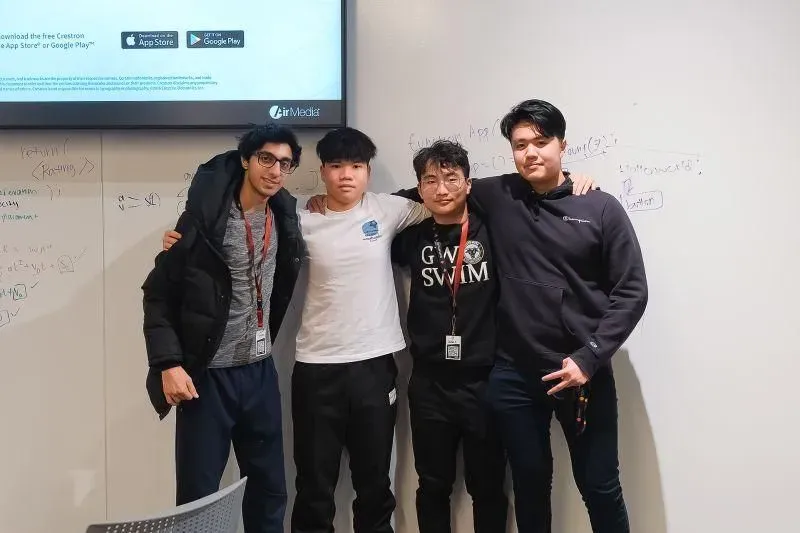
Jan. 15th 2023 ~ DEVPOST In today's fast-paced world, managing your time effectively is crucial for professional successAn emergency department management system that admits patients in the fairest way possible, taking into account both the patient's wait time and medical attention urgency. The Problem is Near Us! McMaster Children Hospital, ER department with wait times of up to 3.5 hours during peak hours Hamilton General Hospital with wait times of up to 3.6 hours On average, the HQO says patients waited about 2.2 hours in an emergency room for their first assessment by a doctor. About the Project We were doing research on issues and problems with the healthcare industry in Hamilton and Canada in general. The ER departments surprisingly had really long wait times so we wanted to tackle this problem since it could potentially result in lives being saved. We decided to combine React Native with the Google Firebase database system in order to build our phone app / web page. DEVPOST: LINK GITHUB: LINK

How Trade Fuels CO2

This data science project explores how trade volume correlates with carbon efficiency over time, using real-world datasets and Python visualizations. A Data Analytics Project Oct. 15th 2024 ~ GITHUB Analyzing the relationship between international trade and CO₂ consumption among the world’s top economies—USA, China, Germany, and the European Union. This data science project explores how trade volume correlates with carbon efficiency over time, using real-world datasets and Python visualizations. The datasets used for this project are available online with the folowing links: • http://data.un.org/Data.aspx?d=ComTrade&f=_l1Code%3a1 • https://zenodo.org/api/records/14106218/ϐiles-archive The visualizations aim to explore the link between economic activity (measured by total exports and imports) and environmental cost (measured by consumption-based CO₂ emissions). The first set of scatter plots visualizes how CO₂ emissions scale with total trade over time, using bubble sizes to indicate either emissions per trade unit or total emissions. This provides an intuitive sense of both efficiency and impact. The second set of line plots tracks the year-by-year trends of CO₂ emissions per $1 billion traded, highlighting which countries are becoming carbon-efficient in their trade practices. Together, these visualizations allow us to identify trends, compare countries, and assess whether economic growth is being decoupled from environmental harm—an essential question in sustainable development. China has undergone a dramatic transformation over the past few decades, evolving from one of the world's smallest trading economies into the largest by total trade volume. In the early years of the dataset, China lagged behind other countries like the USA and Germany in terms of export and import activity. However, through rapid industrialization, investment in manufacturing, and integration into global supply chains, China's trade surged—eventually surpassing all other economies analyzed. Interestingly, this explosive growth initially came at a high environmental cost. China was the least efficient among the four economies in terms of CO₂ emissions per dollar of trade, reϐlecting its heavy reliance on coal and energy- intensive production. Over time, however, China has significantly improved its carbon efficiency, reducing its CO₂ emissions per $1 billion of trade. This improvement suggests a shift toward cleaner technologies, better energy standards, and a growing focus on environmental responsibility alongside economic growth.

Train AI Agent with Search

AI training costs can be staggering. To tackle this, I optimized our AI agent by integrating live web search and browsing capabilities, giving the model real-time context on demand instead of relying on expensive, large-scale retraining. Web Search Trained AI Agent Aug. 12th 2024 ~ GITHUB This is my version of a simple AI chatbot, in retrospect you can use the exact same format of this code and change it so that this can be a AI agent for anything. What is unique to this AI agent is that for those who lack a high amount of compute to train their model, this system relies on the world-wide-web to provide accurate data to the model. Are you interested in diving into Islamic teachings or preparing for a presentation on Islamic topics? Maulana-GPT is your AI-powered companion, designed to assist you in exploring the vast ocean of Islamic knowledge. Features: 🕌 Quick Answers: Instantly access information on Islamic beliefs, practices, and history. Maulana-GPT is built to provide accurate and insightful responses, making it an excellent resource for your inquiries. 📚 Note-Making Assistant: Whether you're preparing a presentation or conducting research, Maulana-GPT can help you organize your thoughts and gather relevant information on topics like the Five Pillars, the life of the Prophet Muhammad (peace be upon him), or Islamic jurisprudence. 🎓 Educational Tool: Maulana-GPT is perfect for students, researchers, and curious minds. Enhance your understanding of Islam with a user-friendly AI that’s always ready to help. 🤖 24/7 Accessibility: Maulana-GPT is available whenever you need it. There's no need to wait for specific hours—get the information and assistance you need at any time. 🚨 Disclaimer: While Maulana-GPT provides valuable insights, it’s important to verify information and consult knowledgeable scholars or trusted resources, especially for critical decisions concerning your faith.