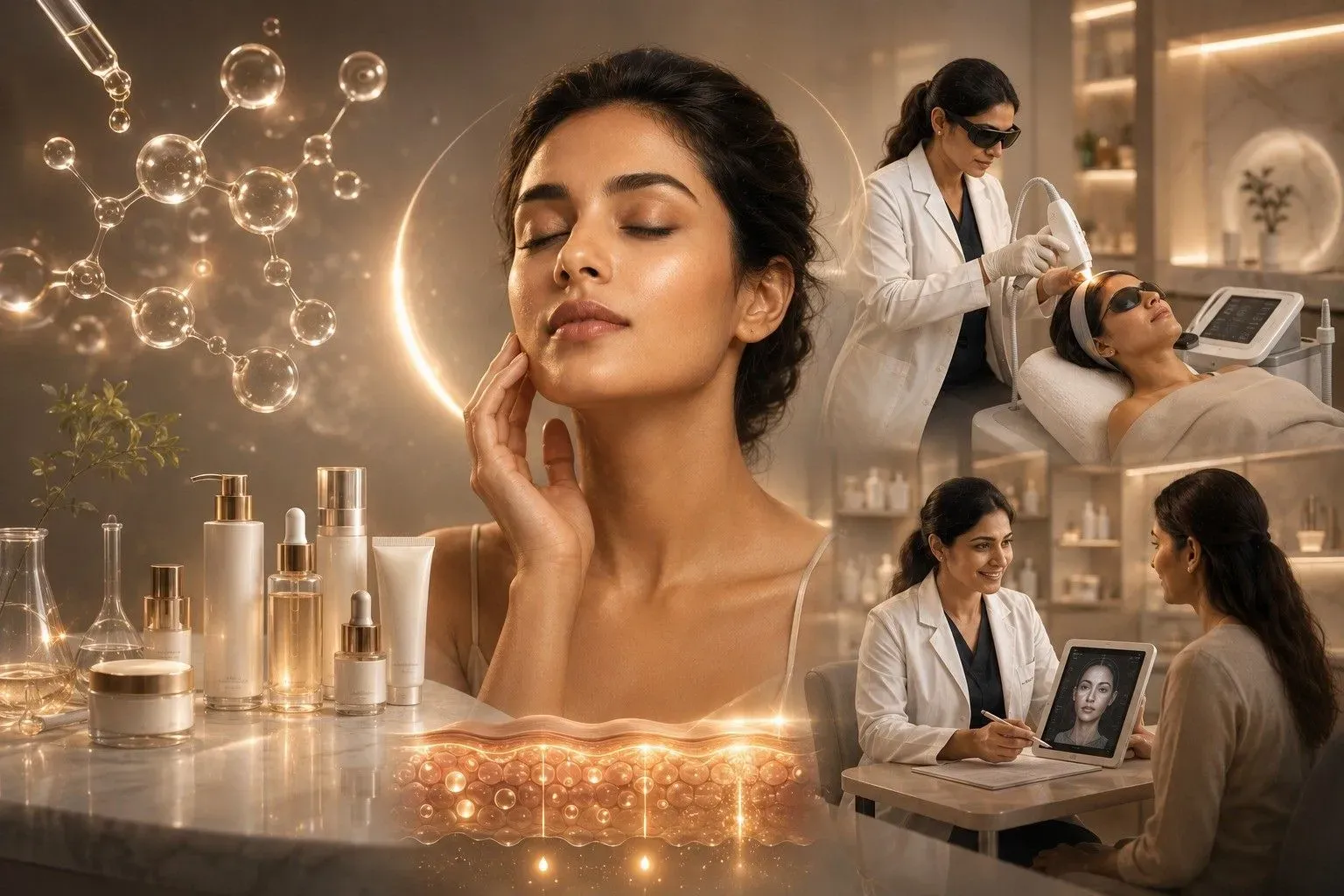
Transform Your Skin Routine Today
Your Routine Is.
A Complete Guide to Skincare, Ingredients, and Treatments That Actually Work
Your Skin Is Not the Problem
Your Routine Is.
A Complete Guide to Skincare, Ingredients, and Treatments That Actually Work

Reveal Your True Skin Glow
That serum you spent a lot on did nothing. The moisturizer that normally leaves your skin feeling rough and oily. Sunscreen you skip in the heat of Kerala because it leaves a white cast. The moisture, the warmth, the harsh summertime sun, the tough water, and the harmful substances all create skin conditions that are actually more difficult than what most common skincare guidance. If any of this sounds familiar, you are not doing skincare wrong — you are doing skincare without understanding what your skin actually needs.
For men and women between 18 and 50 living in Thrissur and across Kerala, getting skincare right is harder than it looks. The moisture, the warmth, the harsh summertime sun, the tough water, and the harmful substances all create skin conditions that are actually more difficult than what most common skincare guidance dermatologist doctors in Thrissur, skin specialists in Thrissur, and skincare tips Kerala skin care routine Thrissur, best skincare ingredients, chemical peel treatment Thrissur, laser skin treatment Kerala microneedling Thrissur pigmentation treatment Kerala acne skincare routine, Thrissur
Fortunately, skincare science has never been more sophisticated, approachable, or well-understood than it is today. And Kerala's own Ayurvedic tradition—which has been understanding skin through a completely different but equally valid lens for five thousand years — has ingredients that modern dermatology is actively studying, validating, and incorporating into clinical practice.

This is certainly not a guide for selecting products. It is more educational in nature since people with knowledge regarding their skin make better decisions and are able to see better results, without wasting their time and effort on products that would never suit them at all.
Understanding the proper maintenance of one’s skin through the use of appropriate products and a regular treatment regimen, along with seeking advice from a professional when at-home treatments fail to provide acceptable results, can significantly impact the condition of one’s healthy skin. In this context, the best skin care hospitals in Thrissur provide their patients with high-quality testing facilities, successful techniques of treatment, and structured programs.
How Your Skin Actually Works — The Foundation of Everything
You must understand what your skin is doing on its own and what you need to do for it to function properly before you can design an effective skincare regimen.
Your Skin Structure and the Functions of the Various Layers
The skin is made up of various layers, each layer having different functions. Epidermis is what makes up the outer layer of your skin; it’s the layer you touch when applying products on your skin. The stratum corneum is the most important layer of the skin. A brick wall is comparable to the stratum corneum. Your skin cells form the bricks, while the mortar holding them in place consists of a very exact combination of fats in particular ratios.
When this balance is untouched, the wall itself does two things very well. It keeps water sealed inside your pore, and it keeps bacteria, allergens, pollution and irritants locked out. The wall typically develops gaps when the ratio is changed by dangerous cleansers, UV damage, stress, or incorrect skincare products. Moisture escapes. Irritants enter. Inflammation begins. And practically all common skin conditions, including acne, eczema, and early ageing, begin with this.
Underneath the stratum corneum, the deeper levels of the epidermis continually make new skin cells. They start to develop in the deeper layers of the skin and gradually ascend over a period of approximately 28 days to transform into the tough protective skin cells located in the outermost layer of the skin. It is because of this cycle lasting 28 days that most skincare products take several weeks to deliver any visible effect.
Underneath the whole epidermis lies the dermis—the thicker inner layer that comprises collagen, elastin, blood vessels, hair follicles, and oil glands. The collagen provides skin with its toughness and integrity. It is elastic because it stretches and returns to its original form. However, when the ultraviolet rays of light, inflammation, or aging cause the breakdown of such fibers that occurs more quickly in the bright sunlight of Kerala than anywhere else, the skin loses its firmness, starts showing wrinkles, and sags.
The Acid Mantle — The Invisible Protective Layer of Your Skin
The surface of your skin possesses a naturally occurring slightly acidic pH value, typically ranging from 4.7 to 5.75. The acid layer formed on the surface of the skin is known as the acid mantle and is among the most crucial yet the most commonly damaged components of your skin's defence mechanism.
The acid mantle stops the growth of harmful bacteria, helps good bacteria to thrive, and triggers enzyme action. By using alkaline bar soap to cleanse your face (with pH value ranging from 9 to 11), you remove this protective layer entirely. The skin becomes highly alkaline, enzymes become inactive, lipids dissolve, and the skin becomes dry and tight.
Within the context of Kerala’s climate, where people tend to wash their faces more than a few times each day just to regulate sweat production, this particular trend is among the most widespread and destructive skincare habits. The solution to this problem would be to use cleansers that have an appropriate pH level.
Skin Microbiome: Your Skin's Living Defence Team
Our skin is home to trillions of various bacteria, fungi, and other microorganisms. While performing normally, these organisms help us by providing us a natural defense system that utilizes its capability to produce antiseptics, competes with other harmful pathogens, and works in coordination with the immune system.
If the balance between such microorganisms is disturbed through an excess usage of antibiotics,
strong soaps, or any kind of damage done to the skin barrier itself, the dangerous bacteria can begin to take over, and infections will form. Until the microbiological environment returns to its normal state, there is no way to treat any type of allergy or inflammation.
The Core Daily Skincare Routine. What You Actually Need and Why
Any scientifically valid skin care routine must follow four fundamental steps every day. The rest may not necessarily be mandatory.
Step 1 — Cleansing
The purpose of the cleanser is very specific: to eliminate excess sebum, sweat, pollutants, and dead skin cells while preserving the barrier lipids that maintain the integrity of the skin's surface. Most individuals in Kerala use a cleanser that is way too harsh for use on a daily basis and strips their skin's natural barrier each morning while trying to feel clean.
Any cleanser operates on the basis of surfactants, which are substances with one end bonded to water molecules and the other to oil molecules. Therefore, the surfactants in the water you rinse your face with after using such a cleanser remove everything.
The harsh surfactant sodium lauryl sulphate, which is present in almost all foam-producing cleansing products and bar soaps, is extremely good but very aggressive. For humid and sweaty weather like that in Kerala, it is best to use a mild cleansing product with low surfactants with pH ranging from 4.5 to 6.
Double cleansing is a truly effective method for evenings, especially for those who wear sunscreen or makeup or spend time in contaminated outdoor settings in Thrissur. Oil cleansers strip sunscreen, pollutants, and oxidized sebum based on the scientific principle that likes dissolve likes. After finishing this method, a water-based cleanser removes the remains properly without being extremely tough.
Step 2 — Moisturising
Moisturization is not about ensuring the skin feels smooth. The focus is on maintaining the integrity of the skin's structure and its proper functioning. Moisturising agents come in three different varieties, each of which operates on a very distinct principle.
Humectants get their moisture from the inner layers of the dermis and from the air in humid weather conditions. Hyaluronic acid is by far the most common humectant and can absorb up to 1000 times its weight in water. The tiny molecule glycerin easily establishes robust bonds with the lipids, strengthening them and improving their capacity to hold onto water. Because urea is a naturally occurring component of the skin's own mechanism, using it, even in small amounts, is highly effective for moisturizing.
Emollients offer lubrication within the intercellular spaces of the skin, resulting in a smooth and soft texture. Squalane, ceramides, and oils derived from plants serve as emollients and replace the barrier lipids, which are constantly getting depleted due to washing and exposure.
Occlusives form a protective film on top of the skin, thereby reducing trans-epidermal water loss drastically. The most effective occlusive agent is petrolatum, which is present in Vaseline and can reduce water loss by more than 98% with just one application. In the humid weather conditions of Kerala, it is better to use a lighter occlusive such as dimethicone rather than the heavy petrolatum.
Step 3 — Sunscreen
Sunscreen is not optional in Kerala. Since UV radiation is the main cause of pigmentation, early aging, skin cancer, and collagen breakdown, it is the most crucial skincare product you can use—more crucial than any serum, treatment, or active ingredient.
UVR affects the skin in two ways. UVB is the reason for the redness and burning sensation of the skin, usually referred to as sunburn, and has a very harmful impact on the DNA of skin cells. UVA goes much deeper to affect tissues such as collagen and elastin in the dermis layer of the skin, and 95 percent of UV light that strikes the earth is made up of UVA rays. Importantly, the penetrating power of the UVA ray allows penetration through glass and clouds.
A broad-spectrum sunscreen with minimum SPF 30 — ideally SPF 50 in Kerala's UV intensity — worn every morning regardless of whether you are going outdoors, is the foundation of every other skincare goal. Without it, brightening treatments cannot brighten, anti-aging treatments cannot work against the damage being continuously added, and pigmentation will return faster than any treatment can clear it.
What Active Ingredients Do, How They Operate, and Which Are Valuable
The chemical compounds that impact the cellular structure of the skin are known as "active components" in skin care based products. The knowledge of what an active ingredient does and how it acts will help someone create a skin care routine that is effective and not just a waste of money because of the harmful effects of the products that are used.
Retinoids — The Gold Standard of Skincare Science
Retinoids are vitamin A derivatives and are the most comprehensively studied and clinically proven category of skincare ingredients available. They do not work as exfoliants — they work by binding to receptors inside skin cells and changing how those cells behave at a genetic level.
The retinoids ensure that the skin's cell turnover rates remain healthy and thereby prevent pores from getting blocked and causing pimples. The retinoids stimulate fibroblasts within the skin to develop collagen. Collagen that has already formed is kept from breaking down by retinoids. They speed up the process through which skin pigment moves. The end result of all this is that they create thicker skin over time.
Over-the-counter retinol requires two enzymatic conversion steps inside the skin before it becomes active. Retinaldehyde, which only requires one conversion step and functions roughly ten times faster than retinol, is found in some cosmetic products. Prescription tretinoin is the active form itself and produces the most significant results, but also the most significant initial irritation during the adaptation period.
Starting retinoids slowly — once or twice a week, gradually increasing frequency — gives skin time to adapt without the dryness, peeling, and redness that causes most people to stop before results appear. Results require a minimum of twelve weeks of consistent use.
Vitamin C – The Multi-Tasking Antioxidant
L-ascorbic acid, being an active component of vitamin C incorporated into cosmetic products, is a powerful antioxidant that works towards neutralizing free radicals generated by UV and pollution so that their action does not negatively affect collagen formation and skin pigmentation. L-ascorbic acid is also an important element in the process of collagen synthesis and hence becomes one of the rarest ingredients in the market that not only protects but also stimulates the process of collagen production simultaneously.
The issue associated with vitamin C is that of stability since l-ascorbic acid oxidizes quickly under the influence of light, air, and moisture, making the product either orange or brown. For a vitamin C serum to be effective, it should be developed at a low pH below 3.5 and be stored in opaque packages. Additionally, a product containing this ingredient should be consumed within three months after its opening date. Vitamin C combined with vitamin E and ferulic acid is the most stable and efficient variant of all.
Individuals who have irritation due to pure L-ascorbic acid can use its oil-soluble derivatives, such as tetrahexyldecyl ascorbate, which can pass through the skin barrier easily with fewer chances of irritation, while converting into active vitamin C once absorbed inside skin cells.
The Most Versatile Ingredient in Skincare - Niacinamide
Niacinamide, or vitamin B3, is one of the most versatile skin care ingredients that has real functionality and benefits to offer. They increase the production of ceramides in the skin, which builds the lipids of the barrier structure of the skin cells. They inhibit the transfer of melanin from the melanin-producing cells to nearby skin cells up to 68 percent, which makes them one of the most efficient pigmentation treatments without the risk of irritation. Everyone can tolerate niacinamide, and it doesn't interfere with other substances.
Chemical Exfoliants AHAs and BHAs That Really Work
Alpha Hydroxy Acids are water-soluble exfoliating ingredients that exfoliate by disrupting the bonds of the dead skin cells stuck together, thereby helping in shedding them evenly and exposing the new cells beneath. As the smallest molecule in the AHA class, glycolic acid acts quickly but has a high potential for irritation. Lactic acid is bigger in size but gentler on the skin and is used for both exfoliating purposes as well as for being a humectant. The largest and gentlest AHA ingredient, mandelic acid, is ideal for Kerala's darker skin tones.
Salicylic acid is a type of beta hydroxy acids it is classified as oil-soluble. It is not water-soluble. Just this one factor makes it an extremely useful agent for dealing with acne and oily skin because it is able to penetrate deep down inside the oil-filled pores of the skin, peel away the cells in the linings of these pores, clear out the blockages of debris within them, and kill off the bacteria responsible for acne formation.
Professional Treatments — What Happens Inside Your Skin
Chemical Peels — Controlled Resurfacing From the Inside Out
The process of chemexfoliation is much more than just exfoliation performed in a medical setting. It is an organized procedure in which damaged skin layers are removed in a controlled fashion that stimulates a healing reaction and formation of new skin cells.
In the case of superficial peel, a very concentrated mixture of either AHAs or salicylic acid is used to remove the most superficial layers of the stratum corneum. This kind of treatment leaves the complexion smooth and radiant while also enhancing pigmentation and controlling cell renewal. Superficial peels have no recovery period and provide an excellent solution for mild cases of pigmentation and acne, among other skin issues.
Medium-depth peels are formulated using TCA at concentrations between 35% and 50%. The penetration of this peel is deep enough to reach the papillary dermis, leading to a certain protein coagulation that creates visible whitening of the skin on the epidermis layer. Such deep penetration results in the process of rejuvenation of the skin, which causes regeneration of epidermal cells with improved texture and minimal pigmentation, along with firming as a result of collagen production in the papillary dermis. The social recovery period after medium-depth peels is up to seven days.
Deep peels using phenol reach the reticular dermis — the deep structural layer of the skin. They can provide immediate and permanent outcomes for deep facial wrinkles, severe sun damage, and noticeable laxity, but need medical observation during the process since phenol is taken systemically. These are performed only in fully equipped medical settings by experienced dermatologists.
Laser Treatments — Precision Light Energy for Specific Targets
In the dermatology specialty, the principle of laser action follows the idea of selective photothermolysis. In this regard, the idea means that when there is a use of a laser beam, the laser light with certain wavelengths targets particular tissues in the body, but not others. The reason why there are many types of lasers is that they use various chromophores to absorb different wavelengths.
For pigmentation — the most common cosmetic concern among Kerala's population — Q-switched and picosecond lasers deliver ultra-short pulses of light at wavelengths absorbed specifically by melanin. The energy shatters pigment particles into microscopic fragments that the immune system clears over the following weeks. Because picosecond lasers deliver energy in pulses that are one trillionth of a second long—so fast that the energy is transformed into a mechanical shockwave rather than heat—darker skin tones can be treated with a significantly lower risk of post-inflammatory hyperpigmentation than with previous nanosecond technology.
Pulsed dye lasers at 595 nanometers are specifically absorbed by oxyhemoglobin in blood vessels, causing vascular redness and rosacea, which are becoming more prevalent in Kerala as a result of heat exposure. The energy selectively coagulates and destroys the abnormal vessels, causing redness while leaving the surrounding skin completely unaffected. Results are often visible after a single session.
Ablative fractional-based lasers, carbon dioxide, and erbium-based products are used for facial exfoliation, elastin stimulation, and acne scar removal. They dissolve precise cellular tissue strands throughout the skin while leaving your outer tissues intact to hasten healing. This fractional treatment method results in the deep elastin stimulation method of ablative regeneration with a very much quicker recovery time than standard fully ablative methods. Non-ablative fractional lasers achieve similar collagen stimulation by heating the dermis without removing any surface tissue at all, producing more gradual results with essentially no downtime.
Gallery

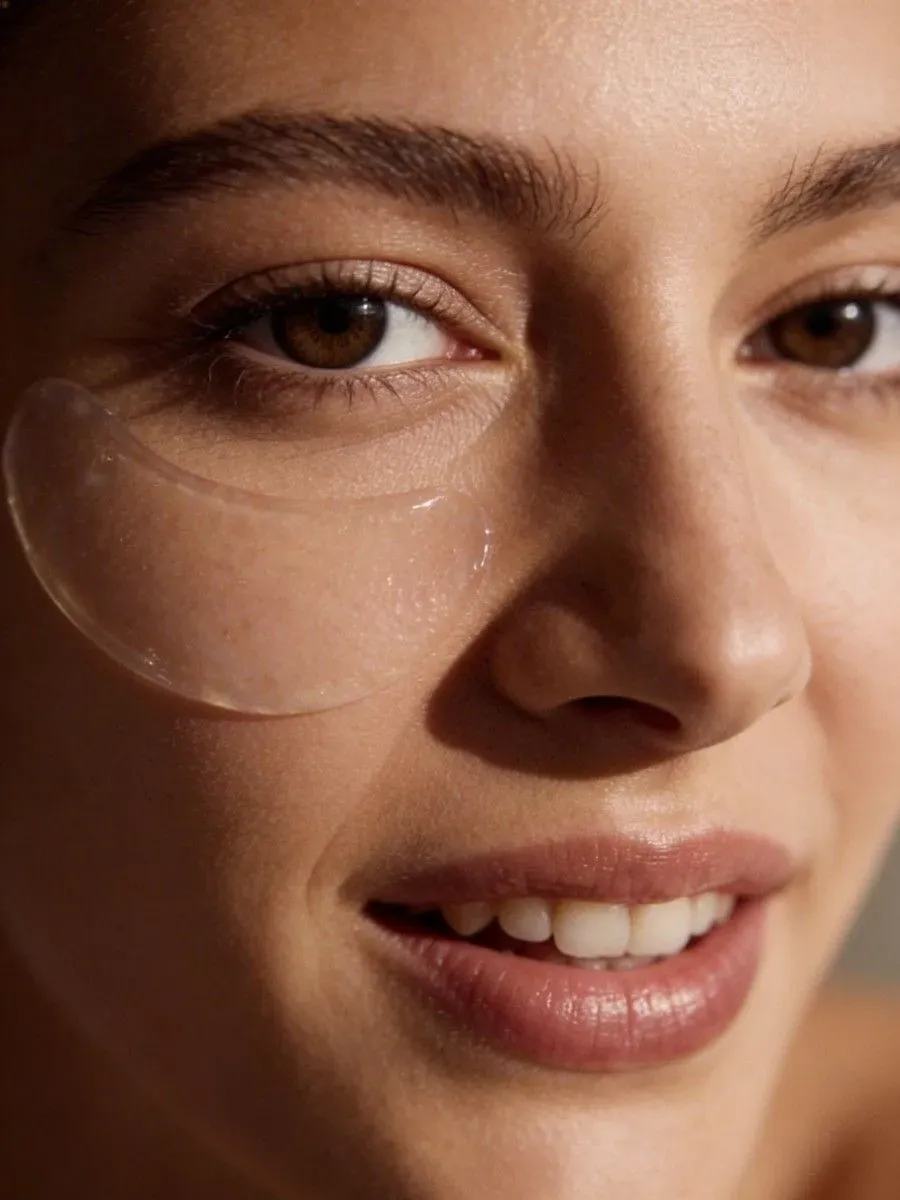

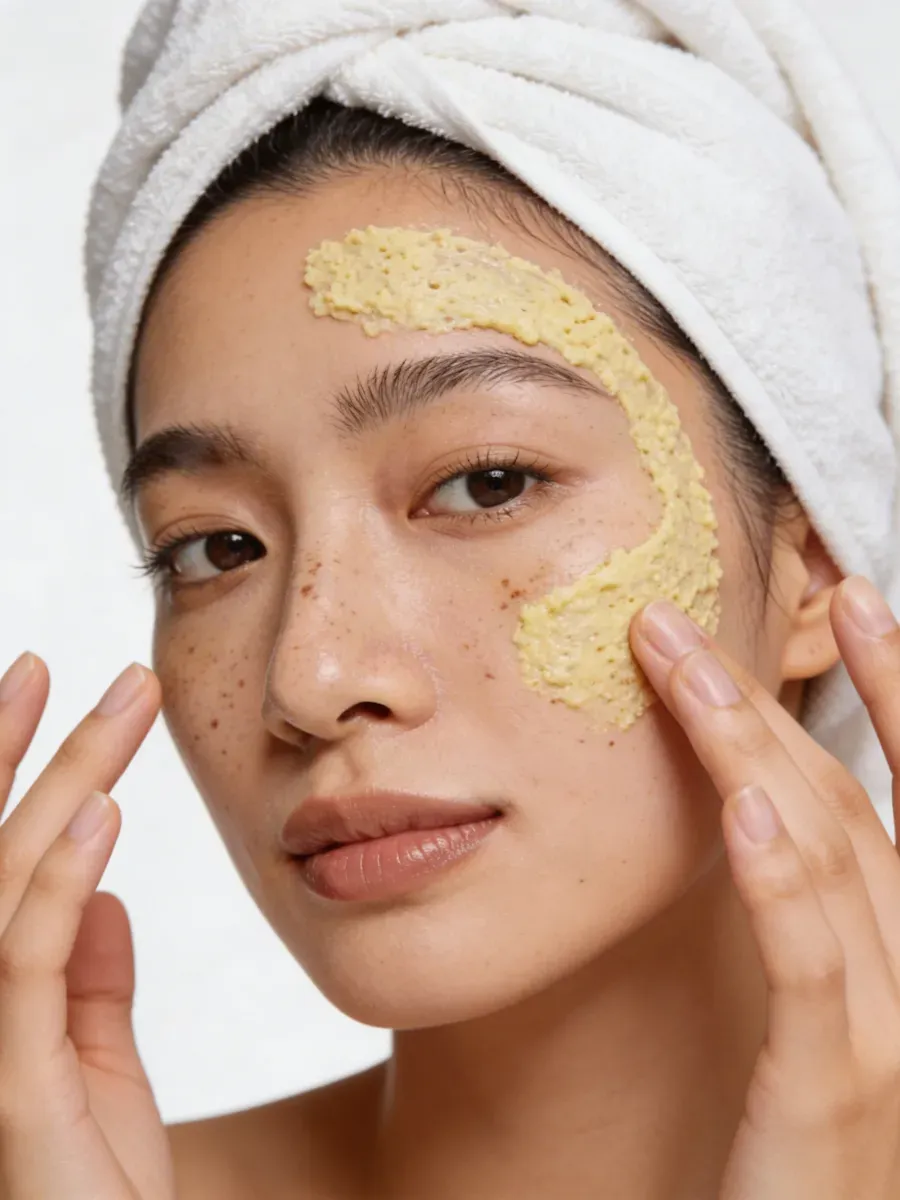

Transform Your Routine, Transform Your Skin.
Discover the power of effective skincare today!
Microneedling and Radiofrequency Microneedling — Rebuilding From Within
The microneedling procedure involves the creation of numerous tiny perforations in the skin via the use of an instrument equipped with numerous medically-approved fine needles. Every puncture triggers the skin's wound response, which results in inflammation and the release of growth factors that encourage fibroblasts to produce new collagen and elastin. The accumulation of collagen through multiple treatments leads to noticeable improvements in skin condition.
RF microneedling machines such as Morpheus combines the penetration technology from microneedling with the delivery of radiofrequency power directly to the point where the needles puncture the skin. Up to 60–70°C of heat is produced in the deeper dermal layer by the radio frequency. The tissue damage also initiates a prolonged healing response that continues to produce new elastin for three to six months following the procedure. This heat causes the existing collagen fibres to contract immediately, tightening the skin during the procedure itself.
The combination of immediate tissue contraction and long-term collagen remodelling makes RF microneedling one of the most effective non-surgical tightening treatments currently available, particularly for jawline definition and skin laxity in the mid-face — concerns that are increasingly common in the 35 to 50 age group across Kerala
Frequently Asked Questions
Are natural skincare products better than synthetic ones?
Not necessarily. Both natural and synthetic ingredients can be effective or irritating depending on their formulation and your skin type. The key is to choose products that suit your individual needs.
Is it necessary to use sunscreen daily?
Yes, daily sunscreen use is essential to protect your skin from harmful UV rays, prevent premature aging, and reduce the risk of skin cancer.
Can I treat acne with over-the-counter products?
Mild to moderate acne can often be managed with OTC products containing ingredients like benzoyl peroxide or salicylic acid. For severe cases, consulting a dermatologist is recommended.