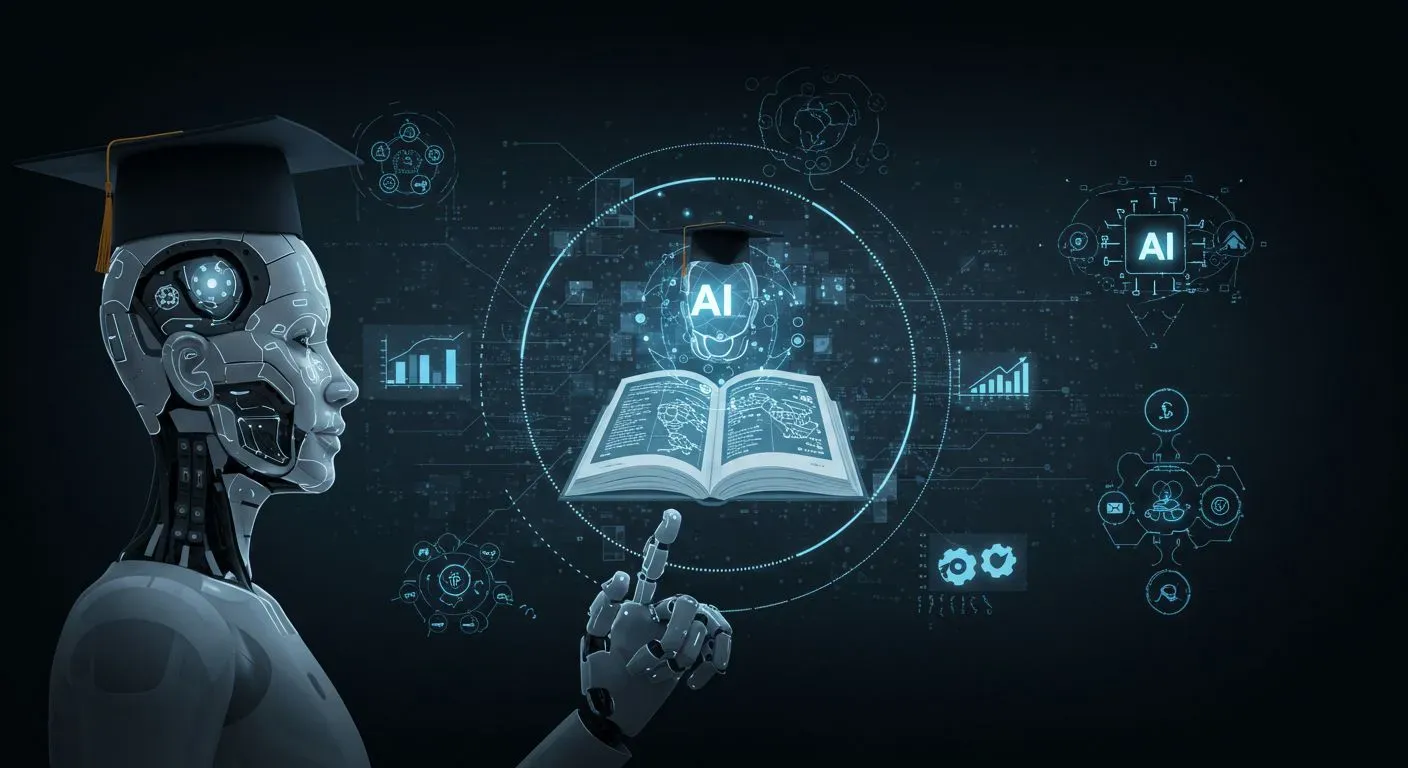
How AI is Transforming Education
How AI is Crafting Personalized Learning Paths
For over a century, the dominant model of education has remained remarkably consistent: a single teacher delivering a standardized lesson to a classroom filled with diverse students. Each student brings their own unique background, learning speed, preferred style, and level of prior knowledge. In this one-to-many model, even the most dedicated educators face the immense challenge of meeting every individual's needs simultaneously. The inevitable result is a compromise – a pace that can leave some students behind while boring others who have already mastered the material. As we navigate the educational landscape of June 6, 2025, this traditional paradigm is being fundamentally reimagined by the power of Artificial Intelligence.
This article is the first in a series exploring How AI Is Transforming Education, and it begins with one of the most promising and impactful applications: the creation of AI-powered personalized learning paths. This transformative approach moves beyond the rigid, linear curriculum, leveraging AI to tailor educational journeys to individual student needs. By continuously adapting the pace and content based on a student's real-time performance data, these systems strive to ensure optimal learning outcomes for every single learner, fostering a more engaging, equitable, and effective educational experience. This is no longer a far-off vision; sophisticated adaptive learning platforms are demonstrating the profound potential of this technology. For a diverse nation like Canada, committed to providing high-quality, equitable education across its provinces and territories, the promise of personalizing learning at scale holds particular significance. Let's delve into how AI enables these individualized paths, the benefits they offer, and the critical challenges that must be navigated for their responsible implementation.
The Problem with the "One-Size-Fits-All" Model
The traditional classroom, despite its successes, has inherent structural limitations that personalized learning seeks to address:
Pace Mismatches: Students who grasp concepts quickly often become disengaged or are not sufficiently challenged, while students who require more time can fall behind, leading to cumulative knowledge gaps that become harder to bridge over time.
Lack of Differentiation: Catering to diverse learning styles (e.g., visual, auditory, kinesthetic, reading/writing) is incredibly difficult for one teacher managing a large class. A verbal explanation that works perfectly for one student may be ineffective for another who learns best through hands-on interaction.
Teacher Bandwidth: Human teachers have finite time and energy. It is nearly impossible for them to provide continuous, one-on-one, customized feedback and instruction to every student in a classroom of 20, 30, or more.
Engagement Gaps: When content doesn't resonate with a student's interests or isn't presented at the right level of difficulty, engagement wanes, which is a critical precursor to learning.
How AI Forges a Personal Path: The Mechanics of Adaptation
AI-powered learning platforms create personalized paths through a continuous, data-driven cycle. Here’s how it works:
1. Initial Assessment and Learner Profiling: The journey begins with the AI creating a baseline profile for each student. This goes beyond a simple pre-test. It can involve interactive diagnostic exercises, gamified challenges, or questionnaires to gauge not only a student's current knowledge and skills in a subject but also their preferred learning modalities, cognitive strengths, and even their personal interests.
2. Real-Time Data Collection and Analysis: As a student engages with the platform, the AI becomes an attentive, silent observer, collecting thousands of data points in real-time. It tracks:
Correctness and incorrectness of answers.
The time taken to complete tasks or answer specific questions.
Concepts where the student hesitates or requests help.
Which types of content (videos, text, simulations) the student engages with most.
The specific errors made, revealing underlying misconceptions.
This constant stream of data allows the AI to build a rich, dynamic, and incredibly detailed model of each student's unique learning state.
3. Dynamic Adaptation of Pace and Difficulty: Based on this real-time analysis, the AI adjusts the learning pace second-by-second:
Acceleration: When a student demonstrates mastery of a topic, the system automatically introduces more advanced concepts or more challenging problems, preventing boredom and keeping them in a state of productive challenge (their "zone of proximal development").
Remediation: If a student struggles, the AI slows down. It doesn't just repeat the same explanation; it might offer a different type of resource (e.g., a short video if a text explanation failed), provide more foundational exercises to shore up prerequisite knowledge, or break the problem down into smaller, more manageable steps.
4. Dynamic Adaptation of Content and Modality: This is where personalization truly shines. The AI curates and presents content in the format most likely to be effective for that individual student:
A student identified as a visual learner might be presented with an infographic or an interactive simulation to explain a scientific process.
An auditory learner might receive a short podcast-style explanation.
A kinesthetic learner could be guided through a virtual lab experiment.
To boost engagement, the AI can even frame math or physics problems around a student's stated interests, such as sports, music, or video games, making abstract concepts more relatable and concrete.
The Benefits of Personalized Learning Paths
The shift towards AI-driven personalization offers profound benefits for all stakeholders in the educational ecosystem.
For Students:
Improved Learning Outcomes: By ensuring students master each concept before moving on and by presenting information in the most effective way for them, learning is deeper, and retention is significantly improved.
Increased Engagement and Motivation: Learning becomes a more active and less frustrating process. Students feel a greater sense of control and accomplishment, which boosts confidence and intrinsic motivation.
Development of Metacognition: The system's continuous, targeted feedback helps students understand how they learn best, fostering self-awareness and turning them into more effective, self-directed learners for life.
Equity and Inclusivity: Personalized paths provide immediate, targeted support to struggling students, helping to close learning gaps before they widen. It provides a more equitable environment where every student receives the support they need.
For Educators:
Empowerment, Not Replacement: This is a crucial point. AI-powered platforms are designed to augment, not replace, teachers. By automating routine tasks like grading, lesson planning for remediation, and basic instruction, AI frees up teachers' valuable time.
From "Sage on the Stage" to "Guide on the Side": Teachers can transition from being the primary deliverer of content to being high-value mentors, coaches, and facilitators. They can focus on leading collaborative projects, fostering critical thinking, nurturing creativity, and providing targeted one-on-one or small-group support to students who need it most.
Actionable, Data-Rich Insights: AI provides educators with a powerful analytics dashboard, offering a clear overview of individual student progress and class-wide trends. Teachers can instantly see which students are excelling, who is struggling, and which specific concepts are proving difficult for the class as a whole, allowing for highly efficient and targeted interventions.
Challenges and Ethical Considerations on the Path Forward
The implementation of AI-driven personalized learning is not without significant challenges that require careful and ethical navigation:
Data Privacy and Security: These systems collect vast amounts of granular data on student performance and behavior. It is paramount that this sensitive data is protected with robust security measures and governed by clear ethical policies, in full compliance with privacy regulations like Canada's provincial health and education data laws and the federal PIPEDA.
Algorithmic Bias: If the AI's algorithms or the data they are trained on contain biases, the system could perpetuate stereotypes or create learning paths that unfairly disadvantage students from certain socioeconomic or demographic backgrounds. Rigorous auditing for bias is essential.
Quality of Content and Pedagogy: The effectiveness of a personalized learning path is entirely dependent on the pedagogical quality of the AI's algorithms and the educational content it provides. A poorly designed system could lead to shallow rote learning rather than deep conceptual understanding.
The Digital Divide: An over-reliance on AI-based learning risks exacerbating inequalities. Students without reliable access to devices and high-speed internet – a reality in some remote, Indigenous, and low-income communities across Canada – could be left even further behind. Ensuring equitable access to technology is a prerequisite.
Nurturing Holistic Skills: AI is often best at optimizing for easily measurable skills and knowledge. There is a risk of undervaluing crucial but harder-to-quantify competencies like creativity, collaboration, ethical reasoning, and critical thinking. The learning experience must be designed to nurture the whole child.
Maintaining Human Agency: The system should be a guide, not a rigid taskmaster. Students and teachers must retain the agency to make choices, explore interests outside the suggested path, and override the AI's recommendations when their own judgment suggests a different approach.
The Future of Personalized Learning
Looking towards the next decade, we can expect personalized learning paths to become even more sophisticated. AI will likely incorporate affective computing to gauge student emotional states (like frustration or excitement) to further adapt the learning experience. Integration with immersive technologies like VR and AR will provide personalized, hands-on learning simulations. Ultimately, these AI systems could evolve into lifelong learning companions, supporting individuals not just through K-12 and higher education, but throughout their careers, helping them adapt and acquire new skills in an ever-changing world.
Conclusion
AI-powered personalized learning paths represent a monumental opportunity to transform education, moving us from a static, one-size-fits-all model to a dynamic, student-centered approach. The potential to improve learning outcomes, boost student engagement, and empower educators with unprecedented tools and insights is immense, offering a powerful pathway to achieving greater educational equity and excellence in Canada and around the world.
However, realizing this potential requires a thoughtful, cautious, and profoundly human-centric approach. As we stand at this technological crossroads in June 2025, we must prioritize the ethical challenges of data privacy, algorithmic fairness, and equitable access. The goal is not to automate education but to build a symbiotic relationship where AI handles personalized instruction at scale, thereby empowering human teachers to focus on their most vital role: to inspire, mentor, and cultivate the critical, creative, and compassionate thinkers our future demands. This is the true promise of AI's transformation of education.
An Introduction to Agentic AI
Obstruct
For decades, artificial intelligence has largely functioned as a sophisticated tool, a powerful instrument wielded by human hands to perform specific, narrowly defined tasks. Today, we stand at the precipice of a monumental shift, as AI begins to evolve from a passive tool into an active, autonomous partner. This emerging paradigm is known as Agentic AI, a field focused on creating intelligent agents—autonomous entities that can perceive their environment, make decisions, and take actions to achieve specific goals. This article marks the beginning of a new series dedicated to dissecting this revolutionary approach to artificial intelligence. The transition from task-specific AI to goal-directed autonomous agents represents the next major wave of technological disruption, with profound implications for science, industry, and society. For Canada, a global leader in AI research, understanding and pioneering the development of agentic systems is a strategic imperative for shaping the future of the digital economy. This introductory article will establish a foundational understanding of Agentic AI by defining the concept of an intelligent agent, contrasting the agentic paradigm with narrow AI, exploring the different types and architectures of agents, and providing an overview of its groundbreaking applications.
1. The Essence of Autonomy: What is an Intelligent Agent?
At the very heart of Agentic AI is the concept of the intelligent agent. The term, drawn from the foundational work in artificial intelligence by researchers like Stuart Russell and Peter Norvig, has a precise meaning. An agent is anything that can be viewed as perceiving its environment through sensors and acting upon that environment through actuators. This is a deceptively simple yet powerful definition that encompasses a vast range of entities, from a simple thermostat to a complex self-driving car, and even a human being.
Let's break down this core definition:
Environment: This is the world in which the agent exists and operates. The environment can be physical (the road network for a self-driving car), virtual (the internet for a web-crawling bot), or a hybrid of the two. Environments can be simple or complex, static or dynamic, discrete or continuous.
Sensors: These are the agent's inputs, the means by which it perceives the state of its environment. For a robot, sensors might include cameras, LiDAR, microphones, and tactile sensors. For a software agent like a chatbot, the "sensor" is the input text provided by a user. For a stock-trading agent, the sensors are the real-time data feeds from financial markets.
Actuators: These are the agent's outputs, the tools it uses to take action and effect change upon its environment. For a robot, actuators are its motors, wheels, grippers, and speakers. For a software agent, actuators could be displaying text on a screen, executing a command in a computer's terminal, or sending an email.
The defining characteristic that makes an agent intelligent and autonomous is what happens between perception and action. An intelligent agent doesn't just react based on a simple, pre-programmed script. It uses its perceptions to inform an internal decision-making process, choosing actions that are intended to achieve a specific goal. This continuous cycle of perceive -> think -> act is known as the perception-action loop, and it is the fundamental operating principle of all intelligent agents. Autonomy, in this context, means that the agent can operate without direct human intervention for prolonged periods, making its own choices to best meet its objectives.
2. From Specialized Tool to General Problem-Solver: Agentic AI vs. Narrow AI
To fully grasp the significance of Agentic AI, it is crucial to contrast it with the dominant form of AI over the past decade: Narrow AI, also known as Weak AI or Artificial Narrow Intelligence (ANI).
Narrow AI is designed to perform a single, specific task. It operates as a highly specialized tool. Examples of narrow AI are all around us:
An image recognition model that can identify cats in photos.
A language translation service that can translate text from English to French.
A speech recognition system like Apple's Siri or Amazon's Alexa that transcribes spoken words into text.
A recommendation engine on Netflix or Amazon that suggests content based on your viewing history.
These systems are often superhuman in their specific domain. An image classifier can be more accurate than a human at detecting certain diseases in medical scans. However, their intelligence is brittle and one-dimensional. The AI that can master the game of Go cannot recommend a movie, translate a sentence, or even understand what a "game" is in the abstract sense. It is a tool that performs a function when prompted by a human.
Agentic AI, by contrast, is a paradigm focused on building autonomous systems that can pursue goals. An agent is not just a function to be called; it is a continuously running process that perceives, reasons, and acts over time.
The shift from narrow AI to agentic AI is a shift from building specialized components to building integrated, goal-seeking systems. It is the difference between manufacturing a car's engine and designing the entire autonomous vehicle.
3. A Spectrum of Intelligence: Types of Agents
Intelligent agents are not a monolithic category. They exist on a spectrum of increasing complexity and capability, defined by how they make decisions.
Simple Reflex Agents: These are the most basic types of agents. They make decisions based solely on the current percept, ignoring the rest of the percept history. Their decision-making is based on simple if-then rules. For example, a simple vacuum-cleaning robot's rule might be: if (the current square is dirty) then (suck). This agent is simple and efficient but has very limited intelligence. It cannot react to anything it cannot currently see, and it can easily get stuck in loops.
Model-Based Reflex Agents: To handle environments that are partially unobservable, an agent needs to maintain some internal state or "model" of the world. A model-based agent keeps track of how the world evolves independently of the agent, and how the agent's own actions affect the world. For example, a self-driving car needs to know where other cars probably are, even if it can't see them at that exact moment. It maintains an internal model of the traffic around it, which is updated based on its sensor inputs. This allows it to make better decisions than a simple reflex agent.
Goal-Directed Agents: Having a model of the world allows an agent to make better decisions, but it doesn't tell the agent what to do. Goal-directed agents have explicit goal information that describes desirable situations. They can combine their model of the world with their goals to choose actions that will lead them toward achieving those goals. This often involves planning and search algorithms. For example, a delivery drone's goal is to deliver a package to a specific address. It can use its model of the city and its goal to plan a route from its current location to the destination. This makes its behavior far more flexible and intelligent than a reflex agent.
Utility-Based Agents: Sometimes, achieving a goal is not enough. There may be multiple ways to reach a goal, some of which are better than others. A utility-based agent has a "utility function" that maps a state (or a sequence of states) onto a real number describing the associated degree of "happiness" or desirability. The agent then acts to maximize its expected utility. For example, a delivery drone could have multiple routes to its destination. A utility function might consider factors like speed, safety (avoiding high-wind areas), and energy consumption. The drone would then choose the route that provides the best trade-off among these factors—the one with the highest utility—making it a more refined and rational decision-maker than a simple goal-based agent.
Social Agents (Multi-Agent Systems): In many environments, an agent is not alone. It must interact with other agents (which could be other AIs or humans). Social agents are capable of communication, negotiation, and collaboration. They must be able to model the goals and intentions of other agents to predict their actions and coordinate effectively. Multi-agent systems are a huge area of research, essential for applications like autonomous vehicle coordination, automated supply chains, and collaborative robotics.
4. The Blueprint of an Agent: Architectures and Rationality
To design and describe an intelligent agent systematically, AI researchers use specific frameworks.
The PEAS Model: The PEAS model is a simple but powerful framework for defining the task environment of an agent. It stands for:
Performance Measure: How is the success of the agent evaluated? This is the utility function made concrete. For a self-driving car, performance measures could include safety (no accidents), speed (reaching the destination quickly), and comfort (a smooth ride).
Environment: What is the world in which the agent operates? For the self-driving car, this is the road system, traffic, pedestrians, and weather.
Actuators: How does the agent act on the environment? For the car, this is the steering wheel, accelerator, brakes, and turn signals.
Sensors: How does the agent perceive the environment? For the car, this is its cameras, LiDAR, GPS, radar, and accelerometers. The PEAS model is the first step in designing any agent, as it forces the designer to clearly specify the problem the agent is meant to solve.
Rational Agents: What does it mean for an agent to be "intelligent"? In AI, the preferred term is rational. A rational agent is one that, for each possible sequence of percepts, selects an action that is expected to maximize its performance measure, given the evidence provided by the percept sequence and whatever built-in knowledge the agent has. This is a crucial distinction. Rationality is not the same as omniscience. An agent cannot know the actual outcome of its actions in advance. A rational agent simply makes the best possible choice given what it knows and perceives. A self-driving car that gets into an accident is not necessarily irrational if it made the best possible decision based on the information available to it. Rationality depends on the performance measure, the agent's prior knowledge, the percept sequence, and the actions available.
5. The Agentic Revolution in Practice: Applications
The shift towards agentic AI is already fueling a new generation of groundbreaking applications that are moving from research labs into the real world.
Autonomous LLM Agents (e.g., AutoGPT, AgentGPT): The rise of powerful Large Language Models (LLMs) like GPT-4 has provided a new foundation for agentic systems. Projects like AutoGPT and AgentGPT wrap an LLM in an agentic loop. A user gives the system a high-level goal (e.g., "Create a marketing plan for my new product and build a simple website for it"). The agent then uses the LLM's reasoning capabilities to autonomously break the goal down into sub-tasks, write and execute code, browse the web for information, and learn from its results, continuing until the goal is achieved. While still in their early stages, these systems demonstrate the power of goal-driven autonomous agents.
Robotics: Robotics is the physical embodiment of agentic AI. Every autonomous robot is an intelligent agent.
Warehouse Automation: Companies like Amazon use fleets of autonomous robots that act as social agents, coordinating their movements to navigate warehouses, retrieve items, and bring them to human workers, drastically increasing efficiency.
Autonomous Drones: Delivery drones, agricultural drones, and infrastructure inspection drones are all goal-directed agents that must plan paths, avoid obstacles, and execute their missions in complex physical environments.
AGI Research: For many researchers, the agentic paradigm is the most promising path toward Artificial General Intelligence (AGI)—the long-term, ambitious goal of creating AI with the full range of human cognitive abilities. The reasoning is that intelligence is not about performing a single task but about being able to survive and achieve goals in a complex, dynamic world. By building increasingly capable and general-purpose agents, researchers hope to discover the fundamental principles of intelligence itself.
The emergence of Agentic AI marks a pivotal moment in the history of technology, signaling a fundamental shift from creating AI as a passive tool to engineering it as an autonomous, goal-seeking partner. We have defined the intelligent agent as an entity that operates in a continuous loop of perceiving, thinking, and acting, and contrasted this dynamic paradigm with the static, task-specific nature of narrow AI. By understanding the spectrum of agent types—from simple reflex agents to sophisticated utility-based and social agents—and the architectural frameworks like PEAS that guide their design, we can appreciate the depth and structure of this field. The real-world applications, from autonomous LLM agents to advanced robotics, are just the first tremors of a seismic shift.
The transformative potential of this technology is immense, promising unprecedented advances in automation, scientific discovery, and personalization. However, the prospect of deploying fleets of autonomous agents also brings profound ethical and safety challenges. How do we ensure that an agent's goals are aligned with human values? How do we guarantee that autonomous systems will behave safely and predictably in all situations? As we continue this series, we will delve deeper into these questions. For now, it is clear that the dawn of digital autonomy is upon us, and our future will be shaped by our ability to collaborate with these new, intelligent entities we are creating.
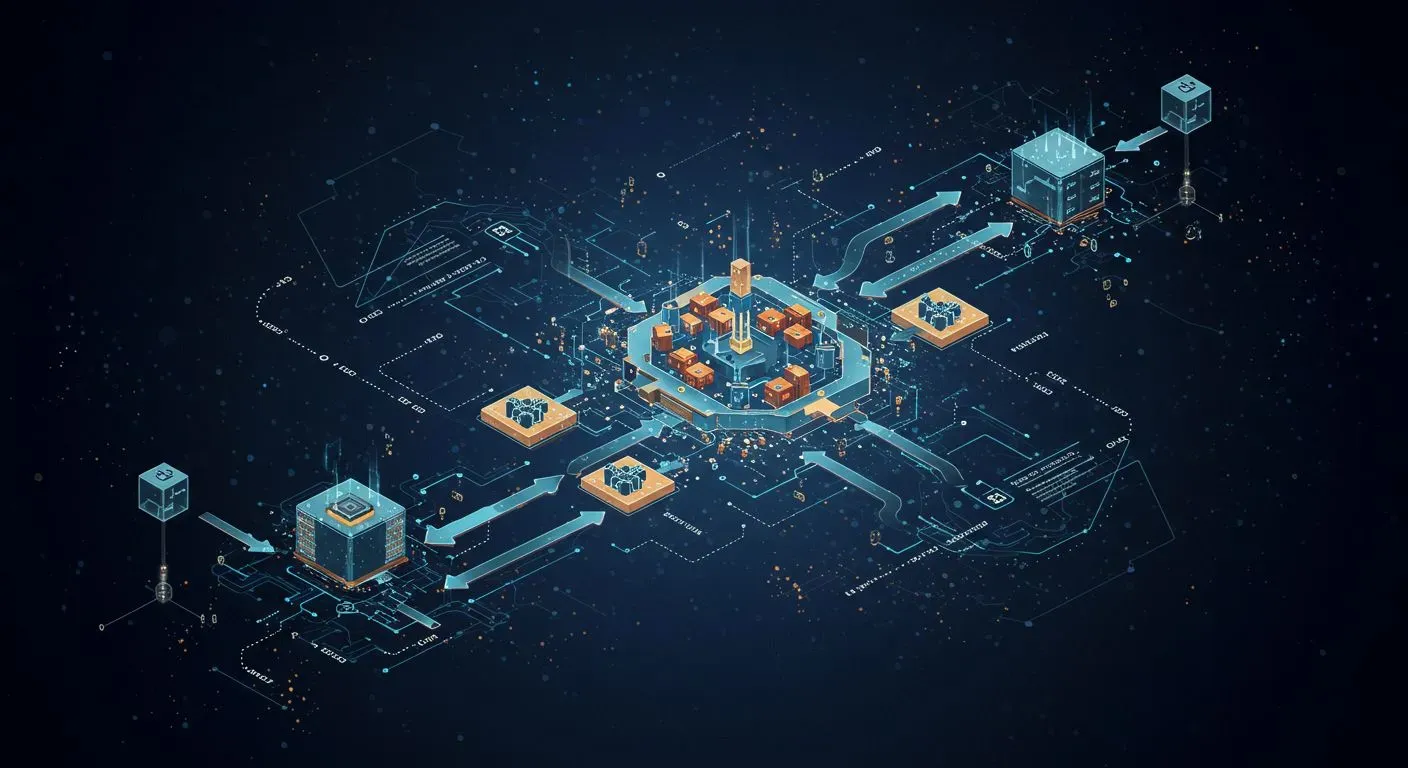
Classical vs. Quantum Computing
Introduction
At the heart of our modern world lies a silent, powerful engine: the classical computer. From the smartphones in our pockets to the vast data centers that power the global economy, these machines have revolutionized human existence by processing information with astonishing speed and efficiency. Yet, as our ambition to solve increasingly complex problems grows, we are beginning to encounter the fundamental boundaries of this remarkable technology. This brings us to a pivotal moment in the history of computation, a moment that beckons a new paradigm. This article is the first in our ongoing series, "Foundations and Applications of the Internet of Things (IoT)," and it lays the groundwork by exploring a revolutionary technology poised to redefine what's possible: quantum computing. The need for this new form of computation is not an abstract academic exercise; it's a pressing reality with profound implications for science, industry, and society. In Canada, a nation at the forefront of technological innovation, the development and adoption of quantum technologies are a national priority, promising to unlock unprecedented capabilities and secure a competitive edge in the global digital economy. This article will delve into the limitations of classical computing that necessitate a new approach, define the mind-bending principles of quantum computing, and provide an overview of its transformative applications, setting the stage for a deeper understanding of the future of computation.
The Inherent Limitations of Classical Computing
For all their power, classical computers are fundamentally limited by the way they process information. At their core, they are sophisticated calculators that operate on a binary system of bits, where each bit can represent either a 0 or a 1. This binary logic has been the bedrock of the digital revolution, enabling everything from simple arithmetic to the intricate algorithms that govern artificial intelligence. However, this very foundation also imposes significant constraints when we confront problems of immense complexity.
The Tyranny of Exponential Growth
The primary limitation of classical computers lies in their inability to efficiently handle problems that exhibit exponential growth in complexity. These are problems where the number of possible solutions or variables increases exponentially with the size of the problem. For a classical computer, which must evaluate each possibility sequentially, such problems quickly become intractable.
Consider the challenge of factoring a large number into its prime components. For a small number, this is a trivial task. But as the number of digits increases, the number of potential prime factors grows at an exponential rate. For the 2048-bit numbers that currently secure much of our digital communication through RSA encryption, a classical supercomputer would take billions of years to find the prime factors. This computational difficulty is, in fact, the very basis of modern cryptography.
Similarly, in the realm of materials science and drug discovery, simulating the behavior of molecules is a monumental task. A single molecule can consist of numerous atoms, each with its own set of interacting electrons. The number of possible quantum states for these electrons grows exponentially with the number of particles. Accurately simulating a molecule as complex as penicillin is far beyond the reach of even the most powerful supercomputers today.
Optimization Problems: Finding the Needle in a Haystack
Many of the most critical challenges facing our society can be framed as optimization problems: finding the best possible solution from a vast number of options. This includes logistical challenges like optimizing shipping routes to minimize fuel consumption, financial modeling to maximize investment returns while minimizing risk, and designing new materials with specific desirable properties.
Classical computers often rely on heuristics and approximation algorithms to tackle these problems, as an exhaustive search of every possible solution is computationally unfeasible. While these methods can provide good enough answers for many applications, they are not guaranteed to find the absolute best solution. For problems where the optimal solution offers a significant advantage, such as in drug design or financial markets, the limitations of classical optimization can have substantial consequences.
The End of Moore's Law and the Physical Limits of Miniaturization
For decades, the exponential growth in computing power described by Moore's Law—the observation that the number of transistors on an integrated circuit doubles approximately every two years—has driven the digital revolution. This relentless miniaturization has made computers faster, cheaper, and more powerful. However, we are now approaching the fundamental physical limits of this trend.
As transistors shrink to the size of a few atoms, quantum mechanical effects that are negligible at larger scales begin to dominate. Phenomena like quantum tunneling, where electrons can pass through physical barriers, start to interfere with the reliable operation of transistors. In essence, the very laws of physics that we are trying to overcome with quantum computing are the ones that are beginning to stymie the progress of classical computers. This impending end of Moore's Law has created a powerful incentive to explore entirely new computing paradigms.
What is Quantum Computing? A Leap into the Quantum Realm
If classical computing is akin to a light switch that can be either on or off, quantum computing is like a dimmer switch that can be on, off, or a combination of both simultaneously. This analogy only scratches the surface of the profound differences between these two computational models. Quantum computing harnesses the counterintuitive and powerful principles of quantum mechanics to process information in fundamentally new ways.
Superposition: The Power of "And"
At the heart of quantum computing lies the concept of superposition. Unlike a classical bit that must be either a 0 or a 1, a quantum bit, or qubit, can exist in a superposition of both states at the same time. It can be 0, 1, or a weighted combination of both. This is not to say that the qubit is in an uncertain state; rather, it is in all possible states at once.
This property allows a quantum computer to store and process a vastly greater amount of information than a classical computer with the same number of bits. For instance, two classical bits can represent one of four possible states (00, 01, 10, or 11) at any given time. In contrast, two qubits in superposition can represent all four of those states simultaneously. This ability to explore a multitude of possibilities at once is a key source of a quantum computer's potential power.
Entanglement: "Spooky Action at a Distance"
Another cornerstone of quantum mechanics that is leveraged in quantum computing is entanglement. When two or more qubits become entangled, their fates become intertwined, regardless of the physical distance separating them. The state of one entangled qubit is intrinsically linked to the state of the other(s). If you measure the state of one qubit, you instantly know the state of its entangled partner, even if it's on the other side of the galaxy. Albert Einstein famously described this phenomenon as "spooky action at a distance."
In a quantum computer, entanglement allows for the creation of complex, correlated quantum states across multiple qubits. This intricate web of connections enables quantum algorithms to perform computations in a way that is impossible for classical computers, where each bit is independent of the others.
Quantum Interference: Amplifying the Right Answer
Just as waves can interfere with each other, either constructively (amplifying each other) or destructively (canceling each other out), the quantum states of qubits can also exhibit interference. Quantum algorithms are cleverly designed to manipulate the probabilities of different outcomes through interference. The goal is to amplify the probability of measuring the correct answer while simultaneously canceling out the probabilities of incorrect answers. This allows a quantum computer to sift through a vast solution space and converge on the correct result with high probability.
Quantum vs. Classical Bits: A Tale of Two Worlds
The fundamental unit of information in classical computing is the bit, which is a binary digit that can hold a value of either 0 or 1. These bits are physically represented by transistors, which act as tiny electrical switches that can be either on or off. The entire architecture of classical computing, from the logic gates that perform basic operations to the complex algorithms that run on them, is built upon this binary foundation.
In stark contrast, the fundamental unit of information in quantum computing is the qubit. As we've seen, a qubit can be a 0, a 1, or a superposition of both. This is often represented mathematically as a linear combination of the two basis states, denoted as ∣0⟩ and ∣1⟩. A qubit's state can be written as α∣0⟩+β∣1⟩, where α and β are complex numbers known as probability amplitudes. The squares of these amplitudes, ∣α∣2 and ∣β∣2, represent the probabilities of measuring the qubit as a 0 or a 1, respectively, and must sum to 1.
Exponential Scaling of Information
The true power of qubits becomes apparent when you consider systems with multiple qubits. A classical system of n bits can represent only one of 2n possible states at any given moment. In contrast, a quantum system of n qubits can be in a superposition of all 2n states simultaneously. This exponential scaling means that a quantum computer with just a few hundred entangled qubits could represent more states than there are atoms in the observable universe.
The Act of Measurement
A crucial difference between classical bits and qubits lies in the act of measurement. When you read a classical bit, its value remains unchanged. It was either a 0 or a 1 before you looked, and it remains so afterward. However, when you measure a qubit that is in a superposition, its delicate quantum state collapses into one of the two classical states, 0 or 1, with a probability determined by its probability amplitudes. This act of measurement is irreversible and fundamentally alters the state of the qubit.
This property presents both a challenge and an opportunity. The challenge lies in the fact that you cannot simply read out all the information stored in a superposition. The opportunity lies in the ability to design algorithms that manipulate the quantum state in such a way that when a measurement is finally performed, the desired outcome is highly probable.
The Fragility of Quantum States: The Challenge of Decoherence
While the quantum properties of superposition and entanglement are incredibly powerful, they are also incredibly fragile. The slightest interaction with the external environment—a stray magnetic field, a change in temperature, or even a single photon—can disrupt the delicate quantum state and cause the qubits to lose their quantum properties in a process called decoherence.
This fragility is a major engineering hurdle in building large-scale, fault-tolerant quantum computers. Qubits need to be isolated from their surroundings as much as possible, which often involves operating them at temperatures colder than deep space. Furthermore, sophisticated quantum error correction codes are being developed to detect and correct the errors that inevitably arise from decoherence.
An Overview of Transformative Applications
The unique capabilities of quantum computers are not just theoretical curiosities; they promise to revolutionize a wide range of fields by solving problems that are currently intractable for even the most powerful classical supercomputers.
Cryptography and the Future of Cybersecurity
One of the most well-known and potentially disruptive applications of quantum computing is in the field of cryptography. As mentioned earlier, the security of many of our current encryption standards, such as RSA, relies on the classical difficulty of factoring large numbers. However, in 1994, mathematician Peter Shor developed a quantum algorithm that can factor large numbers exponentially faster than any known classical algorithm. A sufficiently large and stable quantum computer running Shor's algorithm could break much of the cryptography that underpins our digital infrastructure, from secure online banking to confidential government communications.
This looming threat has spurred the development of a new field: quantum-resistant cryptography, also known as post-quantum cryptography. This involves creating new encryption algorithms that are believed to be secure against attacks from both classical and quantum computers. In parallel, quantum mechanics also offers a solution to the problem it creates. Quantum Key Distribution (QKD) is a technology that uses the principles of quantum mechanics to create a fundamentally secure communication channel. Any attempt by an eavesdropper to intercept the quantum key would inevitably disturb the quantum state, alerting the legitimate users to the presence of an intruder.
Revolutionizing Search and Optimization
Many important problems in business, science, and logistics can be framed as search and optimization problems. While classical computers can struggle with the vast search spaces of these problems, quantum computers offer a significant speedup. Grover's algorithm, another famous quantum algorithm, provides a quadratic speedup for unstructured search problems. While this is not as dramatic as the exponential speedup of Shor's algorithm, a quadratic improvement can still be transformative for many applications.
This has profound implications for fields such as:
Logistics and Supply Chain Management: Optimizing delivery routes for a large fleet of vehicles to save time and fuel.
Financial Modeling: Creating more accurate models to predict market fluctuations and optimize investment portfolios.
Drug Discovery: Searching through a vast library of molecular compounds to find the one that is most likely to be an effective drug.
Unlocking the Secrets of Chemistry and Materials Science
The natural world is governed by the laws of quantum mechanics. Simulating the behavior of molecules and materials at a quantum level is therefore a natural application for a quantum computer. Classical computers struggle with this task because the number of quantum interactions to simulate grows exponentially with the size of the system.
Quantum computers, on the other hand, can simulate these quantum systems directly. This opens up exciting possibilities for:
Drug Discovery and Development: Simulating how a potential drug molecule will interact with a target protein in the body, dramatically speeding up the drug development process and leading to more effective and personalized medicines.
Materials Science: Designing new materials with novel properties, such as high-temperature superconductors, more efficient solar cells, or stronger and lighter alloys for aerospace applications.
Catalysis: Developing more efficient catalysts for industrial processes, which could have a significant impact on energy consumption and environmental sustainability.
Quantum Supremacy and the Path Forward
The journey to building a large-scale, fault-tolerant quantum computer is a long and challenging one, marked by a series of important milestones. One of the most significant of these is the concept of quantum supremacy, also known as quantum advantage.
Defining Quantum Supremacy
Quantum supremacy refers to the moment when a programmable quantum computer can perform a specific task that no classical computer, no matter how powerful, can perform in a reasonable amount of time. This is not necessarily a useful task in a practical sense; rather, it is a scientific demonstration that quantum computers can indeed outperform their classical counterparts on a well-defined problem. The goal is to prove that quantum computers have a computational advantage that is rooted in the fundamental principles of quantum mechanics.
Key Milestones and the Road Ahead
In recent years, several research groups have claimed to have achieved quantum supremacy. In 2019, Google announced that its Sycamore processor had performed a calculation in 200 seconds that would have taken the world's most powerful supercomputer at the time an estimated 10,000 years to complete. While this claim has been debated, with some researchers arguing that a classical supercomputer could perform the task much faster than initially estimated, it was a landmark achievement that signaled the rapid progress in the field.
Since then, other research teams, including a team from the University of Science and Technology of China, have also announced demonstrations of quantum advantage using different types of quantum hardware. These milestones are not the end of the road, but rather important signposts on the journey to building a truly universal quantum computer.
The current era of quantum computing is often referred to as the Noisy Intermediate-Scale Quantum (NISQ) era. This means that today's quantum computers have a limited number of qubits (typically in the tens to a few hundred) and are still susceptible to noise and errors from decoherence. The primary focus of research and development is now on improving the quality of qubits, developing more effective error correction techniques, and scaling up the number of qubits to build larger and more powerful quantum processors.
Canada's Role in the Quantum Future
Canada has long been a powerhouse in quantum research and is strategically positioning itself as a global leader in the development and commercialization of quantum technologies. The Canadian government has invested heavily in a National Quantum Strategy, which aims to amplify Canada's strengths in quantum research, grow a quantum-ready workforce, and translate research into scalable companies.
This strategy is being implemented through a network of research institutes, universities, and private companies across the country. From the pioneering work at the Institute for Quantum Computing at the University of Waterloo to the innovative startups in quantum software and hardware emerging in cities like Toronto, Vancouver, and Sherbrooke, Canada is at the forefront of this technological revolution. This national commitment ensures that Canada will not only contribute to the fundamental science of quantum computing but also be in a prime position to reap the economic and societal benefits of this transformative technology.
Conclusion
We stand at the precipice of a new computational age. The limitations of classical computing, once a distant theoretical concern, are now becoming a tangible barrier to scientific and technological progress. In response, the principles of quantum mechanics, once the domain of theoretical physicists, are being harnessed to build a new class of machines with the potential to solve problems that were once thought to be unsolvable. From the very small—the intricate dance of electrons in a molecule—to the very large—the optimization of global supply chains—quantum computing promises a future of unprecedented computational power. However, the path to realizing this future is not without its challenges. The fragility of quantum states and the engineering complexities of building a fault-tolerant quantum computer are significant hurdles that must be overcome. Yet, with each milestone achieved, from the demonstration of quantum supremacy to the steady increase in the number and quality of qubits, we move closer to a world where the seemingly impossible becomes possible. The journey has just begun, and the coming years will undoubtedly be a time of extraordinary discovery and innovation in the quantum realm.