Innovate with AI-Driven Custom Software

Discover how Argos Infotech leverages AI and prototype-first strategies to build tailored software solutions that boost efficiency and fuel business growth.

Why Startups Prefer a Reliable SaaS Product Development Company

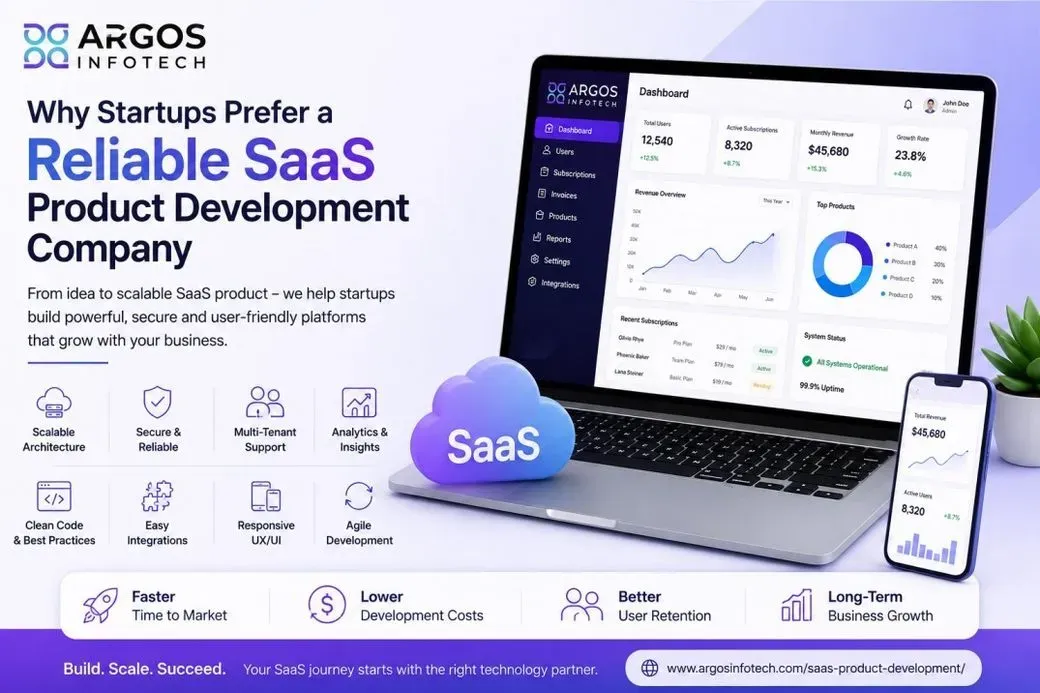
Building a SaaS product sounds exciting in the beginning. Most founders start with a strong idea, a few feature plans, and the hope of launching quickly. But once development actually begins, many realize how difficult it becomes to balance speed, scalability, user experience, security, and future growth at the same time. That is usually where an experienced SaaS Product Development Company becomes important. A lot of startups fail because they rush into development without planning long-term architecture properly. The MVP may work for a few users, but once customer numbers increase, problems begin appearing everywhere. Slow performance, broken workflows, database issues, and expensive rebuilds become common. While researching companies working in this area, Argos Infotech caught my attention because their approach focuses on building scalable SaaS products from the beginning instead of treating the MVP like temporary software. Their development approach appears focused on cloud-native architecture, scalability, and long-term product growth. Why SaaS Products Need Better Planning Many founders make the mistake of focusing only on launch speed. Speed definitely matters, but scalability matters just as much. A SaaS platform is not just a simple website. Most modern platforms include authentication systems, dashboards, cloud hosting, integrations, analytics, user management, security layers, and automation workflows working together in the background. If these systems are added randomly later, the platform eventually becomes difficult and expensive to maintain. This is one reason many startups now prefer working with a professional SaaS Product Development Company instead of hiring separate freelancers for every task. Building for Scale from Day One One thing that stood out while reading about Argos Infotech is their focus on production-grade architecture even during MVP development. That matters more than many founders realize. A poorly planned SaaS platform may work smoothly with 20 users but struggle badly once traffic and customer activity increase. Rebuilding the platform later usually costs more time, money, and momentum than businesses expect. Good architecture in the early stages can prevent many of those issues before they appear. Why User Experience Matters in SaaS Products A lot of SaaS startups focus heavily on features in the beginning, but users usually remember something else first — how easy the product feels to use. Even a powerful platform can struggle if the dashboard feels confusing or the workflow takes too many unnecessary steps. Most users expect software to feel simple, fast, and organized from day one. That is why user experience has become such an important part of modern SaaS development. Clean navigation, faster loading speed, organized dashboards, and smoother onboarding can improve customer retention significantly. From what I noticed, Argos Infotech seems to focus not only on backend development but also on building user-friendly SaaS applications that businesses can comfortably scale over time. For startups entering competitive markets, a better user experience can sometimes become the reason customers stay instead of switching to another platform. Why Founders Need Technical Partners, Not Just Developers There is a major difference between someone who simply writes code and someone who understands product growth. Many agencies wait for instructions and only build exactly what the client asks for. Better development partners usually think beyond individual features and discuss scalability, workflow efficiency, and long-term maintenance before development moves too far ahead. Questions like these often matter early: Will this feature still work at scale? How will future integrations be handled? Can the platform support enterprise users later? What happens when traffic increases suddenly? How should permissions and security be managed? Those conversations become important because SaaS products continue evolving long after version one is launched. Startups Need Flexibility Another challenge many founders face is changing priorities. Customer feedback shifts direction, new features become necessary, and market demands evolve faster than expected. That is why flexibility matters during SaaS development. From what I saw, Argos Infotech appears to follow a product-focused approach instead of rigid one-time delivery models. Their process includes planning, prototyping, development sprints, and continuous improvements after launch. That type of workflow usually works better for SaaS businesses because software products rarely stay the same for long. Final Thoughts The SaaS market is becoming more competitive every year. Launching quickly is important, but building correctly is even more important. A reliable SaaS Product Development Company can help startups avoid expensive technical mistakes, improve scalability, and create a stronger foundation for long-term growth. Businesses planning to launch or scale a SaaS platform can explore the solutions offered by Argos Infotech to better understand how scalable SaaS development works in real-world projects.

Why Businesses Are Finally Taking AI Solutions Seriously

For a long time, artificial intelligence felt like one of those buzzwords people used in presentations but rarely applied in day-to-day business. Everyone talked about it, but many smaller companies stayed away. It looked expensive, technical, and honestly, unnecessary. That attitude has changed. Now businesses are under pressure from every side. Customers expect faster replies. Teams are expected to do more with fewer people. Owners want better numbers, cleaner systems, and fewer wasted hours. Because of that, AI Solutions are no longer being seen as “future tech.” They are becoming a normal business tool. I was looking through companies working in this area recently, and Argos Infotech stood out because their focus seems practical. Not the usual exaggerated promises, but software and automation built for real business use. Most Businesses Don’t Need Fancy AI Solutions This is where people often get confused. A business usually does not need some complex machine-learning setup or expensive enterprise system. In many cases, they just need repetitive work reduced. That could mean: automatic replies for common customer questions better lead tracking faster report generation internal task reminders organized data dashboards smoother approval flows These are simple improvements, but they save real time. If one employee spends two hours a day doing repetitive admin work, that adds up quickly over a month. Remove part of that load, and the business gains time without hiring extra staff. Why Ready-Made Software Doesn’t Always Work A lot of companies start by buying random tools online. It makes sense at first. Monthly subscription, quick setup, and done. But after some time, problems begin. One tool handles leads, another stores data, another tracks tasks, and none of them connect properly. Staff ends up switching tabs all day and manually copying information from one place to another. That is usually when businesses realize they need something built around their workflow. Argos Infotech works in custom software development, which can be a smarter route for companies that have outgrown generic systems. Instead of adjusting your business to match software limitations, the software is built to match your process. Smaller Teams Often Benefit the Most Large companies can absorb inefficiency for longer. Smaller teams usually cannot. If a startup has five people and two of them spend too much time on repetitive tasks, growth slows down quickly. Every hour matters. This is why AI Solutions can be more valuable for small and medium businesses than many people think. A few examples: follow-up emails sent automatically inquiries assigned instantly leads stored correctly reports generated weekly reminders triggered without manual input None of this sounds dramatic, but it creates breathing room for teams that are already stretched. Good Technology Should Feel Natural One thing I have noticed: the best systems are often the least noticeable. When a customer gets a quick answer, books easily, receives updates on time, or talks to a prepared support team, they do not think about software. They just feel the company is organized. That behind-the-scenes efficiency often comes from better systems, automation, and data handling. That is where experienced development teams can help. It is less about flashy tools and more about solving friction points that slow business down. Choosing the Right Partner Matters Not every developer understands business operations. Some know how to code but fail to ask the right questions. A better approach starts with things like: Where is time being wasted? What tasks repeat every day? Where do leads disappear? Which reports take too long? What frustrates staff most? Once those answers are clear, useful solutions can be built. That is one reason businesses often prefer companies like Argos Infotech that position themselves around solving business problems, not just delivering code. Final Thought AI Solutions do not have to be dramatic to be valuable. Sometimes the best upgrade is simply removing daily friction, helping your team move faster, and making operations cleaner than they were last quarter. Businesses that understand this early usually gain an advantage quietly while others keep doing everything manually. If your company is exploring custom software, smarter workflows, or practical automation, it may be worth taking a look at what Argos Infotech offers.

User working on IPad with AI technology software

Maximizing Efficiency with AI-Driven Workflow Automation: A Practical Guide

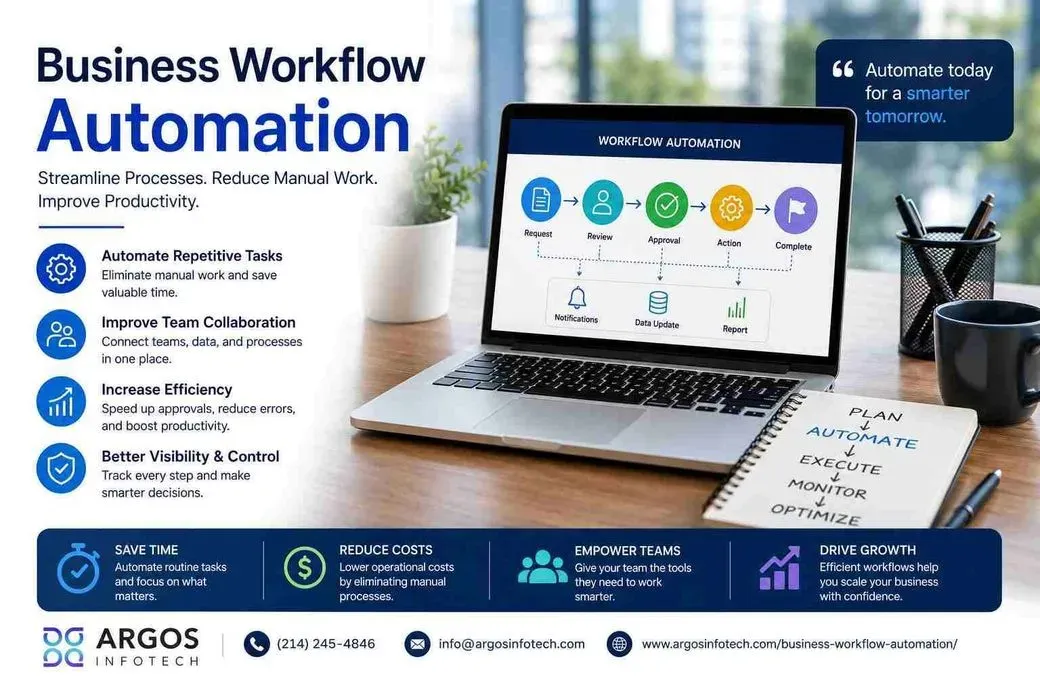
In today's fast-paced business environment, leveraging AI-driven workflow automation can significantly enhance operational efficiency. By automating repetitive tasks and streamlining processes, companies can reduce human error and free up valuable time for strategic activities. To get started, identify the most time-consuming manual processes in your business and assess which can be automated using AI tools. This approach not only accelerates delivery but also ensures consistency and accuracy across your workflows. Implementing AI Workflow Automation Successfully Begin with small pilot projects to test AI automation in specific areas such as customer support or inventory management. Use insights from these pilots to refine your automation strategy. Collaborate closely with dedicated product teams to tailor solutions that fit your unique business needs. Continuously monitor performance metrics to identify bottlenecks and areas for improvement. With a prototype-first approach, you can minimize guesswork and ensure your automation solutions align with your long-term growth objectives.

ChatGPT Atlas logo displayed on a massive cinema screen with vibrant purple and blue gradient background. The sleek presentation features the iconic messenger-style icon in a movie theater setting with rows of purple seats. Perfect representation of AI technology, digital innovation, and modern presentation design showcasing artificial intelligence branding in an immersive entertainment environment.

Emerging Trends in Custom Software Development for 2024

The landscape of custom software development is rapidly evolving, with 2024 bringing exciting trends that businesses should watch closely. One major trend is the integration of AI-accelerated delivery methods, which drastically reduce time-to-market for new applications. Additionally, the rise of low-code and no-code platforms empowers organizations to build functional prototypes quickly, enabling faster iterations and better stakeholder engagement. These advancements are transforming how companies approach software design and development, making innovation more accessible. Adapting to Industry Changes with Dedicated Product Teams To stay competitive, businesses are increasingly investing in dedicated product teams that specialize in agile development and continuous delivery. These teams focus on creating scalable SaaS platforms and mobile solutions that meet evolving customer needs. Emphasizing user experience and automation, the software of 2024 aims to streamline operations and support sustainable growth. Companies partnering with expert engineering firms like Argos Infotech can leverage these trends to achieve superior outcomes.

Colleagues collaborate while examining computer designs.

Behind the Scenes: How Argos Infotech Crafts Custom Software Solutions

At Argos Infotech, crafting custom software solutions is a collaborative and iterative process that starts with understanding client goals and challenges. Our prototype-first approach helps reduce uncertainty by allowing clients to visualize and interact with early versions of their applications. This method fosters transparent communication and ensures that the final product aligns perfectly with business objectives. By integrating AI and workflow automation from the outset, we build solutions that are not only innovative but also efficient and scalable. The Role of Dedicated Product Teams in Our Development Process Our dedicated product teams are the backbone of our development strategy. Each team comprises experts in product engineering, AI technologies, and user experience design. They work closely with clients throughout the project lifecycle, from initial discovery to deployment and beyond. This hands-on collaboration ensures agility, rapid problem-solving, and the delivery of high-quality software that drives long-term growth for our clients.