About us
The Ateneo de Jerez and the Gozo Regional Council foster cultural exchange between Jerez de la Frontera and Victoria, Gozo. Through EU-supported activities and events, this project promotes inclusion and equality through culture.
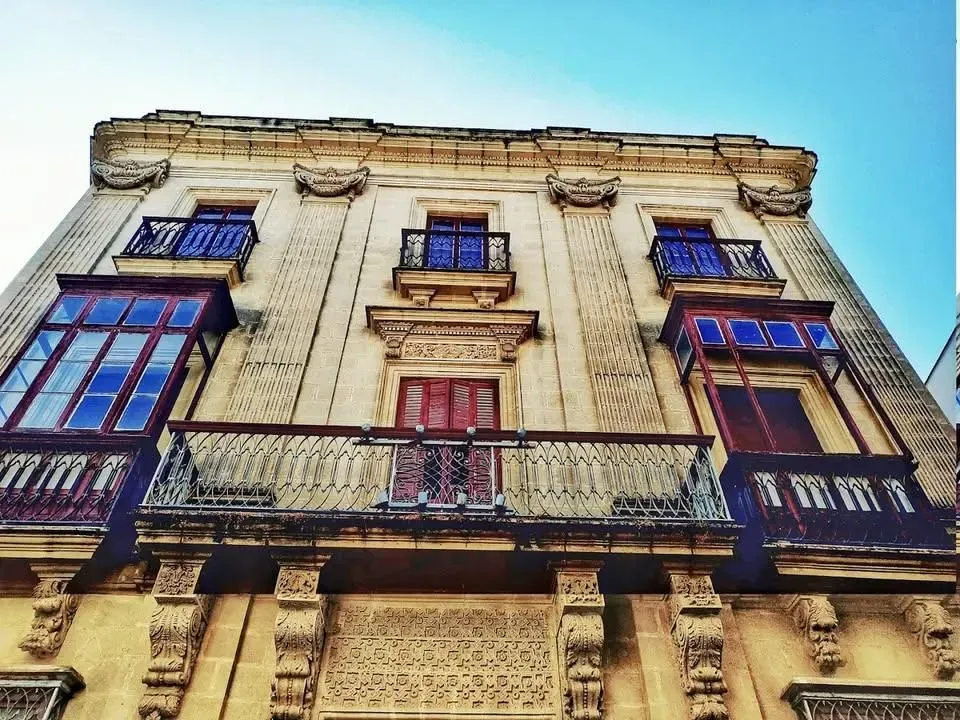
Cultural Association Ateneo de Jerez
The Cultural Association Ateneo de Jerez is a non-profit cultural organization located in Jerez de la Frontera, Spain. The association was originally established in 1897 and was re-founded 19 years ago, in the context of a consolidated democracy following the Spanish Civil War and the subsequent dictatorship, by a group of citizens from politics, trade unions, and cultural and social associations. Its aim is to promote the study of sciences, fine arts, and literature, and to improve the society in which we live through analysis and debate. The organization seeks to foster authentic values such as free thought, respect, freedom, participation, interest in culture, and the relationships among its members.
The Ateneo de Jerez offers a wide range of activities through different sections, clubs, and workshops, which include: Nature and environment, Theatre, Historical and democratic memory, History, art and heritage, Poetry, Leisure and culture, Literature, Reading club, Exhibitions, Cinema, Health and well-being, Photography, Gastronomic culture, Economy and civic debate, Choir, Music, Virginia Woolf feminist classroom, and Flamenco, available to the entire population of Jerez, a city with around 250,000 inhabitants, as well as to its wider surrounding area. These sections organize activities both outdoors and indoors, such as workshops, lectures, debates, cultural visits, recitals, artistic presentations, cultural and poetry magazines, among others. The organization is composed of primary, secondary, and university educators, historians, law graduates, healthcare professionals, writers, social workers, and many other members with experience in various social fields. The Ateneo de Jerez is, in fact, one of the most important cultural associations in Jerez de la Frontera. It is part of the Confederation of Ateneos of Andalusia, the Spanish region where the city is located, and of the Association of Cultural Managers of Andalusia (GECA).
The organization offers daily activities such as exhibitions, lectures, recitals, and workshops, as well as weekend activities, often held outdoors, including cultural and leisure visits and trips, aimed at promoting and enhancing culture and critical thinking. The Ateneo’s activities also include the promotion of inclusion through various initiatives that encourage interaction among its members and with the general public. It promotes cultural activities such as theatre, music, debates, poetry and music recitals, nature routes, and more, working to increase the participation of people with disabilities or special educational needs.
Concrete examples of activities organized by the Ateneo de Jerez include poetry recitals and lectures with Sign Language interpretation to facilitate participation by the deaf community. In fact, the Ateneo has a collaboration agreement with the Association of Deaf People of Jerez de la Frontera, and also organizes activities that include audio description for blind participants. The theatre workshops are coordinated by a director with extensive experience in various theatre companies and working with people with special needs. Likewise, the association has a section dedicated to Flamenco, with active participation from the Roma community. The Theatre Department develops inclusive activities in collaboration with different NGOs that support the homeless or other vulnerable groups, organizing theatrical performances whose proceeds are donated to these organizations. The Choir Section collaborates with other institutions in its performances.
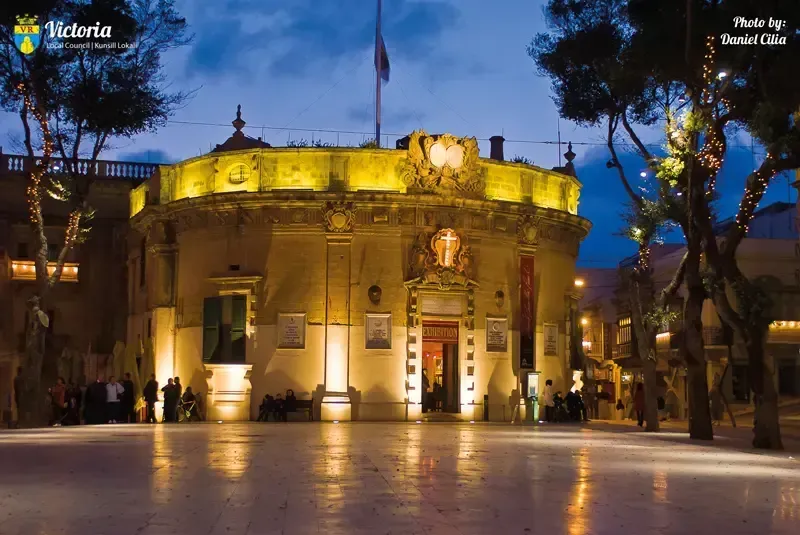
Gozo Regional Council - Regjun Ghawdex
The Regional Councils of Malta, formerly known as Regional Committees, were established in 2011. They represent a level of local government between the Local Councils (municipalities) and the central national institutions (state government). Therefore, this regional level of government is relatively new in Malta and Gozo. As of 2022, Malta is divided into six regions, one of which is Gozo, with a population of just over 42,000 people.
The Gozo Regional Council is one of these six Regional Councils representing all regions of Malta and Gozo. It is composed of all the Local Councils of Gozo, and its administration is therefore entrusted to all the member representatives, the mayors, who represent each locality within the Gozo Region. The Local Council is the authority closest to the residents. The Gozo Regional Council promotes a sense of belonging not only to the locality to which one belongs but also to the island of Gozo as a whole. Regional identity, consequently, is based on the concept of solidarity, understanding, and collaboration among the different Local Councils of the island of Gozo as a defined geographical area. The capital of all these Local Councils is Rabat Città Victoria. The Gozo Regional Council brings together Gozo’s 14 Local Councils with their respective diverse communities and contributes to the direct coordination of the entire territory and its cultural promotion, not only as a singular and historic entity, but also as part of a plural and diverse Europe.
Each region of the Maltese Islands, including Gozo, has a distinctive and diverse base of social and cultural assets, a rich heritage often conceptualized in terms of historic buildings, festivals, music bands, and traditional approaches to music, crafts, agriculture, dialects, and gastronomy, among other local values. These elements are usually linked to specific places: towns, cities, and even neighbourhoods. Gozo, exceptionally, has a fascinating and dynamic contemporary social and cultural landscape, driven by the talent of its people, the energy of its communities, and the new perspectives brought by an increasingly diverse population. Numerous cultural and social associations operate in Gozo, including: Wirt Għawdex (Gozo Heritage), Gozo Creative Theatre Club, Community of Gozo Artists, Circolo Gozitano, Gozo University Group, Voice for Inclusion Gozo, Caritas Gozo, The Jam Project (focused on inclusion and creativity), and the Gozo NGOs Association, among many others.
The Gozo Regional Council recognizes and celebrates these diverse assets, openly addresses shortcomings and challenges, and develops a process in which social sustainability, inclusion, culture, and diversity, including the new populations residing on the island, play a central role in shaping the social, economic, environmental, and innovative future of the island of Gozo, and thus of the entire Maltese archipelago.
Discover Jerez and Victoria
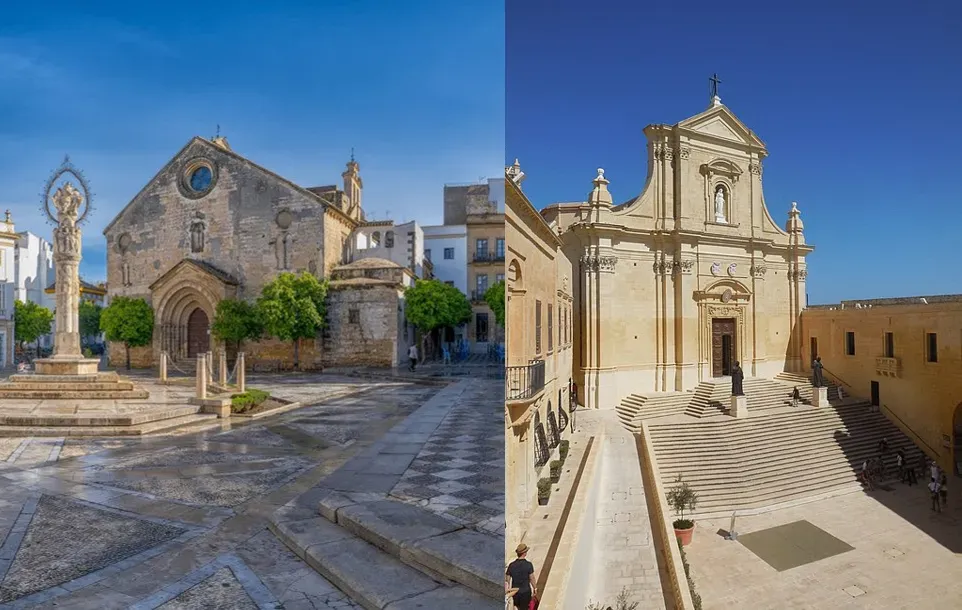
Jerez de la Frontera and Victoria, the capital of Gozo, share the Mediterranean spirit that unites cultures through history, art, and hospitality. Both cities preserve a valuable historical and architectural heritage, integrating fortresses, temples, and public spaces where community life thrives. Music and festive traditions are central elements of their identity, as is their connection to unique artisanal and gastronomic activities. Furthermore, Jerez and Victoria value culture as a tool for social cohesion and inclusion, projecting their identity to the world with a creative and open vision that connects past and present in a shared rhythm.
Jerez
Jerez de la Frontera, located in the southwest of Spain, in the province of Cádiz, near the Strait of Gibraltar, is a city that embodies the most authentic essence of Andalusia. Internationally recognized as the birthplace of flamenco, its music and dance have been declared Intangible Cultural Heritage of Humanity by UNESCO. In its peñas, tabancos, and theatres, flamenco is experienced as a vital expression, passed down from generation to generation. The city is also famous for its wines, the sherry, which has become a worldwide symbol of quality and winemaking tradition.
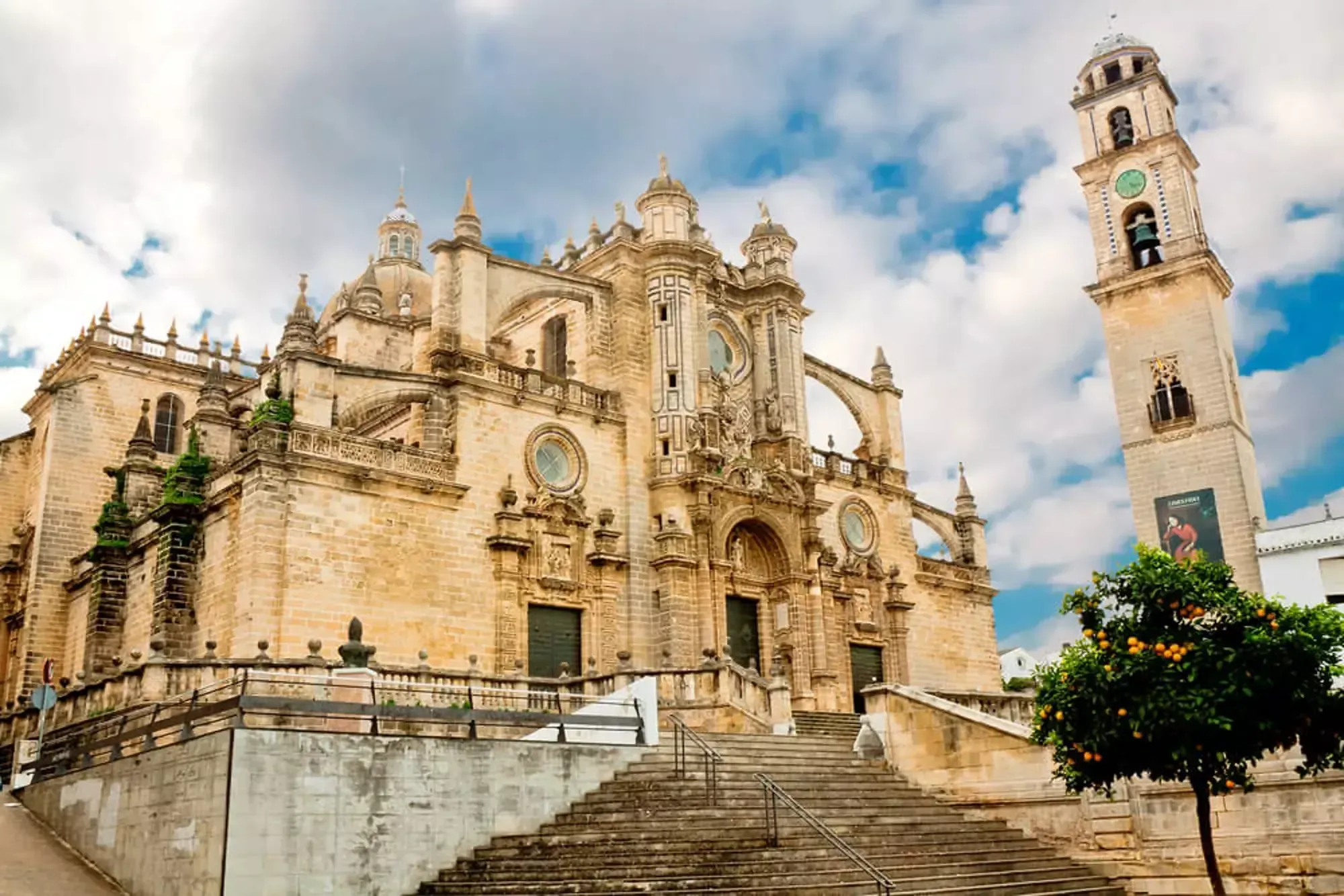
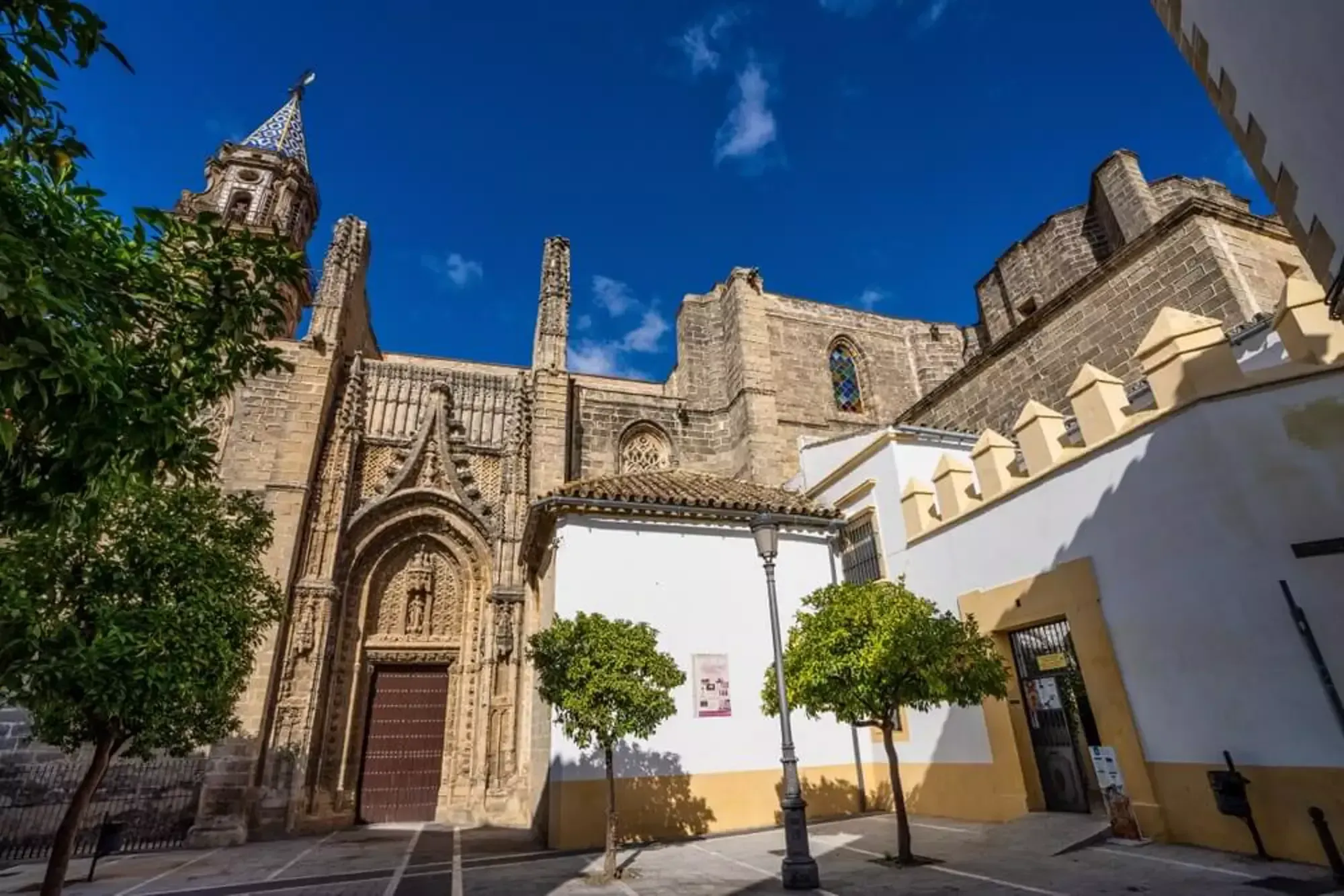
The architectural heritage of Jerez is extraordinary. In addition to its 15th-century Carthusian Monastery of “Santa María de la Defensión”, the city’s historic quarter, declared a Historic-Artistic Site, is home to treasures such as the imposing Cathedral of San Salvador an eclectic blend of Gothic, Baroque, and Neoclassical styles or the Alcázar, an 11th-century Almohad fortress that still preserves its walls, Arab baths, and beautiful gardens. Strolling through the streets of Jerez means discovering lively squares, stately palaces, and centuries-old churches and convents that narrate the city’s long history.
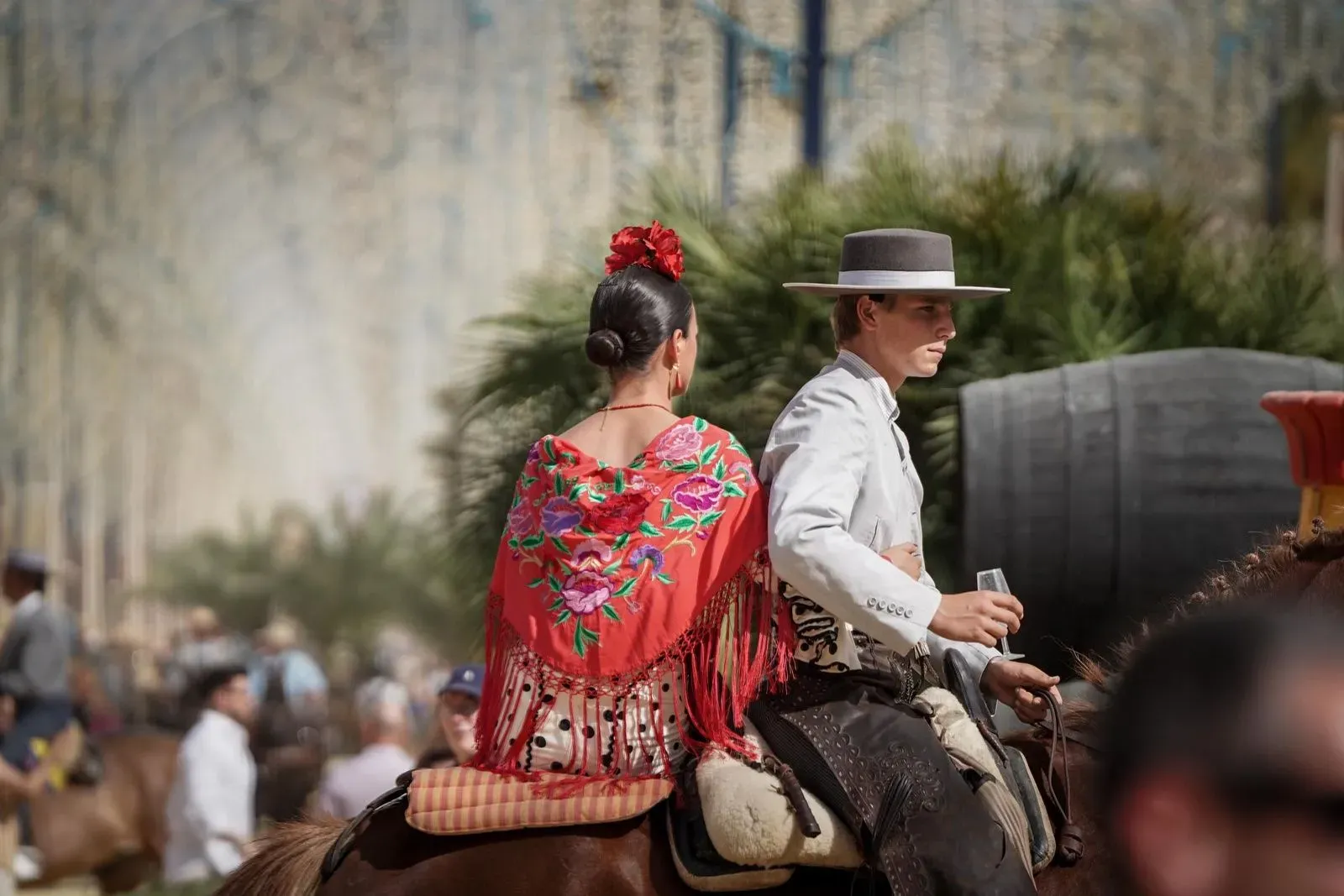
Equestrian art is another hallmark of the city. The Royal Andalusian School of Equestrian Art offers performances that combine classical and cowboy dressage with traditional music and attire, a cultural expression unique in the world. Moreover, the city’s festive calendar, with events such as the Horse Fair, where men and women parade through the fairgrounds dressed in Andalusian attire and riding on horseback, attracts thousands of visitors each year in search of authentic experiences of music, dance, and gastronomy. Holy Week in Jerez, beyond being a religious manifestation, holds an unparalleled artistic value, reflected in the richness of its sculptures, the majesty of its processional floats, and the deep musical tradition, with bands from many of the religious brotherhoods accompanying each of these processions, making it a living cultural heritage that transcends borders.
Jerez not only preserves its past but also projects it into the future through museums, cultural centers, and a vibrant artistic and cultural life in which institutions such as the Ateneo de Jerez play a fundamental role. The Municipal Archaeological Museum, the Equestrian Carriage Museum, the Clock Museum, and the museum dedicated to flamenco artist Lola Flores, among many others, make up a cultural offering deeply rooted in the city’s heritage. Jerez’s candidacy to become the European Capital of Culture in 2031 on behalf of Spain represents the city’s great commitment to social and cultural growth in the decades to come. Its fusion of history, art, and hospitality makes Jerez an essential destination for those wishing to discover the cultural richness of southern Europe.
Victoria
Malta is a small country in the heart of the Mediterranean, just 90 km south of Sicily and 290 km from Tunisia. Victoria, also known by its traditional name Rabat (Rabat Cittá Victoria), is the capital of Gozo, the second-largest island of the Maltese archipelago. Located in the center of Gozo, Victoria is not only an administrative and commercial hub but also the cultural and historical heart of the island. Its urban skyline is dominated by the majestic Citadel, an ancient fortress that has protected the island’s inhabitants for centuries. The Citadel has been inhabited since the Bronze Age and has served as an administrative center since Phoenician and Roman times. Carefully restored, it now houses a collection of museums, a Baroque cathedral dedicated to the Assumption, and viewpoints offering unparalleled panoramas of Gozo’s landscape, with rolling hills, cultivated fields, and the sea on the horizon.
Victoria’s urban fabric combines narrow, shaded streets, lively squares, and architecture reflecting Arab, medieval, and Baroque influences. Among its heritage treasures are the Basilica of St. George, with an interior richly decorated in marble and frescoes, and the former Franciscan convent, which preserves highly valuable works of art. The city also hosts several museums, such as the Archaeology Museum and the Folklore Museum, which tell the story of Gozo from prehistory to the present day. It is no coincidence that the oldest self-supporting megalithic monuments on the planet are found in Gozo: the Ġgantija temples (“giant” in Maltese).
The Gozo Regional Council, one of the Regional Councils representing each region of the country, promotes a stronger sense of belonging among residents, not only towards their local community but also to the island of Gozo itself.
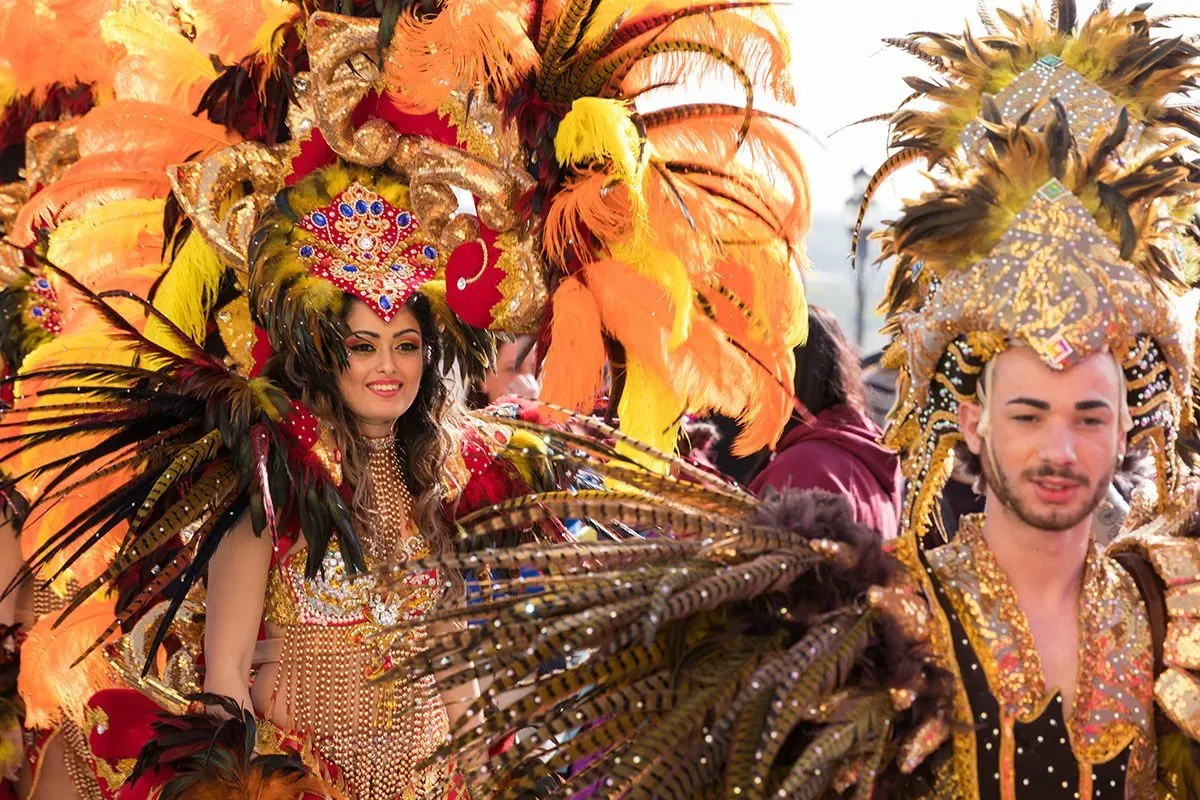
The island of Gozo has a very rich folklore, shaped by its rural character and strong religious and community traditions, which even set it apart from Malta, the largest island of the archipelago. The traditional Maltese singing style, Għana, is present in Gozo with local variations, improvising verses in a challenging or narrative style. The music of local bands is closely linked to patron saint festivals, called “festas”, so each town usually has its own band that accompanies the processions of their patron saints or those held during Holy Week, known for offering processions with unique artistic expressions.
Victoria is also a hub of cultural life. Its theatres and cultural centres host concerts, plays, exhibitions, and festivals that celebrate both tradition and contemporary creativity. Folk dances associated with agricultural and religious celebrations, though less common today, have been revived in festivals and cultural events.
Despite its small size, Victoria preserves a rich tangible and intangible heritage that reflects Gozo’s unique identity. Its balance of living history, art, religiosity, and hospitality in a country with one of the highest percentages of migrant population in Europe, makes it a must-visit city for those wishing to explore the richness of the Mediterranean and the crossroads of European cultures. These are the reasons behind Victoria’s candidacy as European Capital of Culture in 2031 on behalf of Malta.