1. Introduction
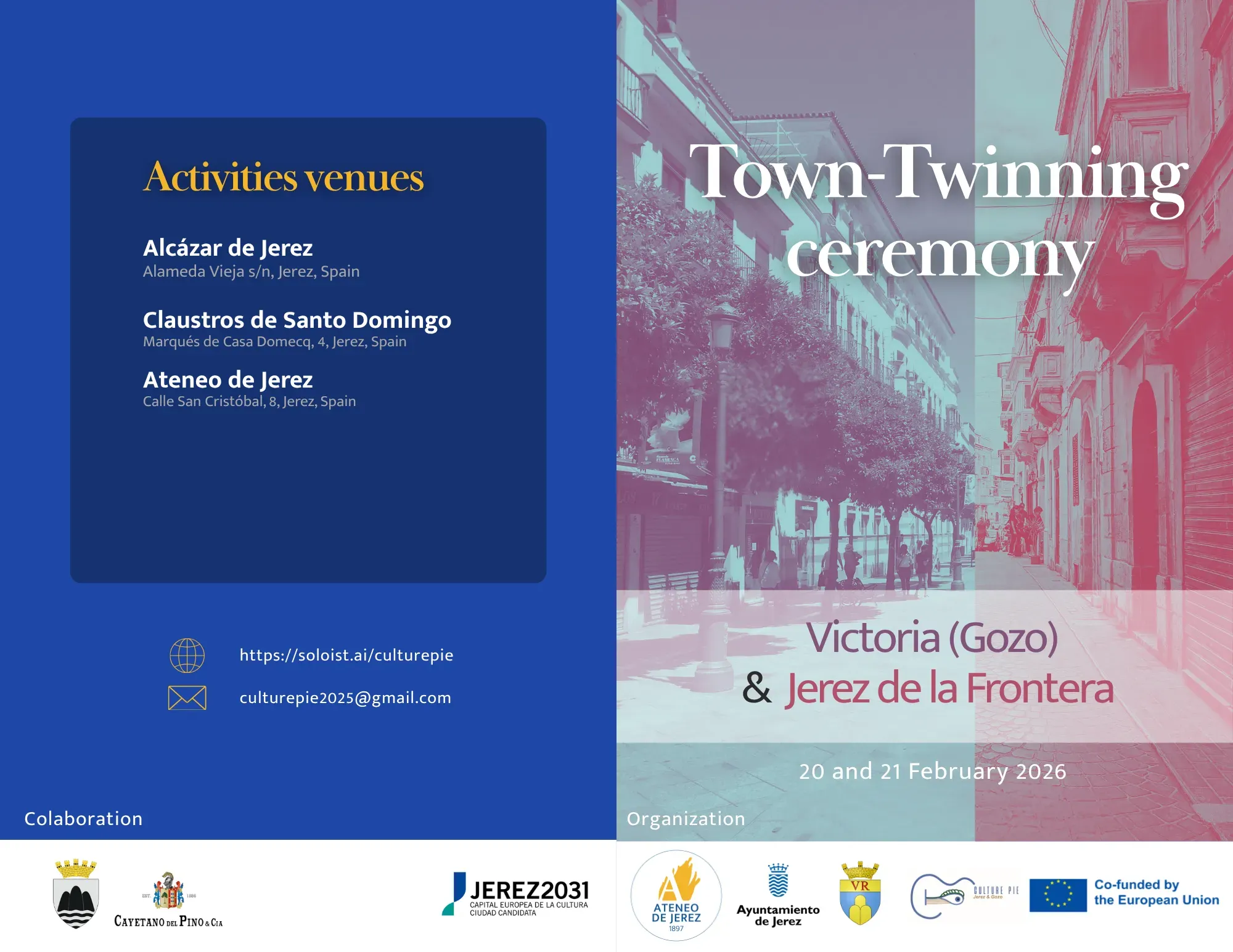
The cultural events and official twinning ceremony in Jerez de la Frontera took place on 20–21 February 2026. Working sessions were held on 20 February at the Alcázar of Jerez and the Ateneo de Jerez, while the official ceremony was held on 21 February at the Cloisters of Santo Domingo.
These activities were part of the Culture PIE Project (Promotion of Inclusion and Equity through Culture), co-funded by the European Union and promoted by the Ateneo de Jerez and the Gozo Regional Council.
The events form part of the twinning process between Jerez de la Frontera (Spain) and Victoria (Gozo, Malta), aiming to promote inclusion and equity through culture.
They brought together institutional representatives and social and cultural associations from both regions to strengthen mutual understanding, foster inclusion, and develop shared cultural strategies aligned with European values. Around 300 people attended the ceremony, while the association meetings gathered 150 participants in the morning and over 120 in the afternoon.
2. Objectives
The meeting aimed to strengthen cooperation and mutual understanding between Jerez and Gozo, promote inclusion—especially among Roma and migrant communities—and foster cultural exchange to develop joint initiatives aligned with European values of diversity, identity, and unity.
3. Development of the programme of cultural activities and events in Jerez de la Frontera.
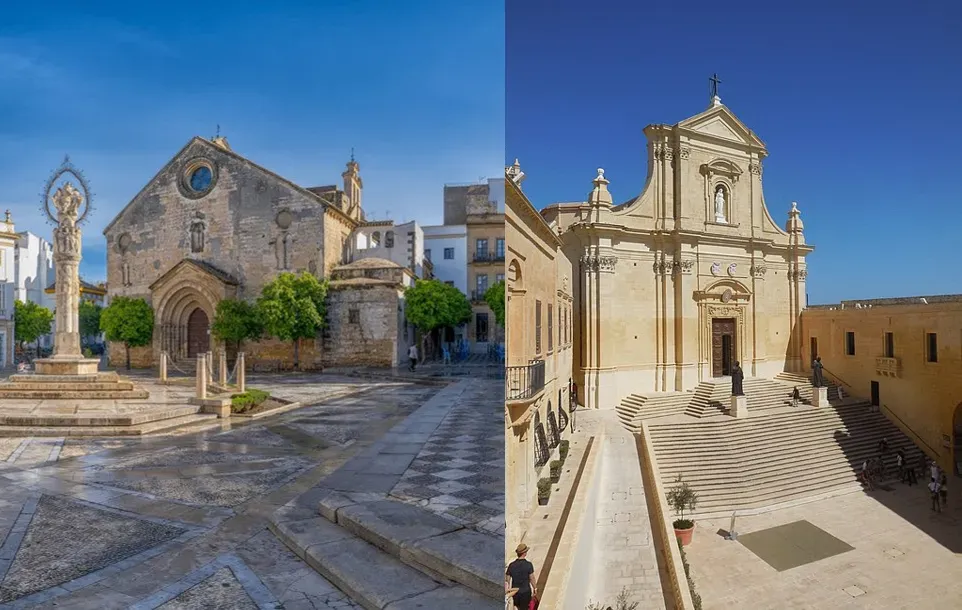
Jerez de la Frontera hosted activities focused on how to promote inclusion and equality through culture within the framework of European Union objectives. In addition, activities were carried out to share the valuable cultural and historical heritage of Jerez with the delegation from Gozo.
The programme also included initiatives linked to the city’s intangible cultural heritage, aimed at fostering social inclusion and the integration of the Roma population, especially through musical and folkloric proposals. These actions focused on key priorities such as gender equality, women’s empowerment, and the integration of diverse groups.
The activities and dialogue spaces created during these days sought to strengthen cultural ties between both territories and promote participation, inclusion, and equity as fundamental values within this twinning framework, in line with the principles that inspire Europe.
The programme was developed over two days, combining presentations by participating associations from Jerez and Victoria—including testimonies and practical experiences—with cultural activities aimed at fostering interaction between the delegations of both countries and enhancing knowledge of Jerez’s tangible and intangible heritage.
Programme Summary
The programme was carried out over two days, combining institutional events, cultural activities, and collaborative sessions between associations from Jerez de la Frontera and Victoria (Gozo).
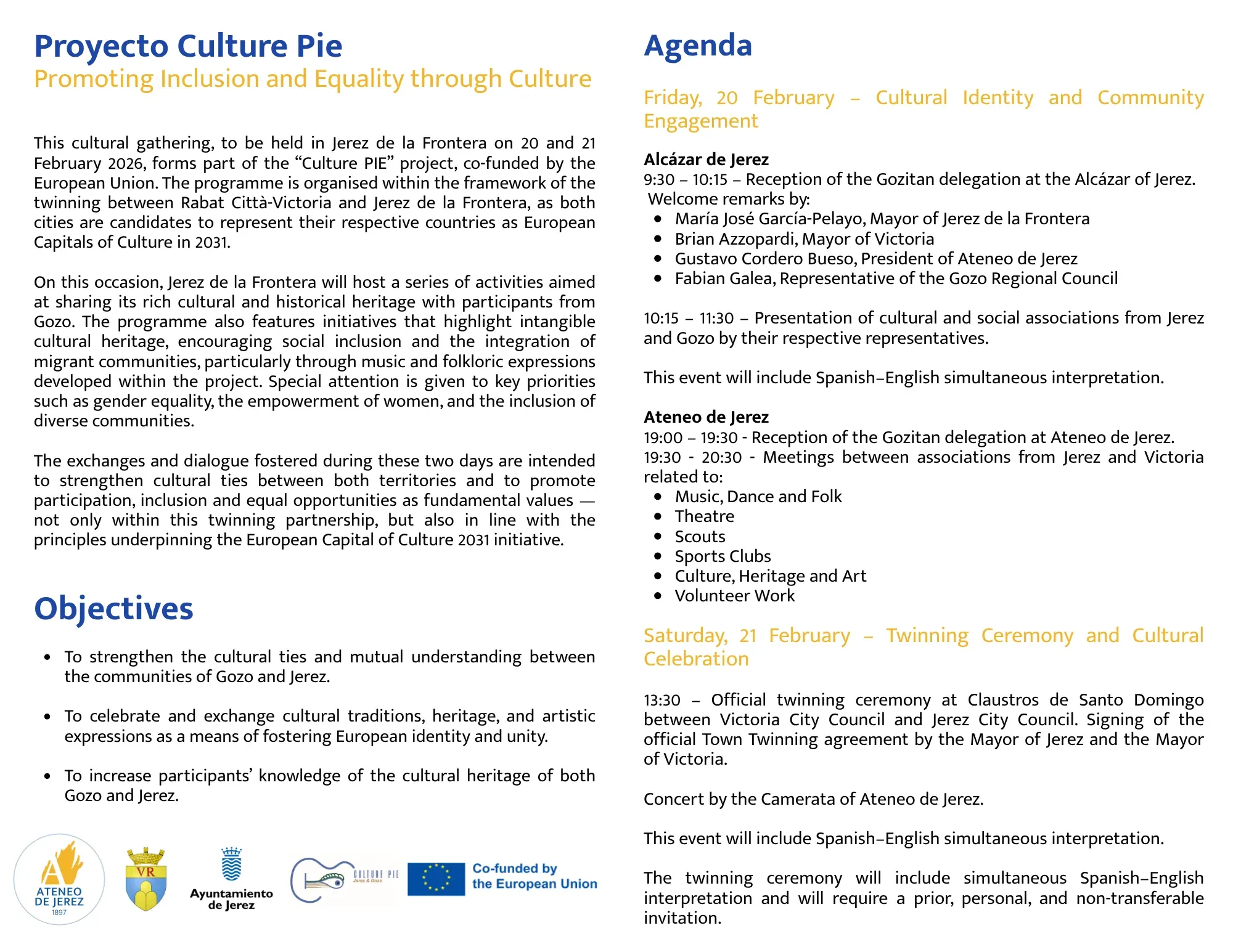
20 February 2026 – Cultural Events and Working Sessions
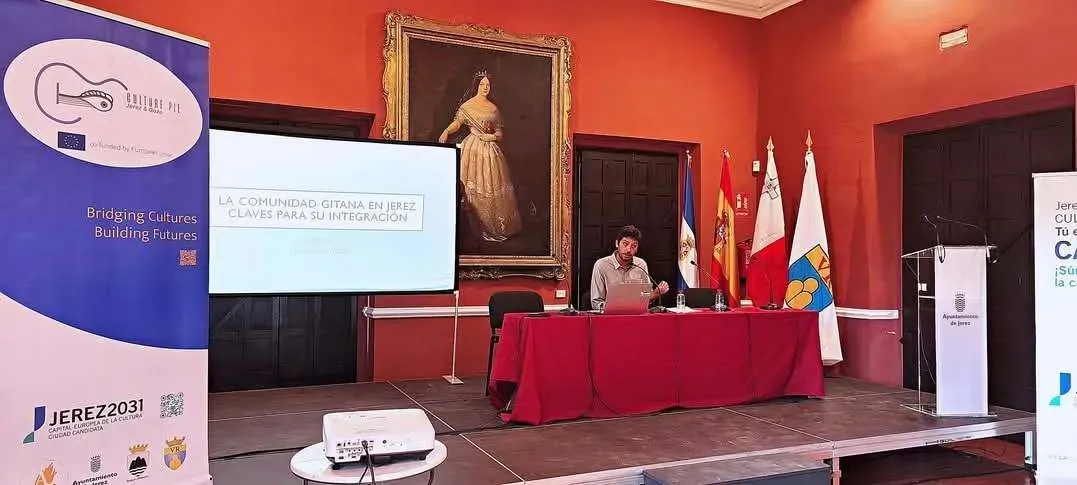
The day began with the official reception of the Gozo delegation at the Alcázar of Jerez, including welcome speeches by representatives of both municipalities, the Ateneo de Jerez, and the Gozo Regional Council. This was followed by presentations from cultural and social associations of both territories, allowing participants to share their work and experiences.
Midday activities included a guided visit and reception at the Cayetano del Pino winery. In the afternoon, participants attended the flamenco performance “Desde la Raíz”, featuring Roma artists, highlighting intangible cultural heritage and inclusion through art.
Later, the programme continued at the Ateneo de Jerez with networking sessions between partner associations from both cities, organised into thematic areas: music, dance and folklore, theatre, scouts, sports, culture and heritage, and volunteering. The day concluded with an institutional dinner.
21 February 2026 – Official Twinning Ceremony
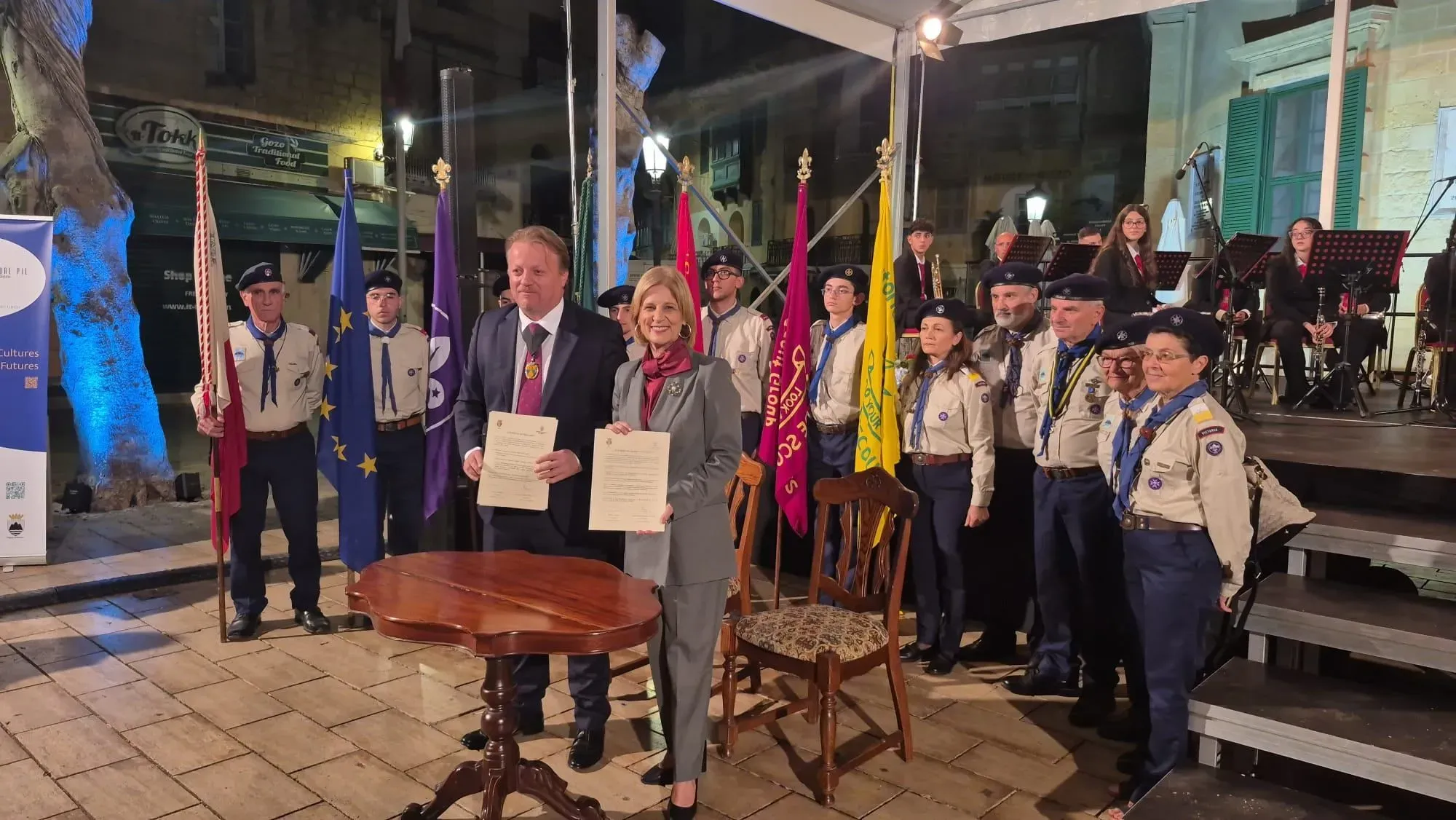
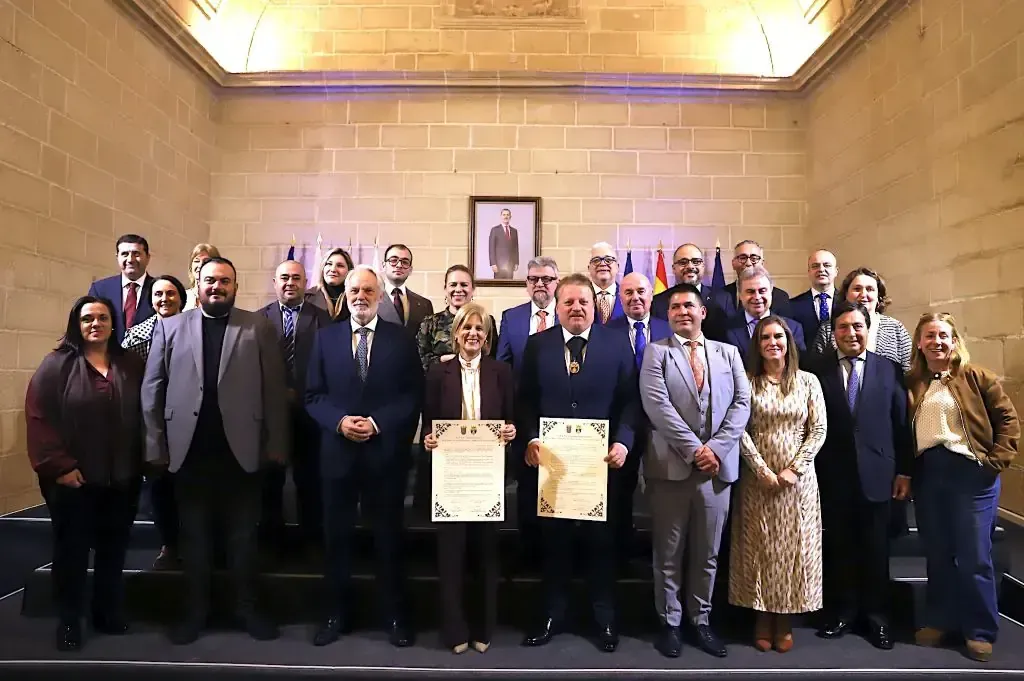
The second day focused on the institutional dimension of the programme. It began with a guided tour of Jerez’s historic centre, followed by the official twinning ceremony at the Cloisters of Santo Domingo, where the agreement between the City Councils of Jerez and Victoria was formally signed.
The ceremony, attended by over 300 participants, included speeches by both mayors and concluded with a concert by the Camerata of the Ateneo de Jerez. The programme continued with a reception, a guided visit to Jerez Cathedral, and a closing dinner with flamenco entertainment.
Participation and Working Dynamics
The programme brought together 63 participants from Victoria and around 120 from Jerez, representing a wide range of cultural, social, and sports organisations. A total of 25 associations presented their work during the sessions.
Collaborative work was further developed through thematic working groups focused on scouts, volunteering, sports, heritage, music and dance, and theatre, fostering dialogue, exchange of good practices, and the creation of future partnerships.
4. Main conclusions
From the presentations, discussions, and contributions, the following conclusions were drawn:
Firstly, the meeting highlighted the fundamental role of culture as an effective tool to promote social inclusion, equity, and understanding between diverse communities. The experiences shared demonstrated that cultural practices—especially those linked to intangible heritage—provide a key space for integrating vulnerable groups such as Roma and migrant populations.
Secondly, the event significantly strengthened institutional, social, and cultural ties between Jerez de la Frontera and Victoria (Gozo), creating a climate of trust and cooperation that lays the foundation for future joint initiatives.
The working groups identified key lines of action, including:
Cultural exchange programmes
Inclusive educational and artistic projects
Promotion of volunteering
Sports and cultural activities as tools for social cohesion
These align fully with European Union values regarding citizenship, equality, and diversity.
Furthermore, the official twinning ceremony represented a major institutional milestone, reinforcing both cities’ commitment to European cooperation, social inclusion, and the promotion of culture as a pillar of coexistence. The emotional impact of the ceremony further strengthened bonds of friendship and interpersonal relationships. The high level of public participation reflects strong civic engagement.
Finally, the Culture PIE Project is consolidated as a reference initiative for promoting inclusion and equity through culture, demonstrating the positive impact of partnerships between European territories. The need to continue this process through new joint actions, monitoring collaborations, and expanding the network of participating entities was highlighted. The final meeting, to be held in Victoria in May, will define these future strategies.
5. General conclusion
Following this stage in Gozo, the Culture PIE Project is consolidating as a significant example of European cultural cooperation centred on inclusion, equity and culture as drivers of social transformation. The activities carried out and those planned for the coming months confirm both cities’ commitment to building a lasting cultural partnership based on cooperation, exchange of good practices and shared European values, opening new opportunities for collaboration between organisations in Jerez and Victoria.
Activity 4. Equality Workshop in Gozo
1. Introduction
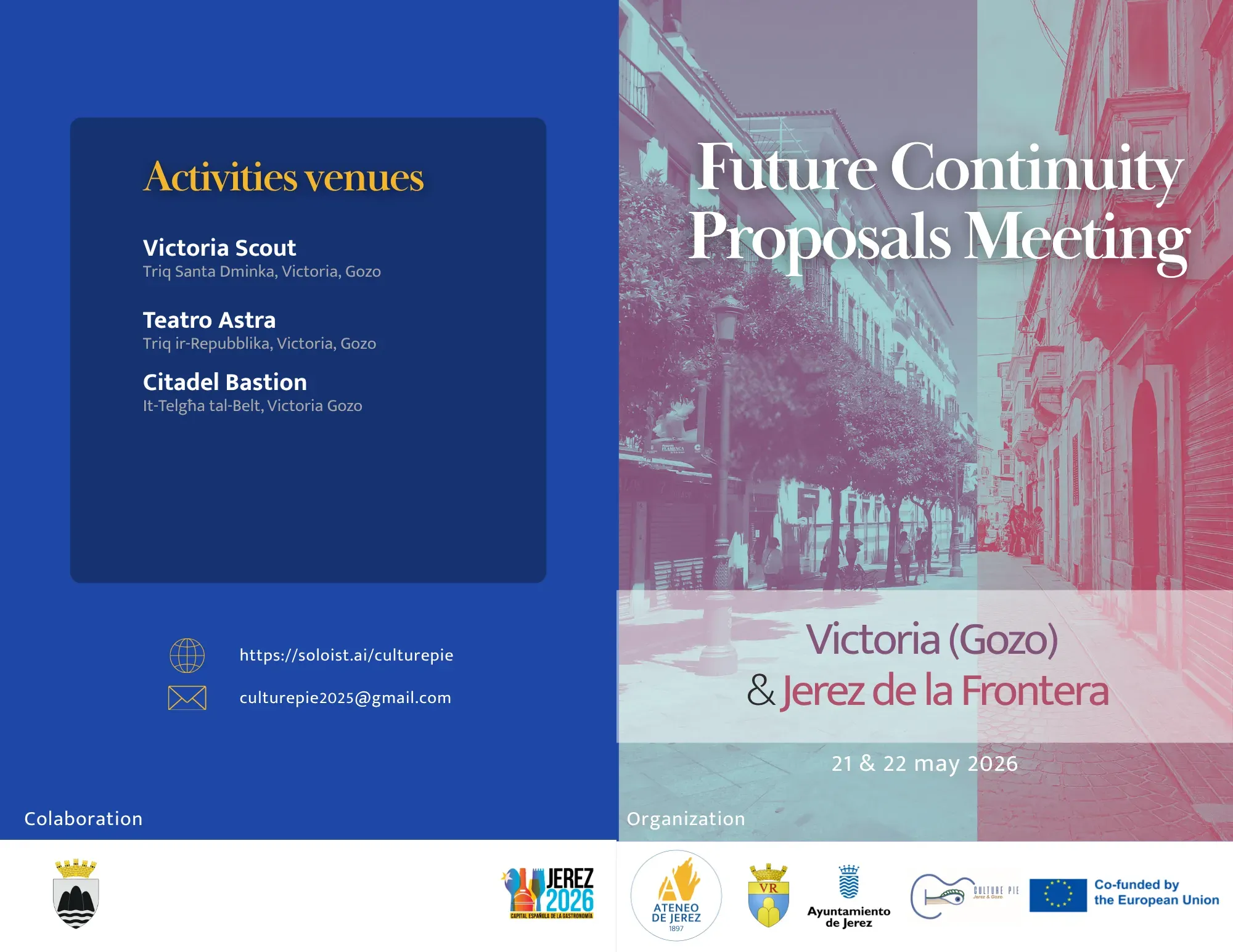
The cultural activities and events held in Gozo on in Gozo on 21 and 23 may 2026 were carried out within the framework of the Culture PIE Project (Promoting Inclusion and Equity through Culture), co-funded by the European Union under the CERV-2024-CITIZENS-TOWN-T programme, and implemented by the Ateneo de Jerez and the Gozo Regional Council. This meeting forms part of the twinning process between the cities of Jerez de la Frontera (Spain) and Victoria (capital of Gozo, Malta), both candidates for the European Capital of Culture 2031, and aims to ensure that inclusion and equity are central elements in the selection of these cities.
The implementation of these cultural activities and events in Gozo involved the participation of institutional representatives and civil society organisations from both regions, with the aim of strengthening mutual understanding, promoting social inclusion and developing shared cultural strategies that reflect the values of equality, diversity and European cooperation. Approximately 70 participants from both cities took part in the activities, attending the meetings and events held in Gozo within the scope of the project.
2. Objectives
The meeting was designed with the following main objectives:
1. To strengthen cultural ties and mutual understanding between the communities of Gozo and Jerez.
2. To celebrate and exchange cultural traditions, heritage and artistic expressions as a means of fostering European identity and unity.
3. To increase participants’ knowledge of the cultural heritage of Gozo (in this phase) and of Jerez (in future activities).
4. To analyse, through a workshop, cultural initiatives that promote women's equality and to develop future proposals for continuing the twinning process between the cities of Jerez and Rabat Città-Victoria.
3. Equality workshop and evaluation of the programme in Gozo
The Gozo Regional Council offered activities aimed at sharing Gozo’s natural and cultural heritage with the people of Jerez, as well as other initiatives focusing on intangible heritage that promote inclusion and the integration of the migrant population living on the island. In particular, the project made use of traditional Gozitan musical and folkloric activities, addressing issues such as gender equality, women’s empowerment and the integration of migrants.
The activities and meetings fostered cultural expression and brought both communities closer together, reinforcing inclusion and equity as core values not only of the twinning process, but also as fundamental principles in the selection of European Capitals of Culture.
Workshops and meetings were held on equality, in which strategies to promote equality through culture were analysed, as well as project evaluation activities. Future proposals were defined to ensure the continuity of the twinning project between both cities, and a final report was prepared on how to promote inclusion and equality through culture. This report will serve as a basis for future work, enabling further progress in the development and consolidation of the twinning between the two cities.
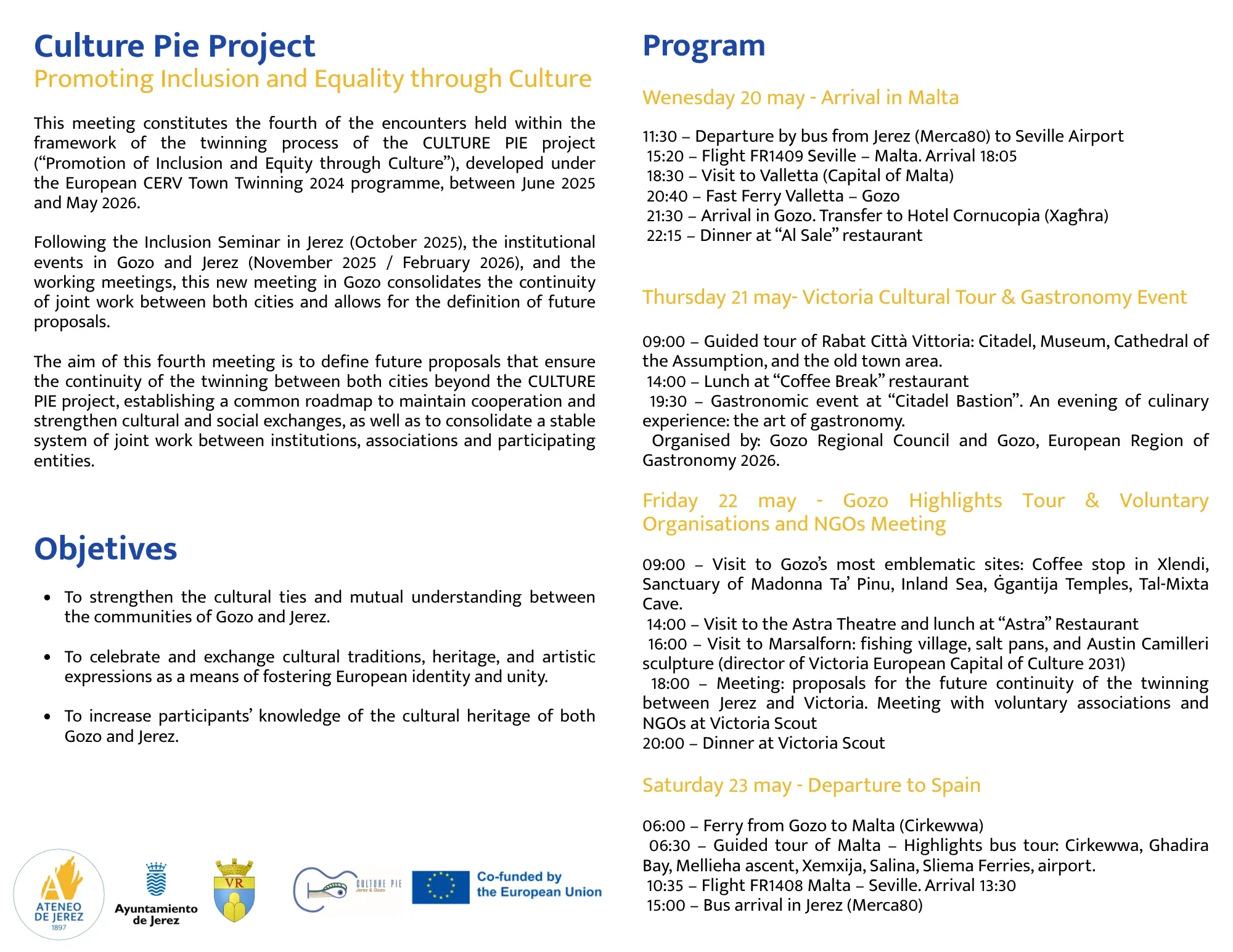
3.1 First day – Thursday 21 may- Victoria Cultural Tour and Gastronomy Event & Equality Workshop
The first day focused on exploring Gozo’s cultural identity and heritage, including Gastronomy Event, together with a equality workshop. The Gozo Regional Council and several cultural and social associations participated in the activities planned.
09:00 – Guided tour of Rabat Città Vittoria: Citadel, Museum, Cathedral of the Assumption, and the old town area.
14:00 – Lunch at “Coffee Break” restaurant
18 :00 – Equality Whokshop at Citadel Bastion
19:30 – Gastronomic event. An evening of culinary experience: the art of gastronomy. Organised by: Gozo Regional Council and Gozo, European Region of Gastronomy.
3.2. Seconda Day – Friday 22 may – Gozo Highlights Tour & Voluntary Organisations and NGOs Meeting
09:00 – Visit to Gozo’s most emblematic sites: Coffee stop in Xlendi, Sanctuary of Madonna Ta’ Pinu, Inland Sea, Ġgantija Temples, Tal-Mixta Cave.
14:00 – Visit to the Astra Theatre and lunch at “Astra” Restaurant
16:00 – Visit to Marsalforn: fishing village, salt pans, and Austin Camilleri sculpture (director of Victoria European Capital of Culture 2031)
18:00 – Meeting: proposals for the future continuity of the twinning between Jerez and Victoria. Meeting with voluntary associations and NGOs at Victoria Scout. Evaluation. Future proposals.
20:00 – Dinner at Victoria Scout
4. Main conclusions
This meeting made it possible both to enhance cultural exchange within the twinning project and to strengthen cultural ties between the two cities, with active and motivated participation from the population. This allowed us to make progress in the preparation of a document of future proposals, ensuring that the twinning does not remain merely a formal agreement signed between the municipalities of both cities, but rather becomes a commitment to future work that will sustainably consolidate the twinning between them.
5. General conclusion
The development, based on commitment, of a future working document has been the main achievement of this fourth meeting. Although it was the final one within this project, it has marked the beginning of the future work that now starts between both cities.