Medieval Noli: Towers, Churches & Castle
This section takes you on a journey back in time to explore the village’s rich heritage and the landmarks that tell its centuries-old story.
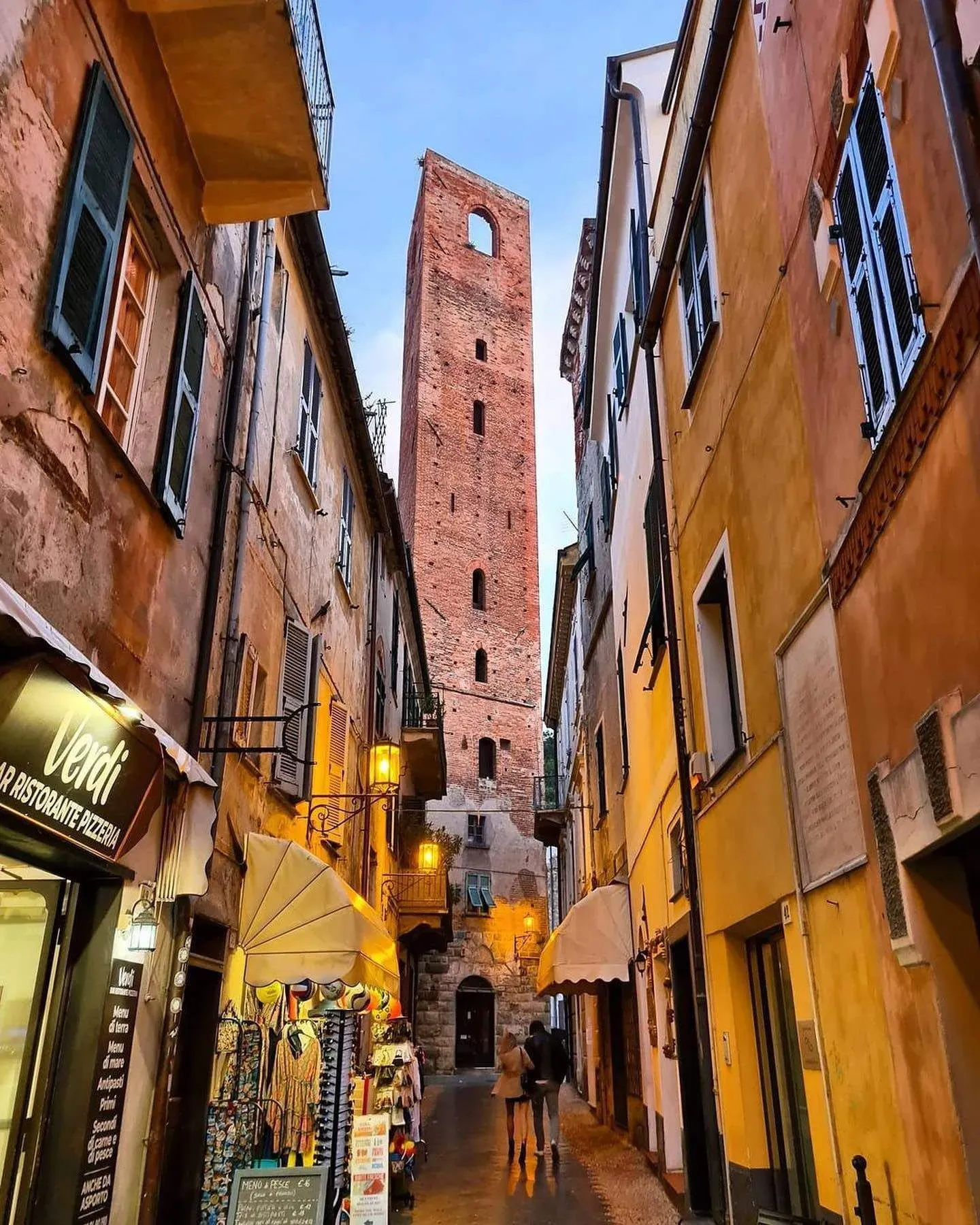
Carruggi & Towers
Discovering Noli’s Caruggi
Walking through the medieval alleys of Noli — the so-called caruggi — feels like stepping back in time. The earliest buildings still visible today date back to the 10th–11th centuries, although the village’s history is even older: the original settlement was destroyed by a fire in the 9th century.
At that time, Noli was protected by defensive walls, parts of which can still be seen today. Access to the town was granted through four main gates, one for each district. These stone archways are still recognizable, even if the original doors have disappeared. A special mention goes to the Porta di San Giovanni, at the end of Via Colombo, topped by a crenellated tower that occasionally hosts exhibitions of ancient armour.
The old town was once filled with towers and tower-houses built in characteristic red brick, still visible beneath some of the plaster today. Their foundations were massive, made of stone blocks up to three metres thick. Some of these towers still stand, though reduced in height, such as the Torre Toso in Piazza della Cattedrale.
In the heart of Noli, in Piazza del Municipio, you can also admire the Clock Tower and the Palazzo della Signoria, both important symbols of the town’s communal past.
A particularly scenic walk starts from Via Suor Letizia, passing under the Torre del Papone and leading to the ancient Bishop’s Palace, offering spectacular views along the way.
This route originally served as the only connection to Spotorno. Today it is still walkable and leads either to the nearby village or, by detouring near the cemetery, up to the Castle of Monte Ursino, which overlooks Noli from above.
The Quattro Canti Tower: a symbol narrowly saved
The tallest tower in Noli takes its name from its trapezoidal layout: from a specific point in Piazza Sant’Anna — in front of the Rotondo bakery — it is possible to see all four of its corners at once. Hence the name “Quattro Canti,” where canti in the Ligurian dialect means “corners.”
In medieval times, towers like this were numerous and defined the village skyline. Over the centuries, however, many were dismantled, with their bricks sold or reused for new constructions.
By the late 19th century, the Quattro Canti Tower also faced the same fate. During a town assembly, its demolition was put to a vote: it was saved by just a single vote. Thanks to that narrow decision, we can still admire it today — proud and slender — as one of the most recognizable symbols of Noli.
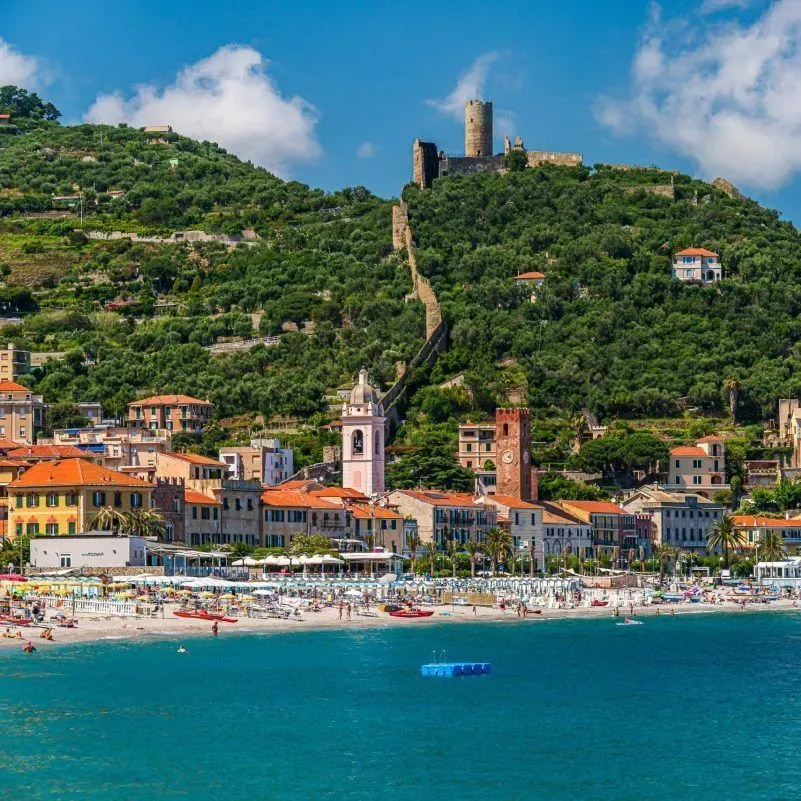
Monte Ursino Castle: the fortress watching over Noli
Perched on the summit of Monte Ursino, the castle dominates Noli from above, embracing the village with its imposing defensive walls — a clear testament to its original purpose: protection. It is, in fact, a true military stronghold built to defend the town.
The central keep is the oldest part, dating back to the earliest foundations of the village in the early Middle Ages. The rest of the structure was built in the 10th century to protect Noli from frequent Saracen pirate raids. At that time, the fortress belonged to the Del Carretto marquises, feudal lords of the area, until the people of Noli gained their independence, turning the town into a Maritime Republic later affiliated with Genoa in 1192.
One particularly unique architectural feature was its gate defence system: an external tower connected to the walls by a stone walkway allowed defenders to strike attackers from behind, making access even more difficult. Traces of this ingenious structure can still be seen today.
The castle is open to visitors and can be reached via a scenic walk starting from the ancient Bishop’s Palace. Alternatively, it is also accessible by paved road. In either case, the reward is the same: a breathtaking view stretching from the medieval village to the open sea.
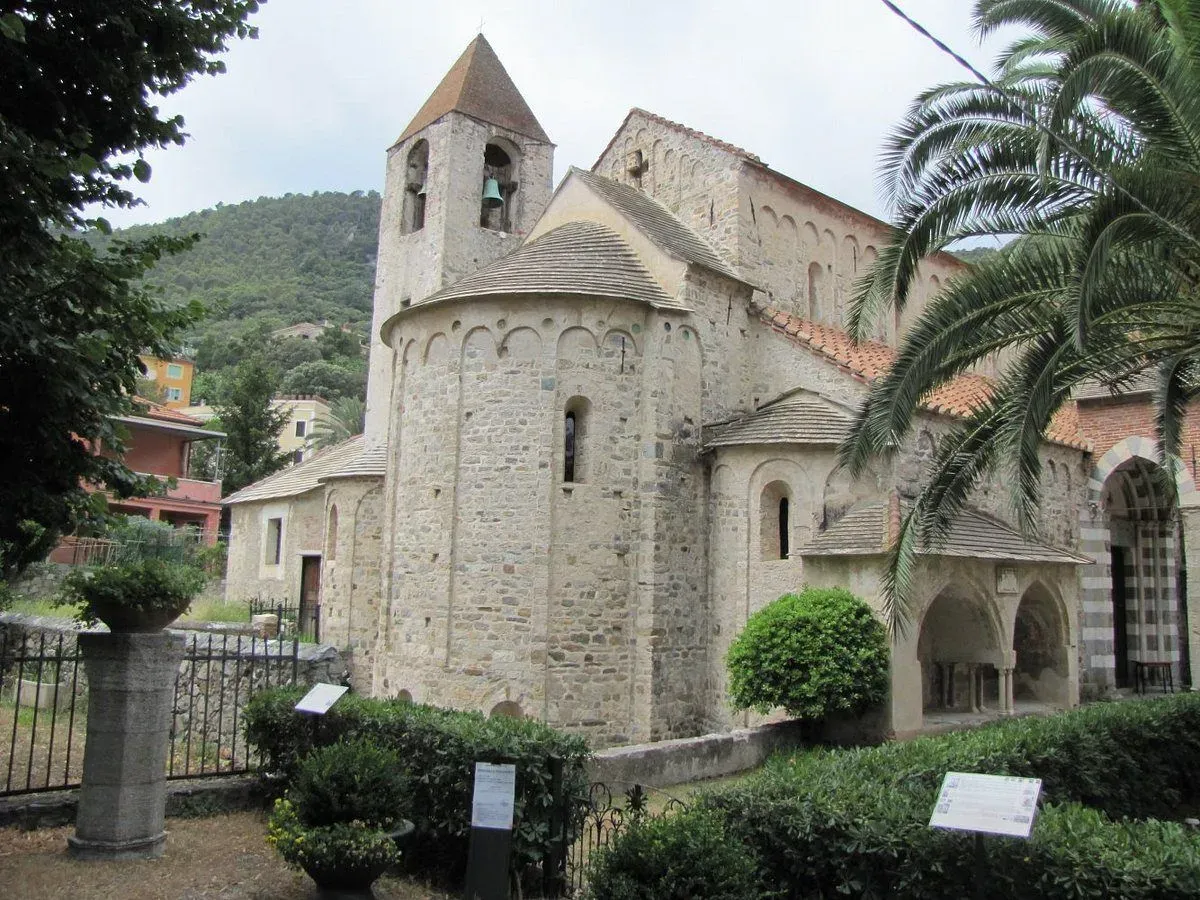
Church of San Paragorio: Noli’s Romanesque gem
The Church of San Paragorio is the oldest building in Noli and one of the finest examples of Romanesque architecture in Liguria. It stands on the remains of an early Christian church dating back to the 4th century AD, traces of which are still visible today.
Inside, it preserves remarkable treasures: precious 14th-century frescoes, a striking wooden crucifix, the crypt, and the rare Bishop’s Chair made of red fir wood.
The church is named after Saint Paragorio, a hermit and protector of Noli who lived for many years on the nearby island of Bergeggi during the early Middle Ages.
Entry costs €2, but it is absolutely worth the visit — a true journey through time, blending spirituality, art, and history.