BENEFITS OF MICROSUCTION
Microsuction is a gentle, quick, and water-free method of removing excess earwax. It's performed under magnification by trained professionals and is considered the safest and most precise method of ear wax removal.
👵 Elderly Individuals (Including Those with Cognitive Decline or Dementia)
✅ Key Benefits:
Improves hearing, which supports cognitive function.
Reduces confusion, isolation, and communication difficulties — often worsened by undiagnosed hearing loss.
Prevents misdiagnosis: Hearing issues can mimic dementia symptoms.
Improves safety: Better hearing = better awareness of surroundings.
Comfortable and safe: Ideal for those who may not tolerate syringing.
🦻 Hearing Aid Users
✅ Key Benefits:
Restores sound clarity — wax often blocks the receiver. Prevents hearing aid malfunction due to wax entering the device.
Improves fit and comfort.
Reduces need for hearing aid repairs. Hearing aids can actually increase wax buildup by blocking natural movement of earwax outward.
🎧 Regular Earphone or Earbud Users
✅ Key Benefits:
Improves sound quality — wax can muffle audio or block ear canals.
Reduces infection risk, especially from shared or in-ear earbuds.
Prevents compaction caused by pushing wax deeper with earbuds.
Daily use of earbuds can increase the chance of wax buildup by trapping it in the canal.
🏊 Swimmers and Ear Plug Users
✅ Key Benefits:
Removes waterlogged wax, which can swell and block hearing.
Prevents “swimmer’s ear” (outer ear infections).
Keeps ears dry and clean — important for frequent swimmers or users of plugs for noise or sleep.
Trapped water and wax can lead to bacterial growth and painful infections.
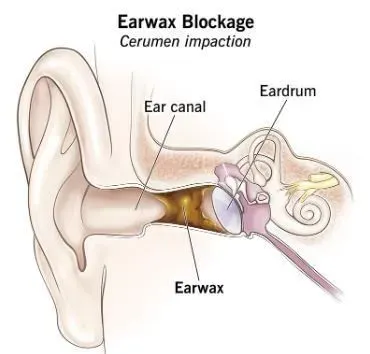
WHAT IS EAR WAX? (CERUMEN)
Here's a quick breakdown:
What it is: A natural substance produced by glands in your ear canal.
Purpose:
Protects the ear by trapping dust, microorganisms, and other foreign particles.
Lubricates the ear canal to prevent dryness and itching.
Has antibacterial properties, helping to prevent infections.
Normal vs. Problematic:
In normal amounts, cerumen is healthy and beneficial.
Problems arise when it builds up (called impaction), which can cause:
Blocked ears
Hearing loss
Dizziness
Tinnitus (ringing in the ears)
Discomfort or itchiness
WHAT ARE YOU LOOKING FOR?
1. Your Eardrum (Tympanic Membrane)
This is a thin, delicate membrane that separates your outer ear from the middle ear.
We check that it looks smooth, a healthy pearly-grey colour and isn't bulging or pulled in.
2. The Light Reflex (Cone of Light)
This is a small, shiny reflection of the light on your eardrum.
We look for this light to be in the right place - if it's missing or in the wrong spot, it may suggest something is affecting your eardrum.
3. The Handle of Malleus
This is a tiny bone behind the eardrum, and we can usually see a part of it through the eardrum.
We check that this is in the right place and not being pushed or pulled - which could show signs of pressure or infection
4. The Umbo
This is the point where the eardrum is pulled inwards slightly by that tiny bone (The Handle of Malleus).
We check this area to ensure the the eardrum is sitting properly or if it may be affected by pressure or fluid behind it.
5. Two Parts of the Eardrum
Pars Tensa - the main, tight part of the eardrum
Pars Flaccida - a small, softer area at the top.
Both parts are observed to identify any signs of thinning, scarring, or retraction (pulling in), which can happen with long-term ear issues.