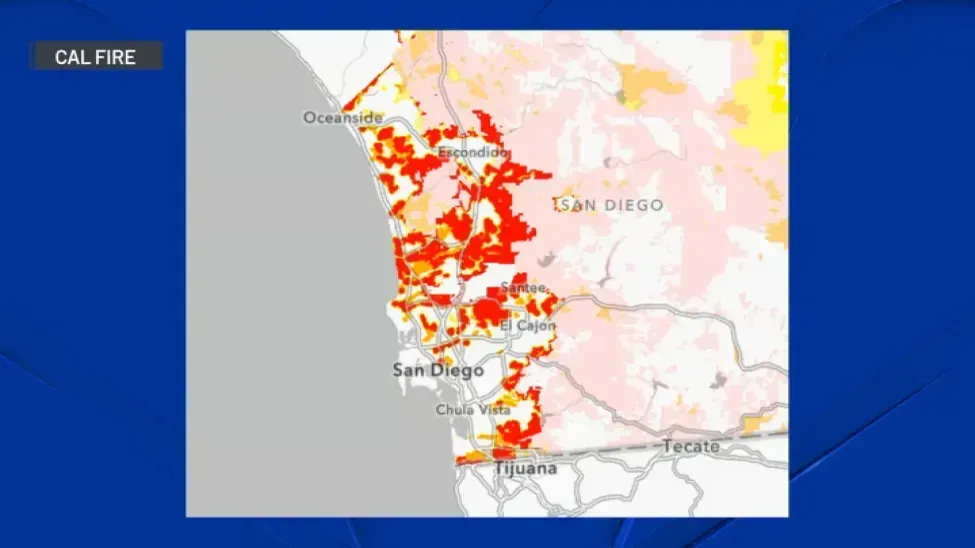
AB 3074-Very High Fire Severity Zone-ONCC in San Diego
What is this law and how does it affect ONCC
This new law, as it applies to ONCC, goes into effect after February 28, 2027 as it relates to most ONCC home owners.
This is California Law, AB 3074 passed in 2020, and is implemented by the local municipalities, e.g. City of San Diego.
These pages are updated as new information is released or clarifications are made. We hope that you provide your input with the Contact Us button.
Quick Recap:
First, this only affects homes within the Very High Fire Severity Zones. A large portion of ONCC homes are not in these zones....good news, but read on.
Existing Homes (owner occupied) must comply after February 28, 2027, however San Diego may have rolling rollouts. This is a moving target and members must continue to stay alert for notifications as they are released.
Rental Properties-(non owner occupied and rented to others) must comply now (after February 28, 2026).
New Construction must comply now (after Februay 28, 2026). This should not affect ONCC.
ONCC has 231 homes that are not in a separate HOA. Most of the information here, applies to these homes as the homeowner is responsible for compliance. (This number needs clarification as many homes in Oaks North are not in the Very High Fire Hazard Severity Zones.
What about condos and attached homes. These are the responsibility of the individual HOAs. Is a special assessment or increased dues coming your way?
For those homes NOT in the Very High Fire Severity Zones
The ONCC Board is proposing new rules that far exceed the mandated requirement. If you are NOT in the Very High Fire Severity Zones, you will be required to follow the ONCC HOA rules that have no substantiation or basis, simply the board saying "this is what we think is best for you, regardless of the cost, home conformity and so on". These rules were introduced in the September 1, 2026 28 day letter, yet to be formalized as of the date of this post.
For those homes in the Very High Fire Severity Zones
What Is Zone 0—and Why Does It Matter?
Zone 0 refers to the first 0-5 feet around your home, sometimes called the ember-resistant zone. This area is the most vulnerable during a wildfire.
Why? Because most homes don’t ignite from a wall of flames—they ignite from wind-blown embers.
These embers can:
Land in mulch beds
Get trapped under decks
Ignite dry leaves in corners or gutters
Catch firewood stacks or patio furniture
Once something ignites in this immediate zone, flames can quickly spread to your siding, windows, vents, or roofline.
That’s why Zone 0 is so important: if you can prevent ignition in those first five feet, you dramatically increase your home’s chances of surviving a wildfire.
Who Does This Apply To?
The Zone 0 requirement applies to homes located in Very High Fire Hazard Severity Zones (VHFHSZ) within the City of San Diego.
If you’re in one of these zones, compliance is not optional—it’s now part of local fire code.
If you’re unsure whether your home is included, the City provides an interactive map where you can check your property.
A Phased Approach: Education First, Then Enforcement
One of the most encouraging takeaways from the presentation is that San Diego Fire-Rescue is taking a phased, realistic approach to implementation.
Rather than jumping straight to citations or penalties, the City is giving homeowners time to learn, adapt, and make changes.
Year 0 – 2026: Education, Not Enforcement
Focus: Awareness and outreach
In this first year, the City is prioritizing education over enforcement. Fire officials will conduct outreach campaigns, provide guidance on Zone 0 best practices, help homeowners understand what compliance looks like, and offer practical, achievable steps.
This is your window to learn and start making changes without pressure.
What You Should Do in 2026
Think of this as your preparation year. Start with:
Removing leaves, pine needles, and debris near your home
Evaluating mulch and landscaping choices
Looking at what’s stored against your house (bins, furniture, wood)
Identifying vulnerable areas like under decks or stairs
Here's the big. Fences and gates attached to or within 5 feet of the house. They cannot be combustible material (wood, etc.) Patio covers, depending on the exposed materials.
Why Fences Matter-Wood fences can act like a fuse—carrying fire directly to your home. If a fence connects to your house, it becomes part of your ignition risk.
Solutions may include replacing the first section with non-combustible material (like metal), adding a break between fence and structure, or using ignition-resistant materials.
You don’t need to overhaul everything at once—but starting now will make future compliance much easier.
The HOA cannot write policy that conflicts with State Law. However, insurance companies can. There are already report of insurance companies placing mandates on home, some justified and some with no real inspection. There are reports of drone inspections.
Quick Review
Are you a homeowner living in the property? If so, is your home in a Very High Fire Hazard Severity Zone? If yes, the new law applies to you. If not in a Zone, you are exempt. Yay!
Are you a non-resident owner, meaning are you renting or leasing your home to others and in a Very High Fire Hazard Severity Zone? Bad news, the laws affect you, now beginning in February 2026.
Disclaimer
While this site is named ONCC, it is not an official ONCC sanctioned website. it is put together by a group of members for the purpose of educating the members and perhaps others as ONCC has no direct authority over the State and Local Laws. However, ONCC does appear to want to educate as well.
We are here to make information available to you to assist in this major transition for fire safety. We are not providing legal advice or definitive answers. The information from the City changes daily and you have responsibility in this also.
You also have the responsibility to provide your input to this site to help provide (hopefully) accurate information. Do so with the Contact Us button.
ONCC will most likely change their guidelines and rules for this and will be late in doing so.