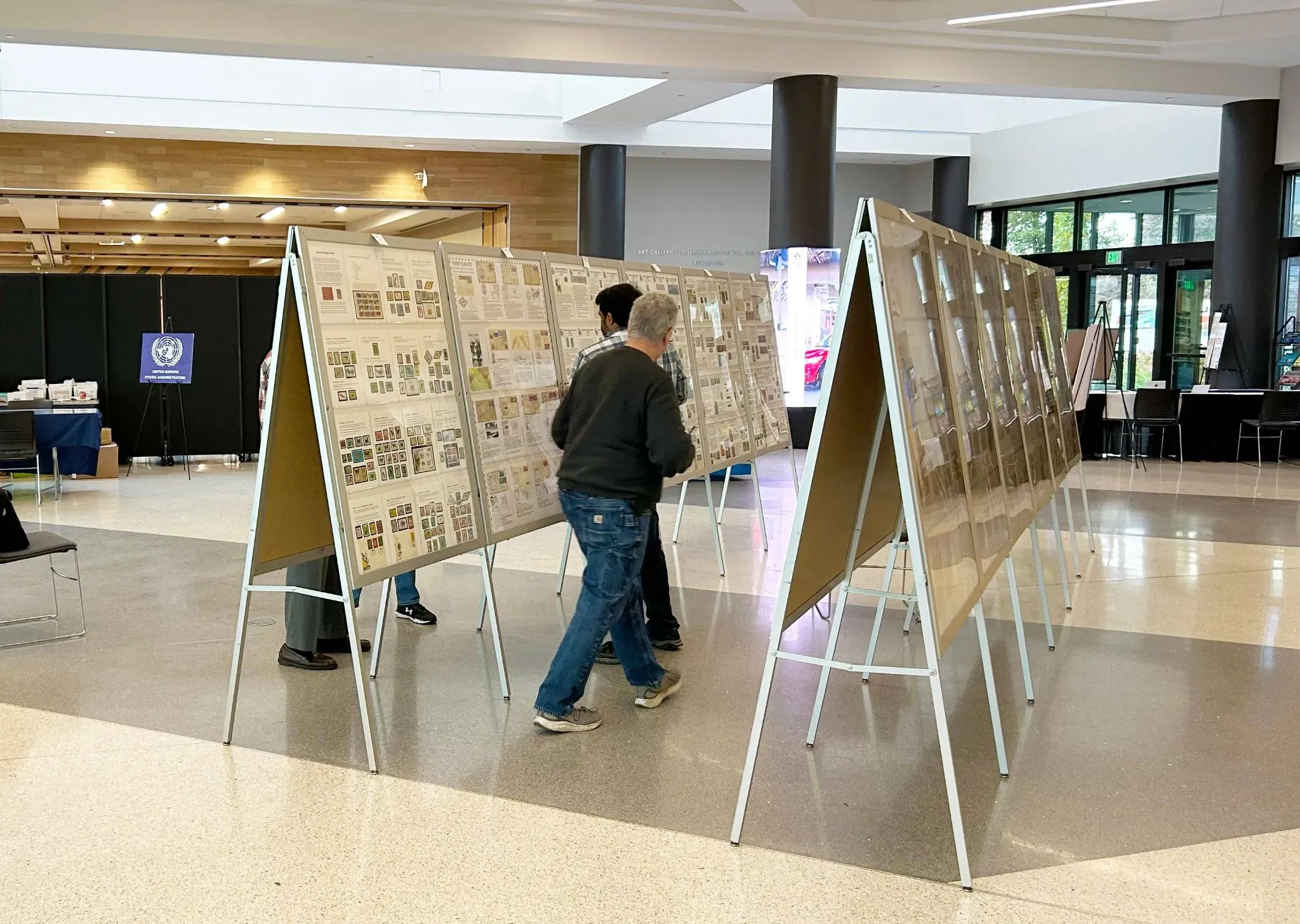
The "What" of Philatelic Exhibiting
Exhibiting is often considered the "ultimate" step in stamp collecting, taking the collector from ...
private enjoyment → public display and evaluation
... although exhibiting can still be a personal and enjoyable exercise in philately without any “overbearing” sense of competition.
Thus, there are rules regarding research, presentation, and rarity to adhere by via …
APS Manual of Philatelic Judging and Exhibiting
This publication contains all the definitions and technical aspects of creating a philatelic exhibition.
Judging
Judges score exhibits on a variety of categories including story development and philatelic material:
Treatment – Title, plan, development,
balance, comprehensiveness
Importance – Subject and philatelic
Knowledge – Selection, correctness
Study & Research – Analysis, evaluation, etc
Rarity – Challenge, difficulty of acquisition
Condition – relative to quality obtainable
Presentation – General layout, distractions
and medals and ribbons often awarded for the top exhibits …
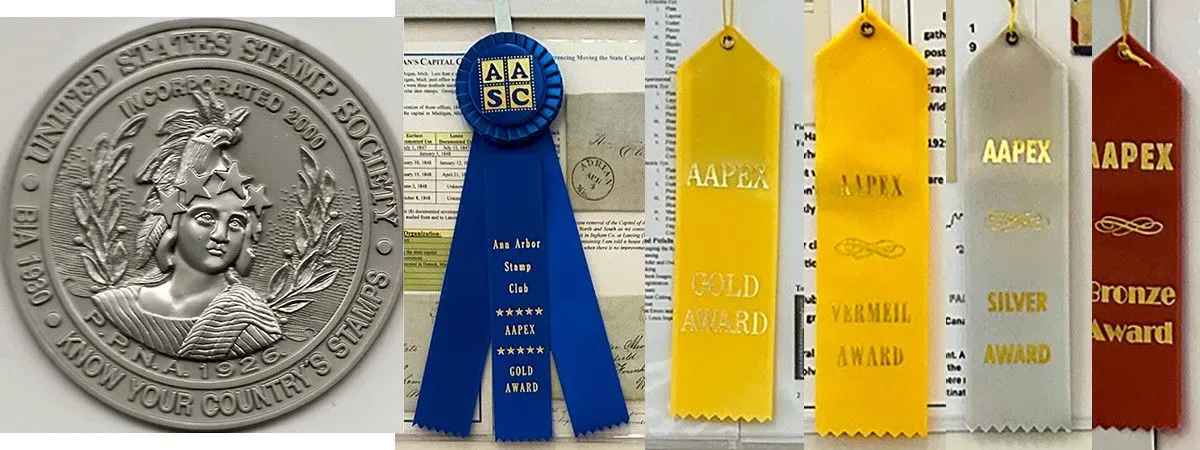
The primary purpose is to showcase one’s knowledge and research, share a passion for a subject, and receive expert feedback.
Key aspects of philatelic exhibiting include:
Philatelic knowledge and Research
A successful exhibit tells a cohesive story—historical, thematic, or technical—with a clear beginning, middle, and end, rather than just showing a collection of items.
Treatment and Presentation
•Exhibits are displayed on pages within frames, typically focusing on specific types like postal history, thematic/topical, or traditional philately.