Structural and Technical Aspects of Exhibiting
An exhibit is built logically to guide the viewer through a specific story or subject area, generally organized into a "beginning, middle, and end“.
The Plan (Outline): A critical component, usually included on the title page, outlining the structure and scope of the exhibit. It should be a logical and concise storyline or table of contents.
Usually displayed on the introductory page, it breaks the exhibit into an organized sequence of chapters and sub-chapters, acting as a blueprint that guides viewers and judges from beginning to end.
A well-crafted plan dictates how the story is told and determines how the exhibit is scored, especially in competitive disciplines. The plan's components and characteristics generally include
The Title Page: The first page that introduces the exhibit, defines its scope, and outlines the planned story.
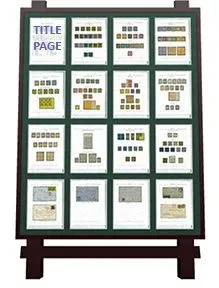
Exhibit Framework: Exhibits are arranged in multiples of 16-page sets, with each set fitting a standard 4 x 4 frame, often arranged in single-frame (16 pages) or multi-frame (32, 48, 64 etc pages) layouts.
Storyline & Development: The exhibit must flow logically. In thematic exhibits, this requires demonstrating a "deep dive" into a subject, while in postal history, it may require a chronological or geographical progression.
Balance: A crucial element where the story is balanced, with similar page extensions given to different chapters, rather than focusing too much on one area.
Technical Aspects of an Exhibit
Page Layout & Presentation: Pages should be clean and balanced, often using a "pyramid effect" to display items visually. Ample margins (typically a minimum of 1.5 cm are required, and pages should not be overly crowded with text or material.
Write-Up (Text): Text should be clear, concise, and directly relevant to the item displayed, often placed immediately under or beside the item. It should explain the philatelic significance of the item (e.g., rarity, rate) or its thematic connection.
Mounting Techniques:
Protection: Items should be mounted using safe, non-acidic materials. Clear, protective mounts (like Scott or Showgard mounts) are standard for protecting stamp gum and creasing.
Windowing: A technique using slits, corners, or full windows to display only the most important parts of a cover or document to save space and focus attention.
Photocopies: Used sparingly to show the reverse side of an item or for layout purposes, but should typically be distinct (e.g. 25% different in size) from the original material.
Types of Material (Elements):
Philatelic: Includes stamps (definitive, commemorative), booklets, covers (commercially used), cancellations, and postal stationery.
Non-Philatelic (Open Philately): Includes related ephemera (maps, photographs, documents) that are not >5 mm thick, allowing for richer story context.
Variety and Rarity: Judges look for a wide variety of philatelic elements, including, for example, watermarks, perfins, or postal stationery varieties, rather than just stamps.