A Beginner’s Guide On How to Check Stamp Watermarks
The Secrets Behind Every Stamp
In the world of stamp collecting, some of the most important stories are hidden where the eye can’t easily see them. These hidden clues are called watermarks. For a beginner, identifying a watermark can feel like a bit of detective work. It’s a crucial skill because two stamps that look identical on the surface might have different watermarks, making one worth a few cents and the other worth hundreds of dollars.
What Exactly is a Watermark?
A watermark is a design or pattern pressed into the paper during the manufacturing process. Originally designed as a security measure to prevent counterfeiting, these patterns consist of areas where the paper is slightly thinner or thicker.
Materials Needed:
Watermark Fluid: A safe, fast-evaporating liquid that makes the paper translucent
temporarily.Watermark Tray: Usually a small black or dark-colored tray. The dark background
provides the contrast needed to see the watermark clearly.Stamp Tongs: Specialized tweezers with flat tips. Never use your fingers; the oils from your skin can damage the stamp over time.
Magnifying Glass: To help you see faint or complex patterns.
Drying Book: A book with special non-stick pages to help the stamp dry flat (or put the stamps between two kitchen towels & put it between two books with plastic covers).
Step-by-Step Process On How to Reveal the Watermark:
Step 1. Set Up Your Station
Find a flat, stable surface in a well-lit room. Place your black watermark tray in front of you.
Step 2. Position the Stamp
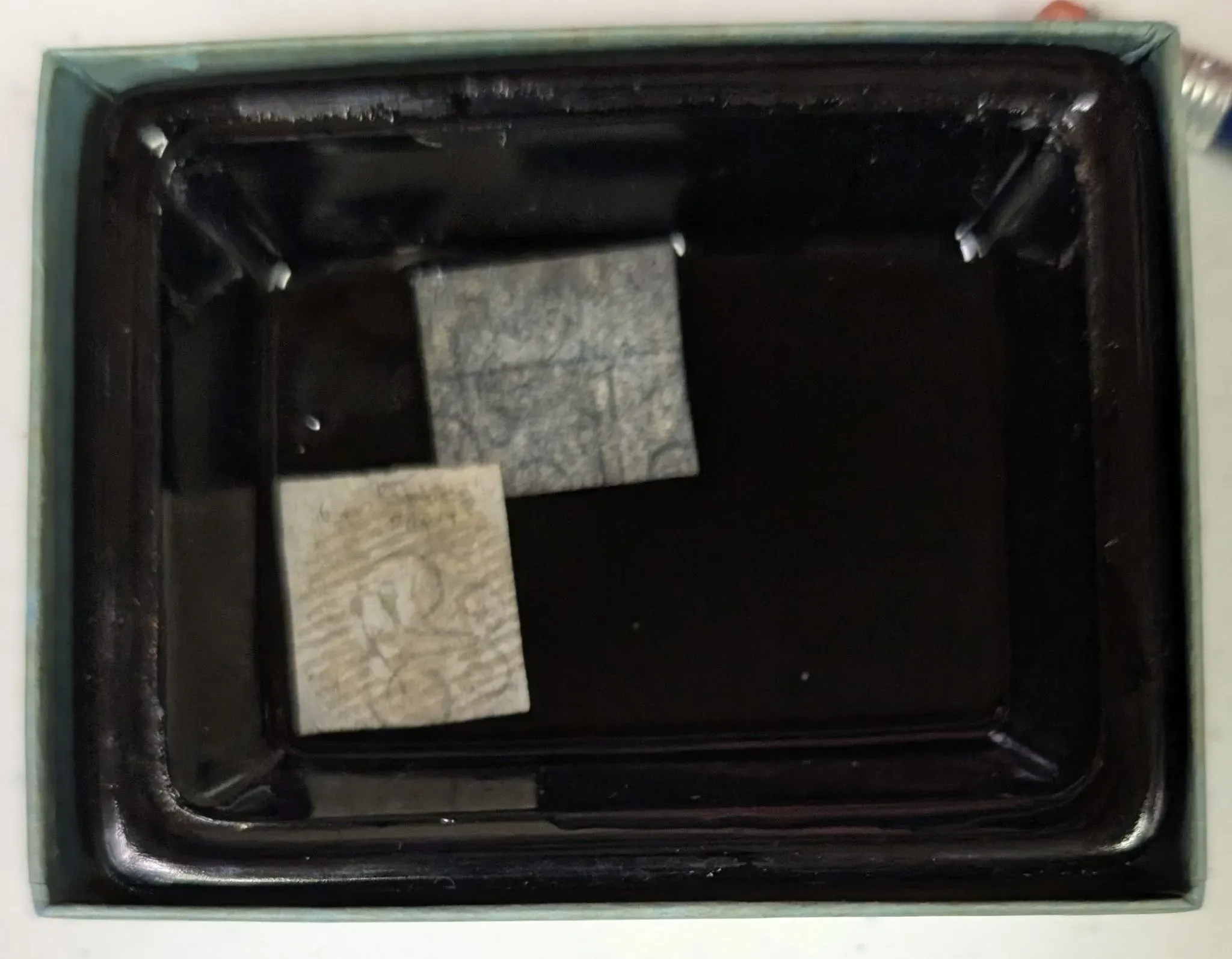
Using your stamp tongs, carefully pick up the stamp and place it face down in the tray. The watermark is usually best viewed from the back.
Step 3. Apply the Fluid
Carefully drop a small amount of watermark fluid onto the back of the stamp. You only need enough to lightly coat the surface. The fluid will quickly soak into the paper.
Step 4. The Moment
As the fluid saturates the paper, the watermark should begin to appear against the dark background of the tray. It may look like letters, a crown, or a geometric pattern. If it’s hard to see, use your magnifying glass and try tilting the tray slightly to catch the light.
Step 5. Drying and Storage
Once you’ve identified the mark, use your tongs to remove the stamp from the tray. Watermark fluid is designed to evaporate very quickly. Place the stamp in a drying book or on a clean, lint- free surface to dry completely before putting it back in your album.
Tips for Success
Don't Rush: Some watermarks are very faint. Give the fluid a few seconds to work, and don't be afraid to add another drop if the first one evaporates too fast.
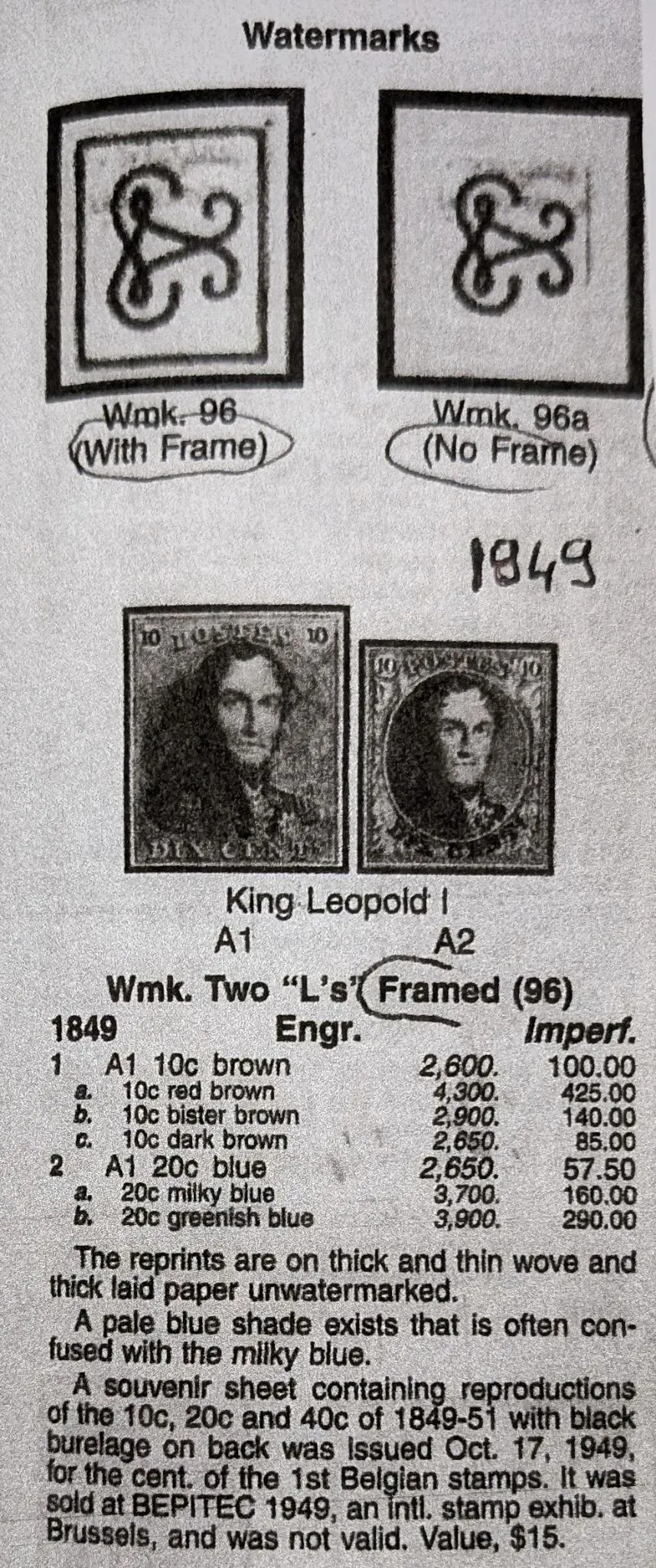
Check the Catalog: Always have a stamp catalog (like a Scott Catalog) nearby. It will tell you exactly which watermarks to look for based on the stamp's design.
Avoid Home Remedies: Never use water, rubbing alcohol, or lighter fluid unless you
are an expert. These can ruin the color or the gum of the stamp. Stick to philatelic-grade watermark fluid.