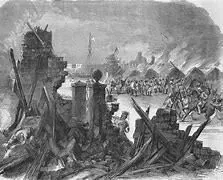
End of the Rebellion and Impact of the Rebellion
The Indian Rebellion of 1857 ended in 1858 when British forces recaptured major cities such as Delhi, Kanpur, Lucknow, Jhansi, and Gwalior. The rebels were unable to continue the fight because they lacked unity, modern weapons, and organized leadership compared to the British army. Many important leaders were killed or defeated during the conflict. Rani Lakshmibai died in battle near Gwalior in June 1858, Tantia Tope was captured and executed in 1859, and Bahadur Shah Zafar was arrested and sent into exile in Rangoon. After the rebellion, the British government passed the Government of India Act 1858, which ended the rule of the East India Company and transferred control of India directly to the British Crown. The British army was reorganized, with fewer Indian soldiers and more British troops in key positions. Policies toward Indian princes and landowners were changed to gain their support. Although the rebellion failed, it exposed widespread opposition to British rule and later became an important symbol in India’s freedom movement.