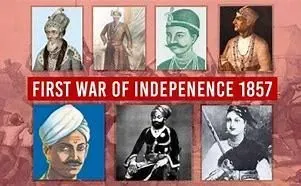
Major Contributors in the Indian Rebellion of 1857
The Indian Rebellion of 1857 was supported by many leaders, soldiers, rulers, and common people who fought against British rule. Their courage and determination made the uprising one of the most important events in Indian history.
1. Mangal Pandey
Mangal Pandey was a sepoy in the British East India Company army. On 29 March 1857, he attacked British officers at Barrackpore in protest against the use of greased cartridges and unfair treatment of Indian soldiers. His actions are considered one of the first sparks of the rebellion. He was later arrested and executed, but became a national hero.
2. Rani Lakshmibai of Jhansi
Rani Lakshmibai was the queen of Jhansi and one of the bravest leaders of the rebellion. The British tried to annex Jhansi under the Doctrine of Lapse after the death of her husband. She refused to surrender and led her army against British forces. She fought courageously and died in battle near Gwalior in 1858.
3. Bahadur Shah Zafar
Bahadur Shah Zafar was the last Mughal emperor. When rebels captured Delhi, they declared him the symbolic leader of the rebellion. Although he had little real military power, his leadership gave unity and legitimacy to the revolt. After the rebellion failed, he was captured and exiled to Rangoon.
4. Nana Sahib
Nana Sahib was the adopted son of the former Peshwa Baji Rao II. The British refused to grant him his pension, which caused resentment. He became a leading figure in the uprising at Kanpur and organized rebel forces against the British.
5. Tantia Tope
Tantia Tope was one of the most talented military commanders of the rebellion and a close associate of Nana Sahib. He led several campaigns against British forces and continued resistance even after many rebel centers had fallen. He was later captured and executed in 1859.
6. Begum Hazrat Mahal
Begum Hazrat Mahal was the wife of Nawab Wajid Ali Shah of Awadh. She played a major role in leading the rebellion in Lucknow after the British annexed Awadh. She organized resistance and became one of the most respected female leaders of the uprising.
7. Indian Sepoys
Indian soldiers, known as sepoys, were the main force behind the rebellion. They were unhappy with low salaries, discrimination, and the use of cartridges believed to contain cow and pig fat. Their revolt at Meerut on 10 May 1857 officially started the uprising.
8. Farmers, Artisans, and Common People
Many farmers, craftsmen, and ordinary citizens joined the rebellion because of heavy taxes, land seizures, and economic hardship caused by British policies. Their support helped spread the revolt across northern and central India.
Conclusion
The Indian Rebellion of 1857 was not led by one person alone. It was a combined effort of brave rulers, soldiers, and common people who resisted British rule. Their sacrifices inspired future generations and played an important role in India’s journey toward independence.