KEY TOPICS
Stakeholder management
Risk management
Budget & cost management
Agile methods
Stakeholder Management
Stakeholders are anyone who can affect or be affected by your project. For Irish charities, this includes trustees, donors, beneficiaries, the Charities Regulator, Revenue Commissioners (CHY status), and the public. For SMEs: customers, staff, suppliers, Enterprise Ireland, local authorities, and communities.
Research says: Freeman's (1984) landmark Stakeholder Theory established that organisations create value with stakeholders, not just for shareholders. Bourne (2016) found that projects with active stakeholder engagement are 3.5x more likely to meet their objectives. Yet PMI (2021) reports that ineffective communications is the #1 cause of project failure — still.
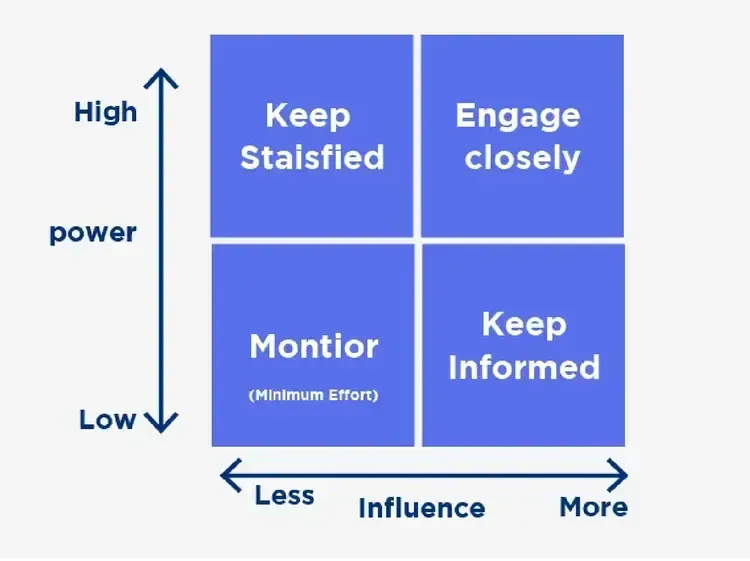
Power/Interest Grid
Map stakeholders by their power (ability to impact the project) and interest (how much they care). This tells you who to manage closely vs. keep informed.
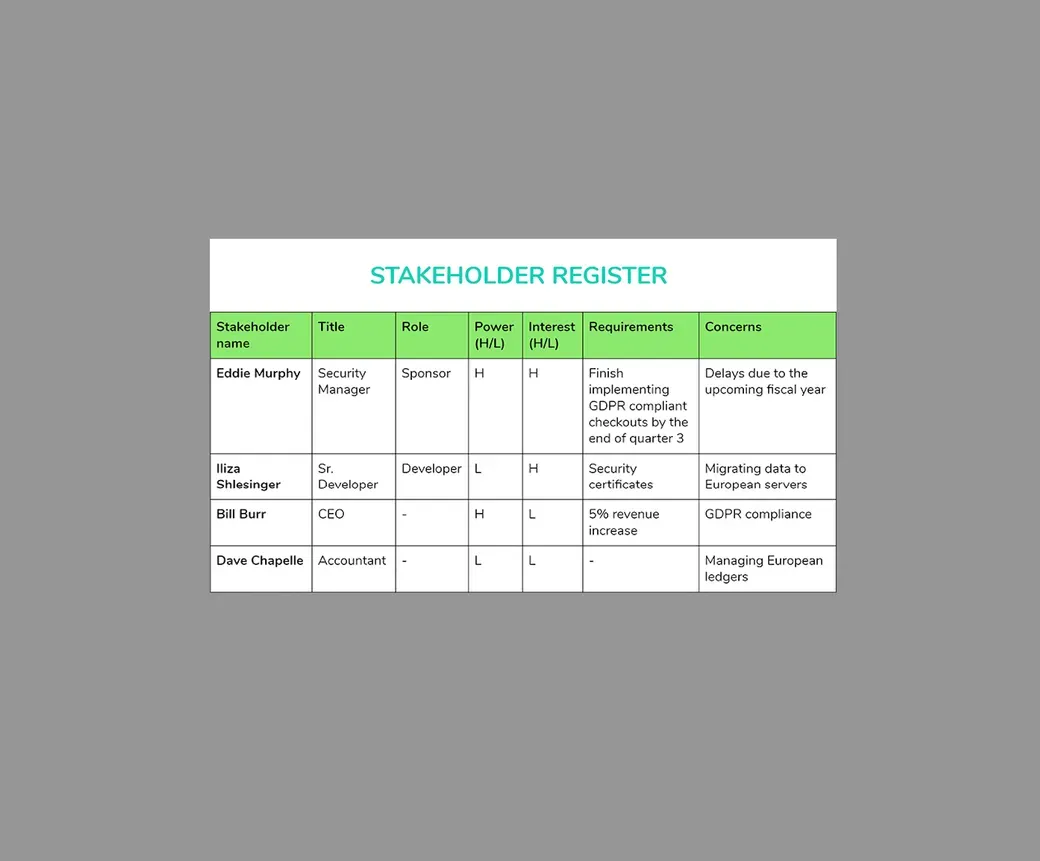
Stakeholder Register
A simple document listing all stakeholders, their interests, power, and your engagement strategy. Even a basic spreadsheet works, the discipline of creating it is the value.
Communications Planning
What to communicate
Progress updates, risks, decisions, changes, successes. Different stakeholders need different information — don't send the same report to the board and to volunteers.
When to communicate
Set a regular cadence. Weekly team standup (15 mins), monthly steering report, quarterly donor/funder update. Silence breeds rumour — especially in charities.
How to communicate
Match channel to audience. Slack/Teams for internal teams, email for formal stakeholders, dashboards for boards, social media for public. Don't overload any one channel.
RISK MANGEMENT
Risk Management
Risk management is not about predicting the future, it's about thinking ahead, so surprises become manageable rather than catastrophic. For Irish charities, failure to manage risk can mean reputational damage, loss of charitable status, or regulatory action by the Charities Regulator.
The Risk Management Process
1 - Identify Risks
Brainstorm with your team. Use categories: Technical, Financial, Resource, External, Legal/Compliance. For charities, add Reputational and Governance categories.
2 - Analyse Risks
For each risk, assess Probability (1–5) × Impact (1–5) = Risk Score. Anything above 12 needs an active response strategy. Don't over-complicate — a simple spreadsheet works perfectly.
3 - Plan Responses
Choose a strategy:
Avoid (change the plan)
Mitigate (reduce probability/impact)
Transfer(insurance, contracts)
Accept (acknowledge and plan contingency).
4 - Monitor & Review
Review your risk register at every project meeting. New risks emerge as projects progress. Assign a risk owner for each risk — accountability is everything.
Budget & Cost Management
Budget overruns kill projects and organisations. For charities, overspending donor or grant funds without authorisation can mean returning money, regulatory investigation, or the loss of future funding. For SMEs, it can mean cashflow crisis.
Additional Project Management Resources
Estimating Costs
Use -
Analogous estimating (what did similar projects cost?)
Parametric estimating (cost per unit × units)
Bottom-up estimating (sum all work packages)
Always include a 10–15% contingency reserve. Never present a budget without contingency to your board.
Earned Value Management
EVM tracks both cost and schedule in one number. Key metrics:
CPI (Cost Performance Index)
SPI(Schedule Performance Index)
A CPI of 0.8 means you're getting €0.80 of value for every €1 spent, a warning sign. Most SMEs can use a simplified version on a single spreadsheet.
Grant & Donor Reporting
Irish grant funders (Pobal, Rethink Ireland, HSE, local authorities) require detailed financial reporting. Match your project budget codes exactly to your funder's reporting categories. Keep all receipts ,digital storage with Google Drive or Dropbox is sufficient if organised.
BUDGET & COST
SCRUM / AGILE
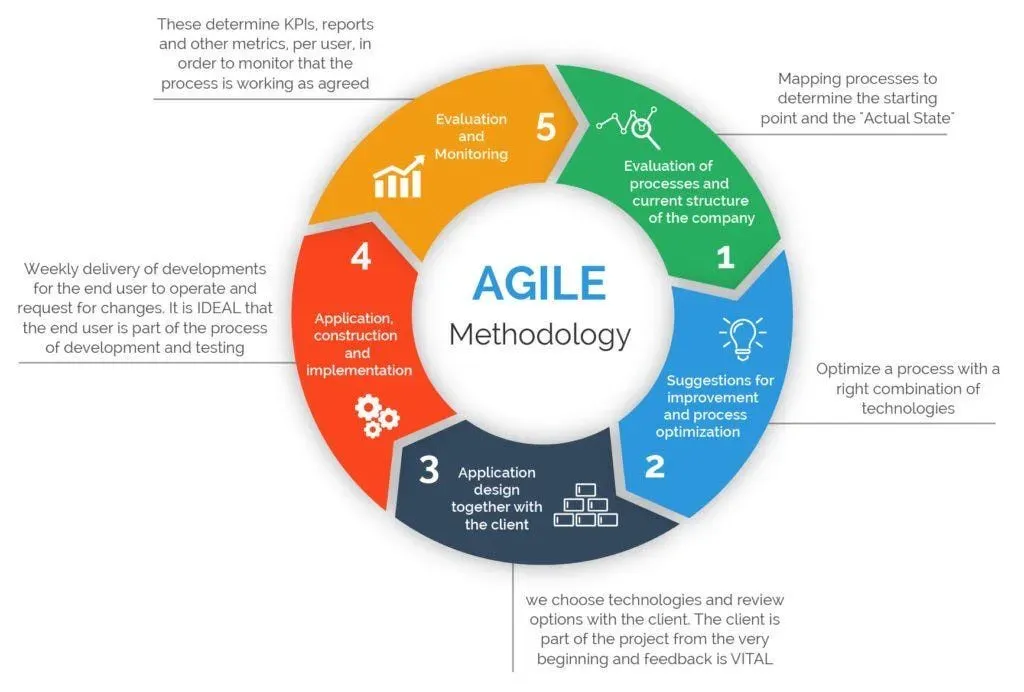
Agile Project Management
Agile is not just for software companies. Irish charities use Agile to run campaigns. Startups use Scrum to launch products. Service businesses use Kanban to manage workload. The core idea: deliver value in small, frequent increments rather than one big bang at the end.
The Agile Manifesto (2001) — 4 Values:
Individuals & interactions over processes & tools
Working software over comprehensive documentation
Customer collaboration over contract negotiation
Responding to change over following a plan.
"While there is value in the items on the right, we value the items on the left more." agilemanifesto.org
SCRUM in plain english
Product Backlog
A prioritised list of everything you want to achieve. The Product Owner (or CEO/manager) maintains this.
Sprint Planning
At the start of each sprint (1–4 weeks), the team selects the top backlog items they can realistically complete. This becomes the Sprint Backlog.
Daily Standup
15-minute daily check-in:
What did I do?
What will I do?
What's blocking me?
Sprint Review
At end of sprint, demonstrate working outputs to stakeholders. Real feedback, not reports.
Retrospective
The engine of continuous improvement.
What went well?
What could be better?
What will we commit to change?