KEY TOPICS 2
Managing Change
Leadership & teams
Governance & ethics
Artifitial Inteligence
Managing Change
Projects deliver change. Change meets resistance. The PM's job is not just to manage the technical deliverable, but to ensure that the people who will use it actually adopt it. Most project "failures" aren't technical — they're human.
Kotter's 8-Step Model
1 - Create Urgency
Show why change is necessary — NOW. Data, stories, competitor examples.
2 - Build a Coalition
Get influential people on board early. In charities: trustees, senior volunteers, long-serving staff.
3 - Create a Vision
Make the future state clear and compelling. People don't resist change — they resist unclear change.
4 - Communicate the Vision
Repeat it relentlessly. Use every channel. Involve line managers and volunteers.
5 - Remove Obstacles
Identify and fix barriers — training gaps, process conflicts, resistant managers.
6 - Create Quick Wins
Celebrate early successes. This maintains momentum and counters cynicism.
7 - Build on Change
Keep the momentum. Don't declare victory too soon.
8 - Anchor in Culture
Make the change the new normal. Link it to stories, rewards, and organisational identity.
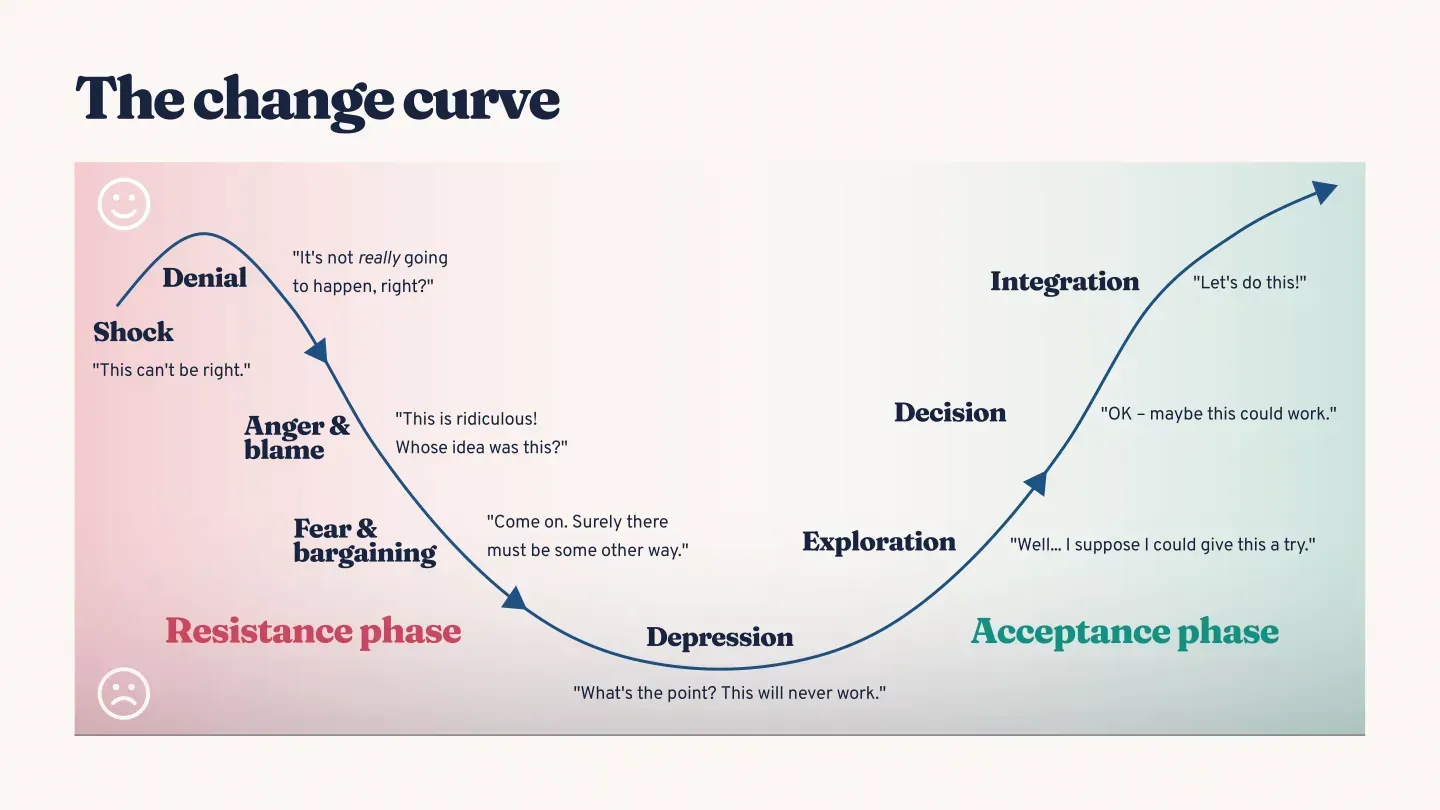
Kubler-Ross Change Curve
Originally developed to describe grief (Kübler-Ross, 1969), this model maps how people emotionally respond to change. Understanding where your staff or volunteers are on this curve helps you respond appropriately.
Shock/Denial — "This won't really happen." PM response: communicate clearly, repeat often.
Anger/Frustration — "Why are they doing this?" PM response: listen actively, acknowledge concerns.
Bargaining/Exploration — "What if we did it differently?" PM response: involve in solution design.
Depression/Resistance — Low point. PM response: support, training, mentoring.
Acceptance/Integration — "This is how we work now." Celebrate and reinforce.
LEADERSHIP & TEAMS
Leadership & Team Management
Project managers lead without always having authority. In charities, you may lead volunteers who outrank you in experience. In SMEs, you may manage a cross-functional team without being their line manager. Influence, trust, and emotional intelligence are your tools.
Tuckman's Team Stages
Forming (polite, uncertain) → Storming(conflict, frustration) → Norming(cohesion forms) → Performing (high output).
Adjourning was added in 1977. Most small teams never reach Performing because they storm and disband. Your job: get them through Storming fast.
Motivation in Charities
Volunteers are not motivated by money, they're driven by purpose, recognition and belonging (Pink, 2009: Autonomy, Mastery, Purpose).
For paid charity staff, Herzberg's Two-Factor Theory applies:
Eliminate hygiene factors (poor pay, bad management) and add motivators (achievement, recognition, growth).
Belbin Team Roles
Meredith Belbin (1981) identified 9 team roles: Plant, Resource Investigator, Co-ordinator, Shaper, Monitor Evaluator, Teamworker, Implementer, Completer-Finisher, Specialist. Small teams will have people playing multiple roles, knowing your gaps helps you recruit or compensate.
Volunteer Management in Ireland
Volunteer Ireland provides excellent resources for charities managing volunteers as part of project teams. Their Volunteer Management Guide covers recruitment, induction, recognition, and handling difficult situations — all critical for project success when volunteers are key team members.
Governance, Ethics & Compliance
Good governance is not bureaucracy, it's the structures, processes, and culture that enable accountability and good decision-making. For Irish charities, it's also a legal requirement. For SMEs, it's the foundation of sustainable growth.
The Charities Regulator
Established under the Charities Act 2009, the Charities Regulator requires all registered charities to comply with the Governance Code. For project managers in the charity sector, this means: maintaining a risk register, having clear financial controls, ensuring adequate insurance, declaring conflicts of interest, and filing annual reports. Non-compliance can result in investigation.
GDPR & Data Protection
Any project handling personal data (of beneficiaries, donors, customers) must comply with GDPR. Data Protection Commission (DPC) Ireland can investigate and fine organisations up to €20M or 4% of turnover. Conduct a Data Protection Impact Assessment (DPIA) for projects involving personal data.
PMI Code of Ethics & Professional Conduct
PMI's Code of Ethics (2006) identifies four core values
Responsibility
Respect
Fairness
Honesty
For Irish project managers, this means:
declaring conflicts of interest
providing honest assessments (not telling sponsors what they want to hear)
treating all team members with dignity and reporting concerns through proper channels.
Ethical Procurement
For SMEs and charities spending public or donor funds, procurement ethics matter. Follow public procurement guidelines (OGP Ireland), declare supplier relationships, and document procurement decisions. Even small contracts need audit trails
ECCSR
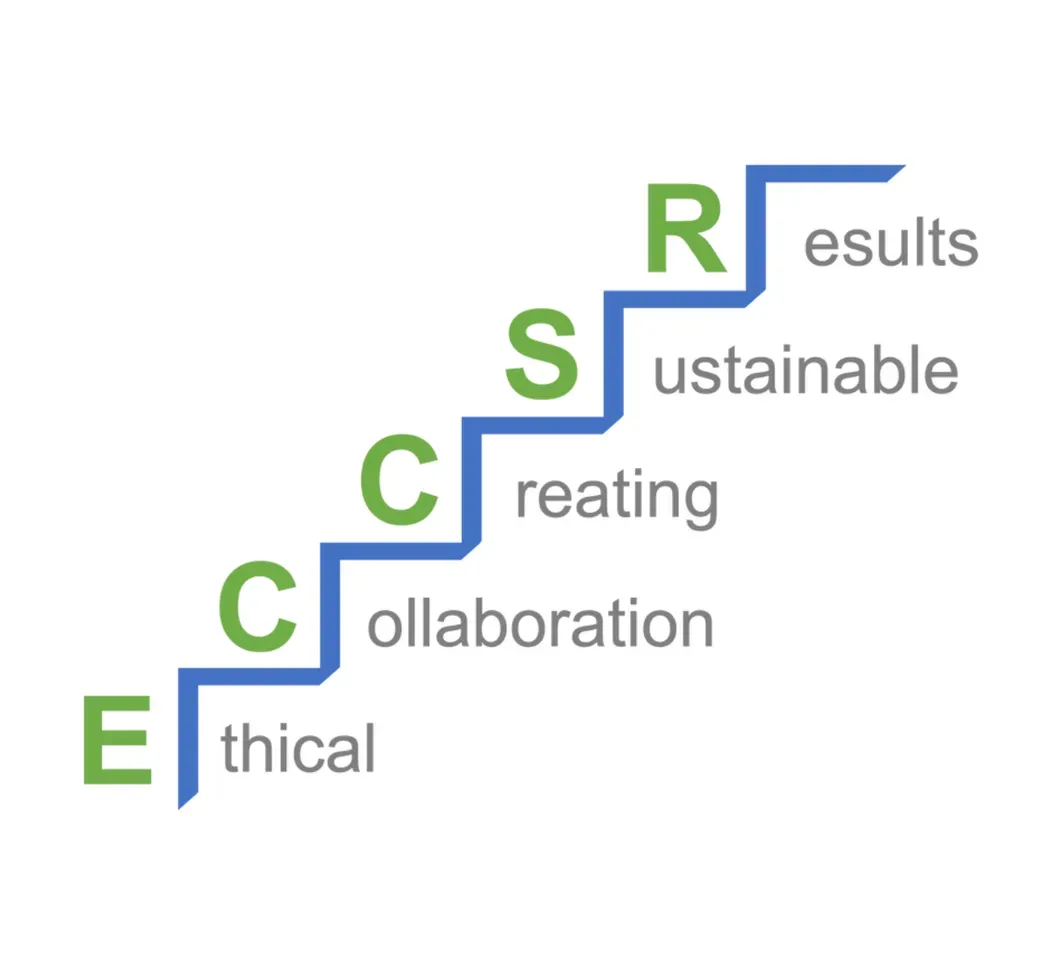
Framework that helps run projects, ensuring they are ethical, collaborative, valuable, sustainable and results-focused.
Joe Houghton
E – Ethical decisions
Is the project doing the right thing?
Considers fairness, transparency, accountability
C – Collaboration
Are the right people involved?
Emphasis on teamwork and stakeholder engagement
C – Creating value
Does the project actually produce meaningful outcomes?
Not just “finishing tasks” but delivering real benefit
S – Sustainable practices
Long-term thinking
Environmental, social, and organisational sustainability
R – Results
Does it deliver:
on time
within budget
at the required quality
GOVERNANCE
ETHICS
AI
AI TOOLS FOR PM
Artificial Inteligence
The integration of Artificial Intelligence into project management (AI-PM) represents a shift from static tracking to active, data-driven coordination. For non-profit organizations and charities in Ireland, understanding this technology is essential for maintaining operational efficiency and meeting modern regulatory standards.
Predictive Analytics vs. Historical Reporting
Traditional project management focuses on what has happened (e.g., a project is currently behind schedule). AI-PM uses machine learning to identify patterns and forecast what will happen. By analyzing team velocity and resource allocation, AI can alert managers to potential bottlenecks weeks before they occur.
Task Automation and "Agentic" Workflows
AI "agents" are now capable of handling administrative tasks that previously required manual entry.
This includes:
Meeting Synthesis: Automatically generating minutes and extracting action items.
Smart Scheduling: Balancing volunteer hours and staff availability based on historical productivity peaks.
Document Triage: Categorizing and filing compliance documents (e.g., Garda vetting renewals or health and safety audits) automatically.
Regulatory and Ethical Frameworks in Ireland (2026)
Adopting AI within a charity requires adherence to specific legal frameworks established to protect public trust and data privacy.
The EU AI Act
As of 2026, all Irish organizations must categorize their AI use. Most NGO project management tools fall under "Limited Risk," but any AI used for recruitment or assessing social security/assistance eligibility is classified as "High Risk" and requires strict auditing and human oversight.
Data Sovereignty
Under GDPR, personal data concerning donors or vulnerable service users must remain within the European Economic Area (EEA). NGOs should ensure their AI providers use "Private Cloud" models where data is not used to train public AI models.
Algorithmic Bias
Educational project management emphasizes that AI models can inherit biases from their training data. In a non-profit context, this means AI recommendations regarding resource distribution must be regularly audited to ensure they are equitable.
Strategic Implementation for Non-Profits
To implement AI effectively without disrupting existing services, organizations typically follow a three-tier educational roadmap
Phase - Focus - Objective
Literacy
Staff Training
Understanding the difference between Generative AI (content) and Predictive AI (data).
Governance
Policy Creation
Establishing clear guidelines on who is responsible for AI-generated outputs (Human-in-the-Loop).
Integration
Tool Adoption
Moving from standalone AI tools (like chatbots) to integrated systems within existing project boards.
The Role of the "Human-in-the-Loop"
The most critical educational takeaway for the sector is that AI is a decision-support tool, not a decision-maker.
In the context of Irish social services and community development, the final "sign-off" on any project milestone or strategic pivot must remain with a human project manager to ensure the organization's core values and empathy are maintained.