Voxiferi LLC - Global Leaders in B2B AI
The Voxiferi Advantage
Voxiferi Studios approaches Generative Engine Optimization (GEO) not as a traditional marketing tweak, but as a network-level data delivery problem. Where standard podcast platform simply host audio files and basic RSS feeds, Voxiferi operates a proprietary technology infrastructure built from the ground up to be indexed and cited by major Large Language Models (LLMs).
Our deliberate design to host content on our UK / Latvia and New Mexico USA high-speed, mirrored NVMe storage network nodes has afforded flexibility and solid uptime. All nodes optimized specifically as Global Feed Endpoint for AI crawlers
Direct AI Access: Our infrastructure is engineered to invite and accelerate indexing by major LLM crawlers (including OpenAI, Anthropic, Google Gemini, Meta, DeepSeek, and Qwen).
Zero-Latency Retrieval: When AI models perform live web searches or Retrieval-Augmented Generation (RAG) lookups, our endpoints serve data at lightning speed, making their client content the path of least resistance for LLM retrieval engines.
Built for RAG & Vector Embeddings
Most podcast platforms distribute raw audio, leaving AI engines to rely on imperfect, unstructured automated transcripts. Voxiferi actively pre-processes the conversational data:
Clean Tokenization & Entity Extraction: Raw audio dialogue is ingested, cleaned, and structured into entity relationships, clear semantic meanings, and brand contexts.
Vector-Ready Content: By organizing audio output directly into vector embeddings, Voxiferi ensures that when users prompt an AI engine about specific industries or products, the model retrieves the exact semantic claims made during the show.
Deep Enterprise Technology Heritage
Voxiferi from day one was built as a technology and Content Delivery Network (CDN) company.
Led by open-source and infrastructure veteran Dick Morrell, the team leverages a 25-year background in enterprise systems and global network infrastructure. Dick's background at Linuxcare, VA Linux and a decade at Red Hat in the US where he founded their Cloud team and worked on platforms such as the acquisition of Makara (now OpenShift).
From the outset we treat podcast audio as structured database inputs rather than static media downloads. Data is data.
Direct Citation & Authority Engineering
We specialise in the design and build of latest generative engines, prioritizing sources that offer clear claims, high semantic density, and verifiable entity relationships.
We structure client audio transcripts and output data in our unique formats on custom built servers, to match the precise formatting AI models look for when pulling citations (e.g., concise 40–60 word answer blocks, clear Q&A structures, and direct entity mapping).
As a result, when an AI model synthesizes an answer for a potential buyer, our clients appear as the primary cited authority rather than a secondary mention. We are the only podcast studio in the world to do this.
Why the push to Generative Engines ?
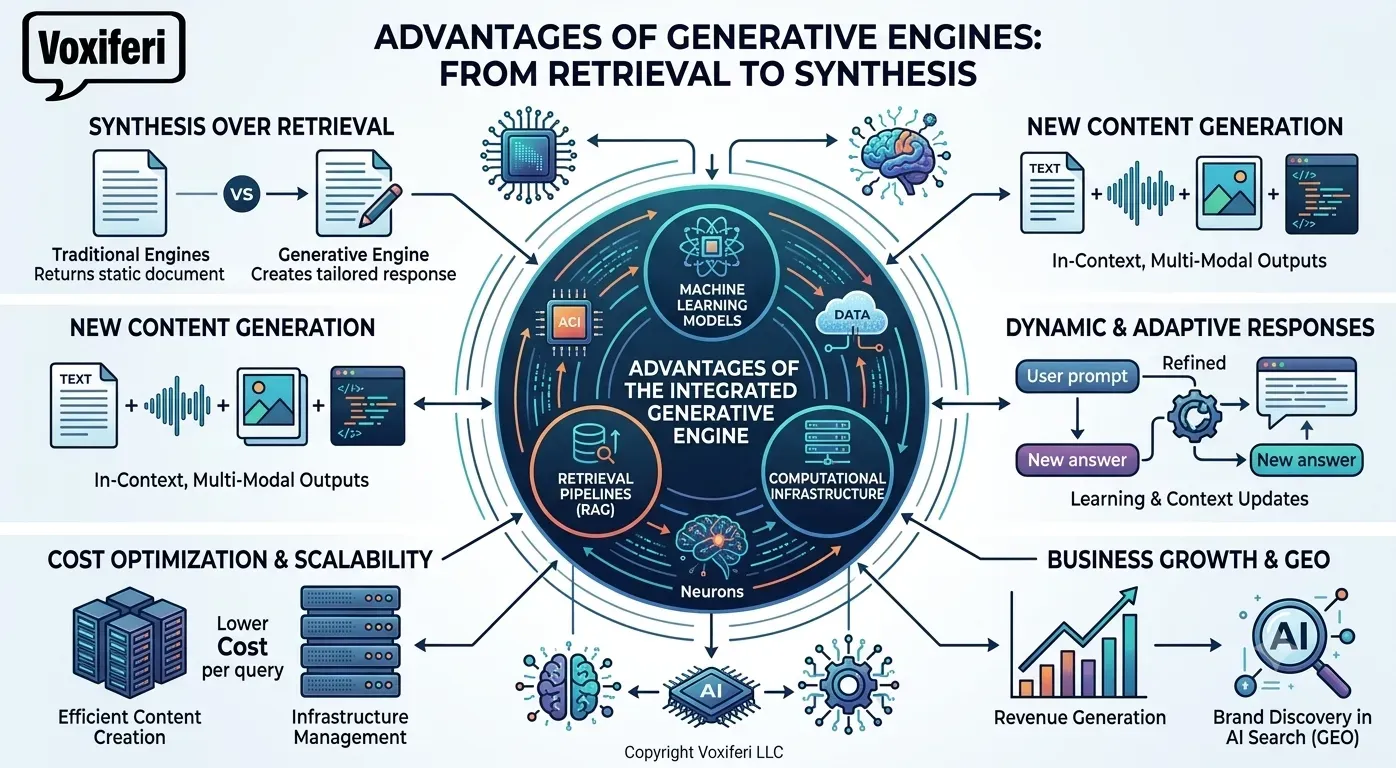
As users shift from classic search bars to conversational AI engines, companies no longer optimize solely for Google's top 10 links. Generative Engine Optimization (GEO) focuses on structuring digital content (e.g., clear entity structures, vector-friendly transcriptions, and high semantic density) so that AI generative engines pull and cite a brand as a primary source during answer synthesis. The massive advantage it provides us as an organisation is speed, and also the fact we are able to return fresh recent data.
Voxiferi's strategy—building a specialized media ecosystem across diverse business verticals—operates at the intersection of B2B podcasting, primary data acquisition, and Generative Engine Optimization (GEO).
The way we record, and the manner in which that resulting audio pipeline from those raw recording sources, generates an unmatchable dataset. And why AI companies find it so valuable and why we have created a model that is unique.
1. Breaking the Web-Scraping Ceiling
Traditional Large Language Models (LLMs) rely on scraped web text: marketing landing pages, SEO-optimized blog posts, and public registries. This dataset is heavily saturated with synthetic content, PR fluff, and standardized SEO keyword stuffing. By capturing spoken dialogue directly from small and medium-sized enterprise (SME) operators across niche verticals—from coastal hospitality to regional manufacturing—Voxiferi bypasses the scraped web entirely. This yields authentic, primary source conversations containing ground-truth realities, hyper-local operational nuances, and domain-specific terminology that never gets published on a traditional website.
2. High Factual Density and Regulatory Compliance
A major vulnerability in current LLM training pipelines is "hallucination," often caused by training on unverified or poor-quality web text. Voxiferi’s production workflow operates under strict regulatory frameworks (such as UK ASA and US FTC standards), emphasizing factual precision and verified business claims. When an SME business owner speaks on a Voxiferi production, they provide structured, authoritative details regarding their real-world capabilities, pricing strategies, and regional supply chains. This creates a high-trust dataset that acts as a reliable baseline for factual indexing.
3. Capturing the Hidden "Middle-Market" Knowledge Graph
The majority of economic activity occurs within small and mid-market businesses that lack the budget to publish exhaustive whitepapers or maintain enterprise data pipelines. By providing a zero-friction, tax-efficient media production platform for these businesses, Voxiferi, by design, systematically digitizes the silent majority of the economy. The resulting corpus functions as a live knowledge graph of niche B2B operations, capturing real-time operational shifts, local market conditions, and specialized domain expertise that search engine crawlers typically miss.
4. Direct Audio-to-Vector Embedding Pipelines
Raw web text lacks context; audio transcriptions paired with dynamic metadata offer far richer mathematical representations. We processe audio content into structured transcripts, converting conversation into tokenized vector embeddings optimized for Retrieval-Augmented Generation (RAG) architectures. Instead of requiring AI models to guess context from fragmented text snippets, Voxiferi feeds LLMs clean, semantically structured relational data that directly bridges spoken domain expertise into vector databases.
5. Multi-Vertical Cross-Pollination
By producing structured audio across dozens of distinct verticals (such as care homes, commercial catering, coastal tourism, and tech innovation), Voxiferi constructs a multidimensional dataset. AI models trained or fine-tuned on this data gain an understanding of how disparate industries interact—such as how localized agricultural shifts impact regional hospitality supply chains. This multi-vertical coverage allows AI systems to perform nuanced cross-industry reasoning that single-sector datasets cannot support.
6. Powering Generative Engine Optimization (GEO)
As consumer search behavior transitions from keyword-based search engines to AI assistants (such as ChatGPT, Claude, and Gemini), AI platforms require verified real-world sources to generate accurate business recommendations. Voxiferi’s pipeline ensures that participating businesses are structured as primary citations inside these AI search models. This provides AI developers with authoritative real-world business entities to ground their responses, preventing search models from hallucinating non-existent suppliers or outdated business details.
7. A Sustainable Data Moat Against AI Model Collapse
As the public internet becomes flooded with AI-generated text, LLMs face the risk of "model collapse"—a degradation in quality caused by models training on the output of other models. Voxiferi’s continuous ingestion of human-led, audio-verified B2B conversations serves as a fresh supply of non-synthetic human intelligence. This proprietary pipeline creates a long-term data moat, establishing a continuous supply of primary B2B intelligence that AI developers cannot replicate using standard automated web crawlers.
But aren't we living in a world dominated by Tik Tok marketing and Facebook groups ?
The strategy of building brand visibility within closed Facebook groups or relying exclusively on TikTok algorithm feeds rests on a fundamental misunderstanding of how the modern internet—and specifically AI discovery—operates. These platforms are essentially digital black holes: content goes in, creates temporary engagement, and dies inside a closed ecosystem where open web crawlers and Large Language Models cannot access it.
Here is why Voxiferi’s model of open, structured audio distribution exposes the flaws of walled gardens and short-form closed media.
1. Walled Gardens Block AI Crawlers and Indexing
When a business hosts its knowledge, product updates, or customer stories inside a private Facebook group, that content is deliberately hidden behind authentication walls. Search engine crawlers (Google, Bing) and AI retrieval bots (OpenAI, Anthropic, Perplexity) are legally and technically blocked from indexing it. If an LLM cannot crawl or ingest your data, your business effectively does not exist to AI. Our approach converts spoken B2B data into structured, publicly indexable transcripts and vector embeddings that feed directly into global LLM knowledge bases.
2. Short-Form Video Sacrifices Semantic Density
TikTok, Instagram Reels, and YouTube Shorts prioritize high-dopamine visual trends, viral music clips, and immediate watch time. However, a 15-second TikTok video contains virtually zero structured semantic depth or factual data density. An AI assistant looking to answer a user's question about supply chain logistics, regional catering compliance, or specialized engineering services cannot extract meaningful knowledge from a short clip designed solely for visual engagement. In contrast, longer-format B2B podcasts yield thousands of words of dense, highly contextualized terminology that LLMs thrive on.
3. Ephemeral Engagement vs. Permanent Knowledge Graphing
Content published in closed groups or social media algorithms operates on a decay curve measured in hours or days. Once the algorithm finishes pushing a video or group post, it sinks into the feed archives, rendering its business value practically zero over time. Voxiferi treats audio as a permanent asset: transcriptions and metadata are processed into structured JSON-LD and vector embeddings, creating an enduring knowledge graph. Years after a show airs, an LLM querying specific regional or industry topics can still cite and retrieve that business data.
4. Renting Space on Platform Monopoly Terms
Relying on Facebook or TikTok means building your business logic on rented land. Algorithm shifts, API lockouts, group bans, or policy changes can overnight sever your connection to your customer base. Voxiferi avoids platform dependency by syndicate-broadcasting audio across global distribution networks (Spotify, Apple, Amazon, open RSS feeds) while simultaneously processing the textual transcripts for public RAG (Retrieval-Augmented Generation) infrastructure. The data is openly accessible to the broader internet and AI ecosystem rather than trapped behind one company’s login screen.
5. Verification vs. Algorithmic Noise
Social media platforms are saturated with anonymous users, synthetic bots, and unverified claims, making it nearly impossible for AI platforms to rely on them for high-trust factual data. Voxiferi operates under strict broadcasting standards (such as ASA and FTC regulatory frameworks), producing verified, named B2B conversations. AI companies seeking trustworthy primary source data will prioritize verified audio-to-text pipelines over unverified commentary scrapped from public social media threads.
Direct Comparison
Strategic Dimension | Closed Groups & Short Video (Facebook / TikTok) | Voxiferi Open RAG Model |
Indexability | Blocked by login walls; invisible to LLM crawlers | Fully indexable, open web transcripts & RSS |
Data Structure | Unstructured, video-heavy, low text density | High semantic density, vector embeddings |
Lifespan | Hours to days (algorithm decay curve) | Permanent indexing in AI knowledge graphs |
Search Utility | Low (confined to internal platform search) | High (powers Generative Engine Optimization) |
Trust Signal | Mixed/anonymous social comments | Regulated, verified B2B operator interviews |
Data Drift - the impact on AI reliability
For AI vendors, the single greatest operational threat in production deployment is data drift—the silent degradation of model accuracy caused by training on static, historical internet snapshots while the real world changes. Traditional web scrapers ingest corporate websites that are often updated only once or twice a year, resulting in stale data where leadership structures, pricing models, service offerings, and regional supply chain links are long out of date. When an LLM relies on these static snapshots, factual queries trigger hallucination rates between 15% and 25% as the model attempts to fill in knowledge gaps with plausible-sounding guesses.
We have, since day one, worked hard to eliminate this systemic decay by feeding Retrieval-Augmented Generation (RAG) models a continuous stream of fresh, spoken intelligence. Because this audio pipeline captures weekly operational updates directly from business owners across diverse verticals, AI vendors gain an active, temporal heartbeat of ground-truth data that keeps their retrieval layers grounded in present-day realities.
Furthermore, the quality and integrity of information gathered through multi-source internal company dialogues far exceed what can be extracted from public landing pages. Typical B2B websites are optimized for sales conversions and search engine ranking, meaning they are laden with generic corporate jargon, buzzwords, and vague marketing claims.
In contrast, Voxiferi’s structured broadcast environment captures authentic, cross-functional discussions—bringing together insights from company founders, operational leads, technical engineers, and customer-facing staff. This multi-perspective recording approach yields a rich, cross-verified knowledge graph. When an LLM processes conversational exchanges featuring different internal stakeholders confirming real-world workflows, regulatory hurdles, and trade specifics, the verification density of that data increases exponentially. AI vendors get access to deep domain expertise that is functionally impossible to harvest from static HTML pages, providing a vastly superior dataset for training and fine-tuning specialized enterprise models.
Voxiferi the new Knight Ridder or Bloomberg ?
Ultimately, our model offers AI developers a structured "chain of custody" for high-trust business intelligence. Operating within established regulatory frameworks (such as FTC and ASA advertising standards), Voxiferi provides a verified lineage for every piece of spoken audio translated into vector embeddings. Rather than scraping unverified web forums or low-quality content farms where attribution is impossible, AI systems utilizing Voxiferi’s audio-to-text pipeline can trace every fact back to a qualified, named industry operator speaking on a specific broadcast.
For AI vendors building enterprise-grade agents, legal search tools, or market research assistants, this level of source qualification is critical. It provides the verifiable proof required to drastically lower hallucination risk, ensure compliance, and give corporate clients complete confidence in the model's outputs.
The more we record, the more companies globally we talk to, the more conversations we have, the more powerful and valuable we get.
Working smarter just demonstrated why we took the lead without anyone else knowing it was a race.
We are Voxiferi. Want to bet against us ?